
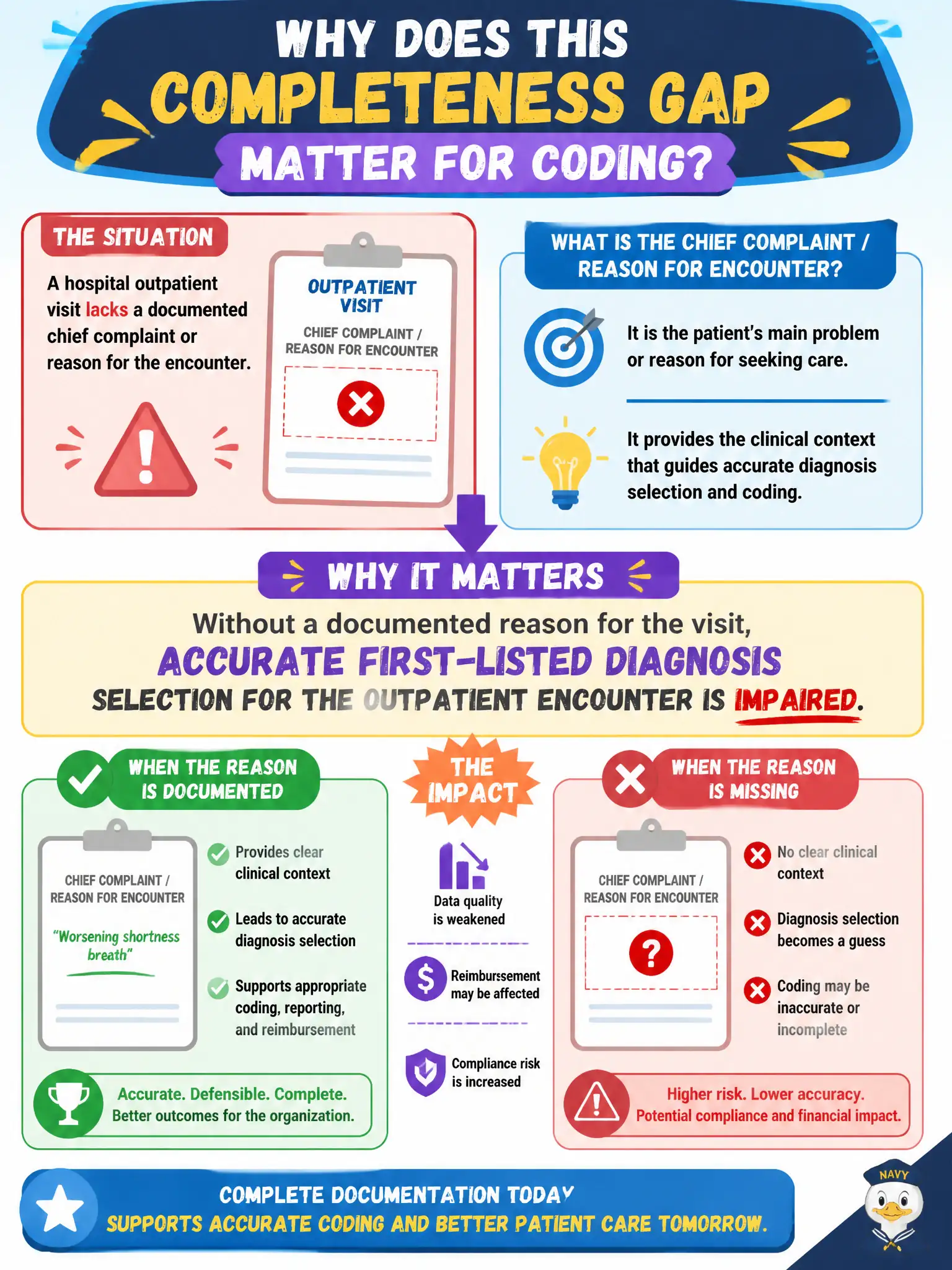
A hospital outpatient visit lacks a documented chief complaint or reason for the encounter. Why does this completeness gap matter for coding?
Select an answer to reveal the explanation.
Short Explanation
Outpatient coding needs to know why the patient showed up — the reason for the visit is the first domino. No chief complaint or encounter reason means you cannot honestly pick a first-listed diagnosis. Flag the completeness gap.
Full Explanation
A hospital outpatient visit that lacks a documented chief complaint or reason for the encounter creates a completeness gap that impairs accurate first-listed diagnosis selection. Outpatient coding depends on knowing why the patient presented so the primary diagnosis reflects the reason for the visit after study of that encounter. It is false that outpatient hospital coding never requires a reason for the encounter. Inventing a wellness diagnosis to populate the first-listed field fabricates medical necessity and purpose of visit. Missing chief complaints do not automatically convert the visit to an inpatient admission. Exam caveat: payer medical-necessity edits often hinge on first-listed diagnosis alignment with the service—documentation of encounter reason protects municipal outpatient claims. Operational check: search nursing intake, provider note headers, and referral text for reason-for-visit language; if truly absent, pursue completion before finalizing the first-listed diagnosis. This discipline protects patients, supports accurate public reporting for municipal hospitals, and keeps the coded abstract defensible when auditors compare codes to the authenticated record. This discipline protects patients, supports accurate public reporting for municipal hospitals, and keeps the coded abstract defensible when auditors compare codes to the authenticated record.