
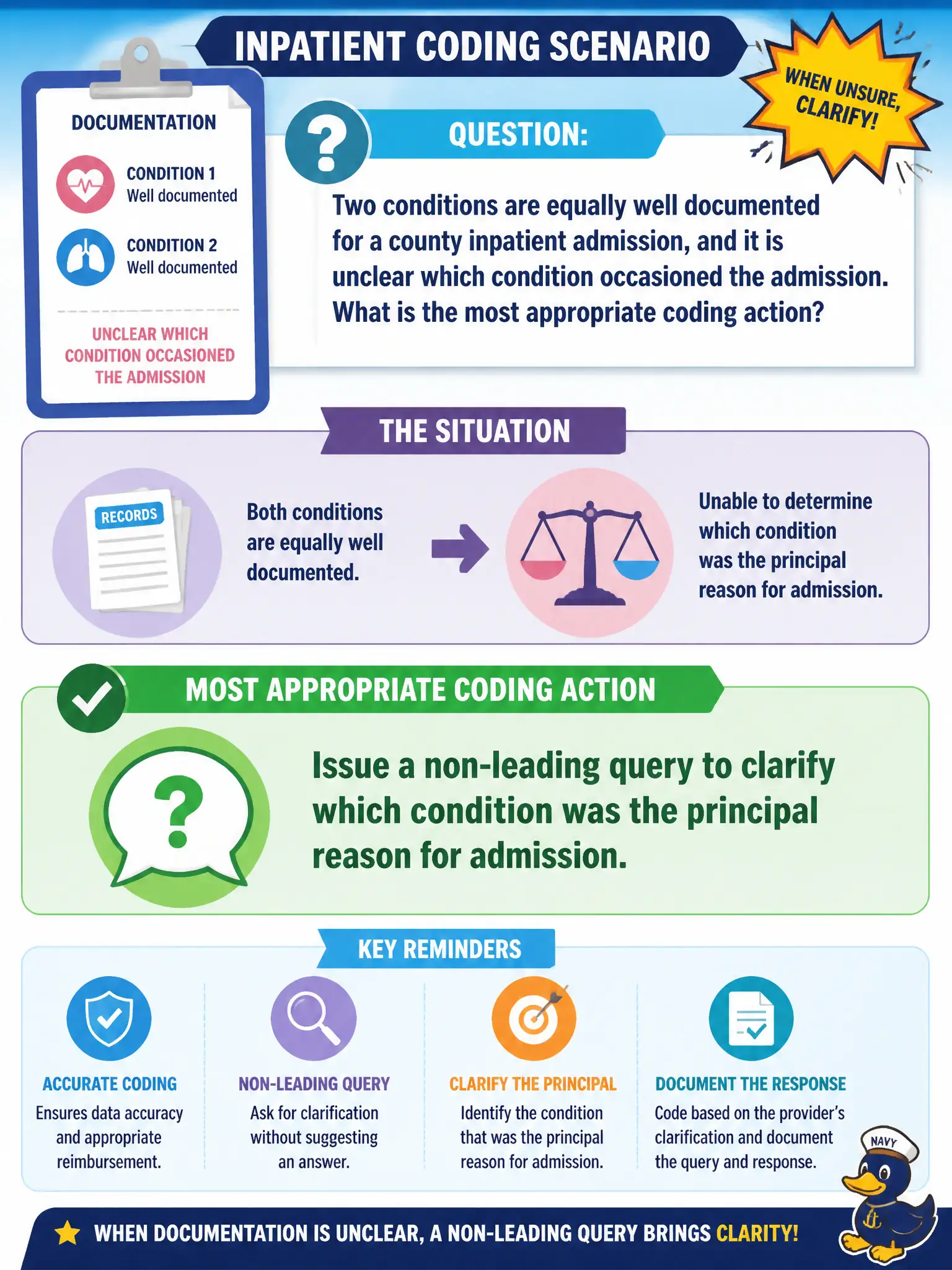
Two conditions are equally well documented for a county inpatient admission, and it is unclear which condition occasioned the admission. What is the most appropriate coding action?
Select an answer to reveal the explanation.
Short Explanation
When two diagnoses are tied for why the patient came in, principal diagnosis is not a popularity contest or a DRG shopping trip. Equal documentation with an unclear occasioning condition is exactly when a non-leading principal-diagnosis query earns its keep. Clarify the reason for admission; then sequence.
Full Explanation
When two conditions are equally well documented for a county inpatient admission and it is unclear which condition occasioned the admission, the most appropriate coding action is to issue a non-leading query to clarify which condition was the principal reason for admission. Principal diagnosis selection drives MS-DRG assignment and must reflect the condition determined after study to be chiefly responsible for the admission. Always sequencing the higher-weighted DRG diagnosis as principal without asking is payment-driven and noncompliant. Coding both as principal diagnoses on the same inpatient claim violates single principal diagnosis rules for standard inpatient reporting. Picking the condition listed first in the history and physical by default substitutes note order for clinical reason-for-admission analysis. Exam caveat: equal documentation without clear focus is a classic principal diagnosis query scenario—keep options balanced and free of DRG language. Operational check: cite both conditions and their treatments, ask which occasioned admission, and sequence principal diagnosis only after the authenticated clarification. This discipline protects patients, supports accurate public reporting for municipal hospitals, and keeps the coded abstract defensible when auditors compare codes to the authenticated record.