
Which practice makes a provider query noncompliant regarding introduction of diagnoses?
Select an answer to reveal the explanation.
Short Explanation
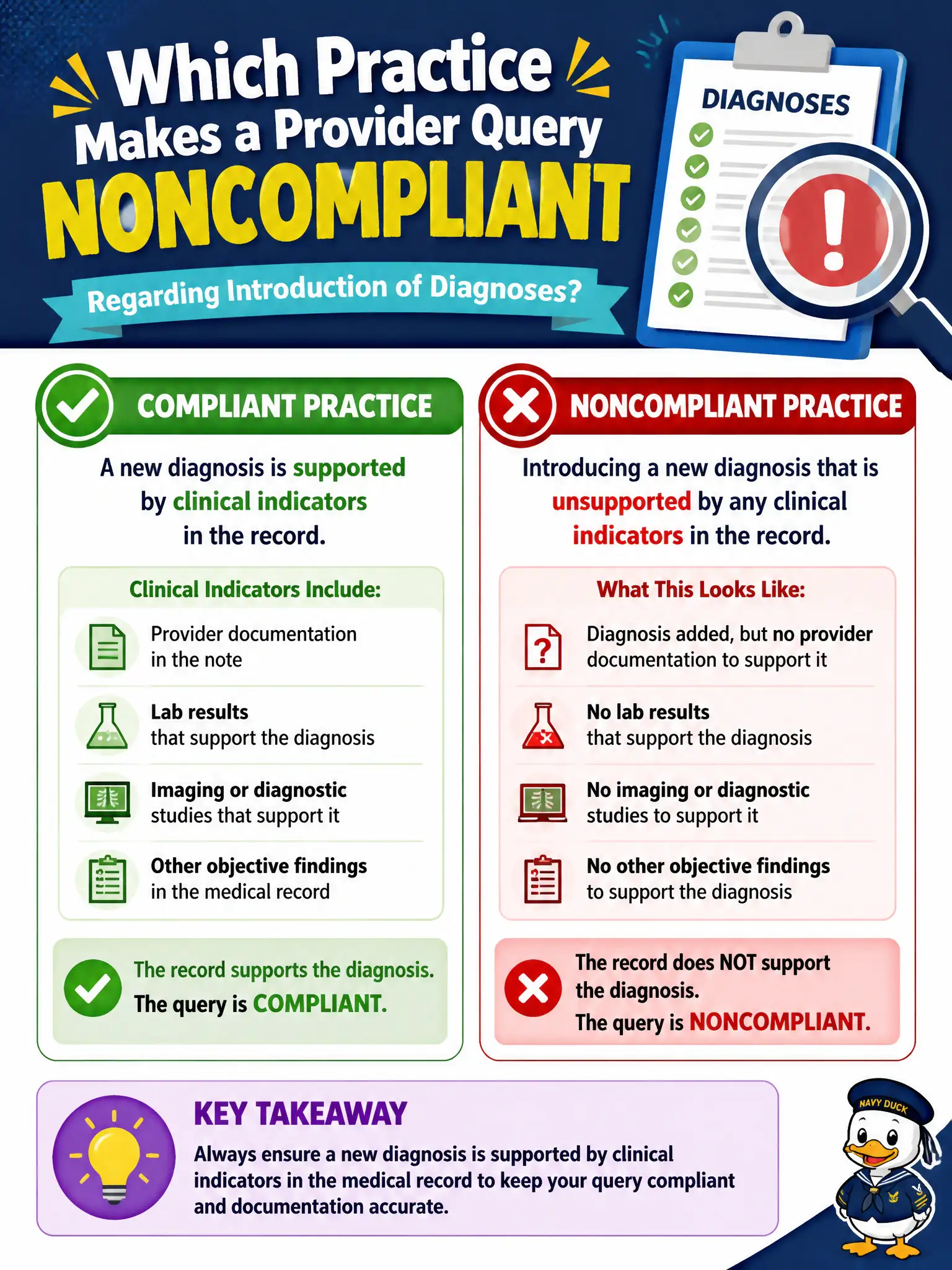
Planting a brand-new diagnosis with zero chart support is like slipping an answer key into the exam. Queries clarify what’s already hinted at—they don’t invent conditions. No indicators, don’t introduce it.
Full Explanation
A provider query becomes noncompliant when it introduces a new diagnosis that is unsupported by any clinical indicators in the record. That practice asks the provider to create disease without an evidentiary basis and is a core integrity violation for hospital coding and CDI. By contrast, asking for clarification when conflicting laterality is already documented is an appropriate use of the query process. Citing fever, cultures, and antibiotic therapy already in the record when seeking infection specificity properly anchors the question in chart evidence. Offering clinically reasonable alternatives plus unable to determine supports nonleading design rather than indicating noncompliance. Exam caveat: unsupported new diagnosis differs from clarifying the acuity, specificity, or etiology of a condition already suggested by documented indicators—CCS items often test that distinction. Operational check before sending: list the indicators you will cite; if you cannot find any in this civic hospital chart, do not query that diagnosis into existence—code only what the record supports. This discipline protects patients, supports accurate public reporting for municipal hospitals, and keeps the coded abstract defensible when auditors compare codes to the authenticated record.