
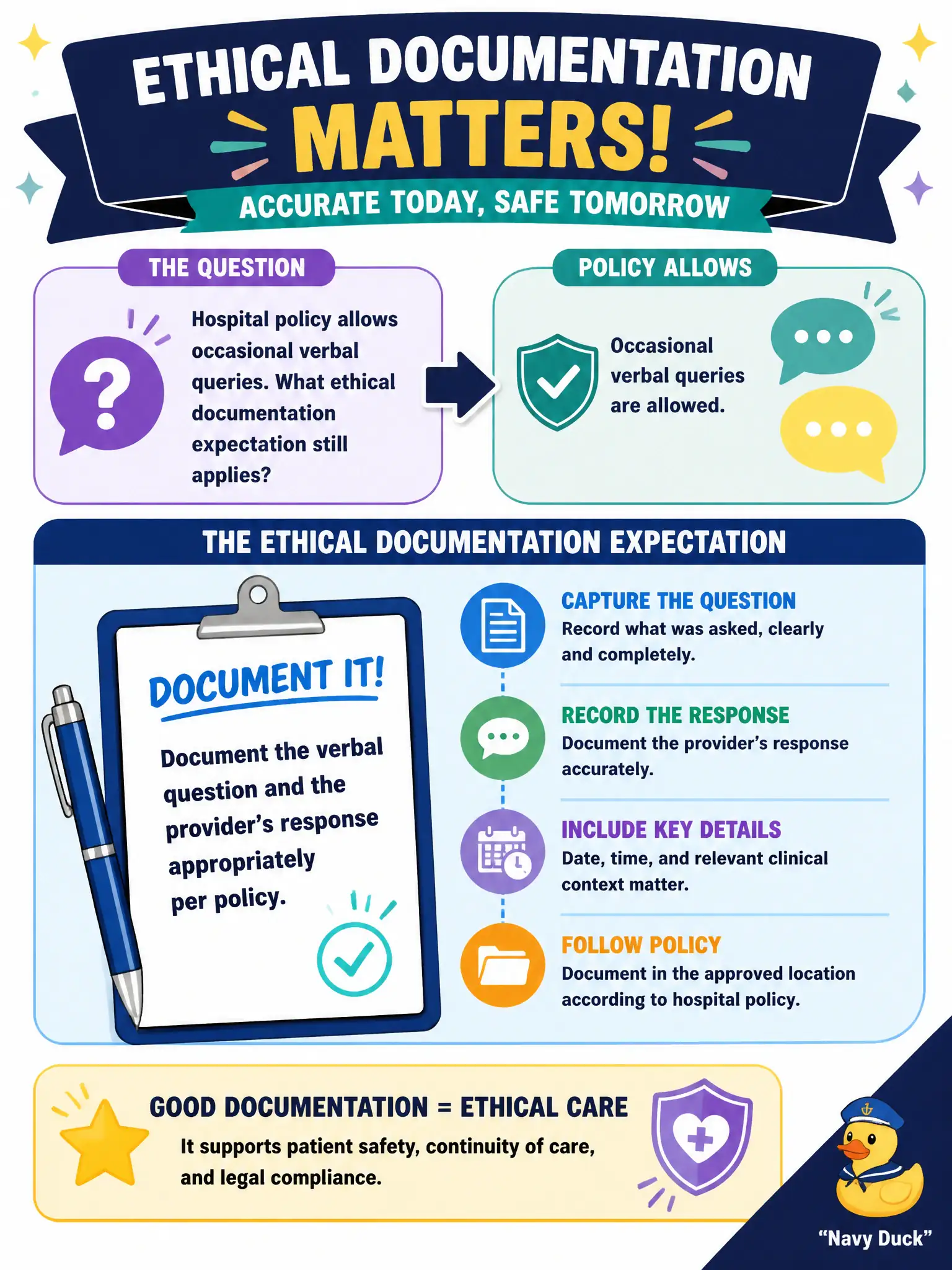
Hospital policy allows occasional verbal queries. What ethical documentation expectation still applies?
Select an answer to reveal the explanation.
Short Explanation
A hallway clarification that never gets written down is a ghost in the audit. Even when verbal queries are allowed, capture the question and the answer. Policy still wants a trail.
Full Explanation
When hospital policy allows occasional verbal queries, ethical documentation expectations still apply: document the verbal question and the provider's response appropriately per policy so the clarification remains auditable. Verbal convenience does not erase the need for a durable record of what was asked and answered for later coding and compliance review. Claiming verbal queries need no written trail if the coder trusts the provider leaves code changes unsupported during audit of civic claims. Recording only that something was clarified verbally without stating what was asked or answered is too vague to defend medical-necessity or severity capture. Converting every verbal exchange into a leading yes/no sticky note on the chart cover is both a confidentiality and leading-content problem. Exam caveat: many facilities prefer written queries and restrict verbal queries to narrow situations—know local policy before using verbal pathways in a county hospital. Operational check: if a verbal clarification occurs, promptly document the question, indicators, and authenticated response in the approved query location before relying on it for final coding. This discipline protects patients, supports accurate public reporting for municipal hospitals, and keeps the coded abstract defensible when auditors compare codes to the authenticated record.