
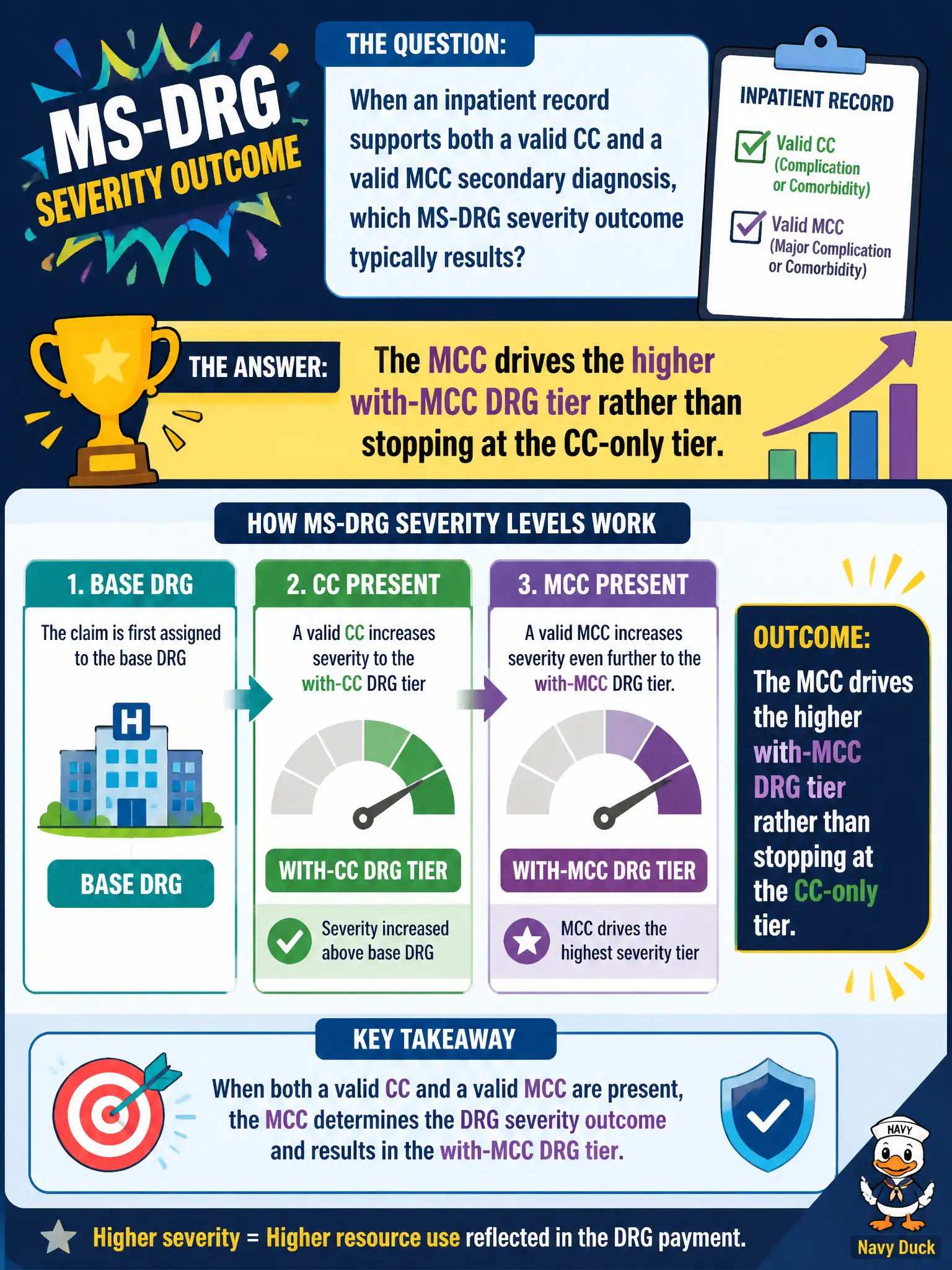
When an inpatient record supports both a valid CC and a valid MCC secondary diagnosis, which MS-DRG severity outcome typically results?
Select an answer to reveal the explanation.
Short Explanation
If you have a real MCC in the mix, the stay usually jumps to the MCC DRG—not the milder CC version. The higher severity flag wins the grouping race.
Full Explanation
When an inpatient record supports both a valid CC and a valid MCC secondary diagnosis, the MCC typically drives the higher with-MCC DRG tier rather than stopping at the CC-only tier. Civic grouping should reflect the highest applicable severity tier supported by documentation. The CC does not override the MCC because CCs are sequenced first—sequencing order among secondaries does not demote a qualifying MCC. Both tiers are not billed on separate claims for the same stay. The grouper does not average CC and MCC relative weights. Exam caveat: a valid MCC elevates to the MCC tier; multiple severity codes do not produce dual claims or averaged weights. Operational check: confirm both the CC and MCC are supported and reportable on the county abstract, verify Grouper output shows the MCC tier for the base DRG, and ensure POA and exclusion logic are correct. Educate that capturing an MCC when truly present is appropriate stewardship—not “double dipping”—while unsupported MCC addition remains prohibited. In municipal and county facility practice, record the rationale for the chosen coding path and the rejected alternatives in the abstract notes so auditors and future coders understand the clinical and compliance basis. Re-check the decision if new authenticated documentation arrives before final bill drop, and escalate persistent documentation gaps to CDI or compliance rather than normalizing unsupported shortcuts that would distort civic claims, quality metrics, or case-mix reporting.