
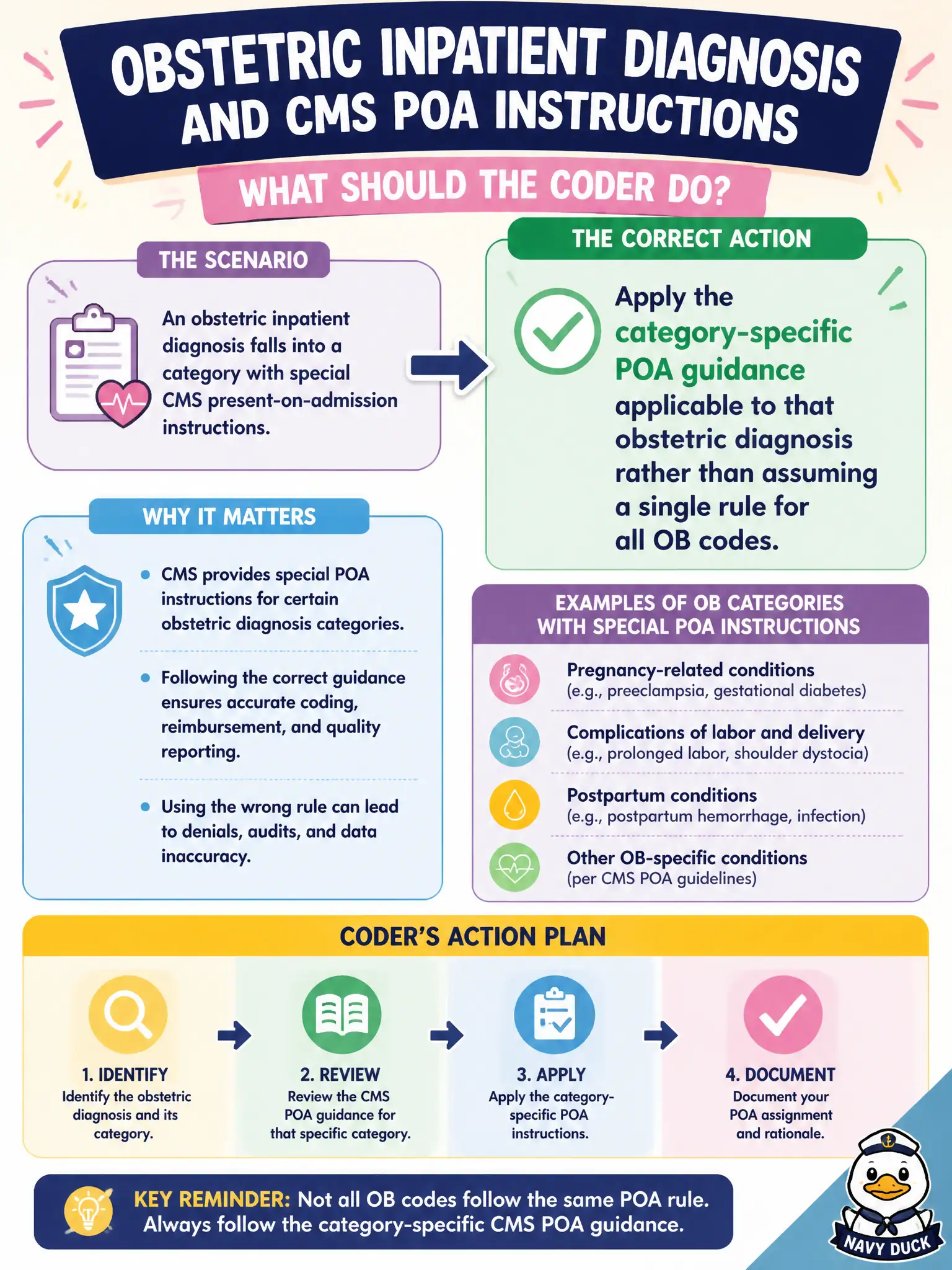
An obstetric inpatient diagnosis falls into a category with special CMS present-on-admission instructions. What should the coder do?
Select an answer to reveal the explanation.
Short Explanation
OB POA isn't one blanket sticker for the whole chapter. Some categories have special instructions—follow those, don't autopilot every OB code to Y or blank.
Full Explanation
Some obstetric inpatient diagnosis categories carry special CMS present-on-admission instructions. The coder must apply the category-specific POA guidance for that obstetric diagnosis rather than assuming one rule covers all OB codes. Obstetric POA nuance exists because pregnancy timelines, delivery-related code structures, and certain chapter 15 categories differ from general acute medical codes. Category-specific compliance protects municipal perinatal datasets from blanket Y/N habits that misclassify maternal conditions relative to admission.
Ignoring CMS POA guidance and assigning Y for every obstetric code fails by concept—special instructions exist precisely because blanket Y is wrong for some categories. Leaving POA blank on all obstetric diagnoses because “pregnancy codes are universally exempt” fails without checking the actual exempt list and category guidance; many OB diagnoses still require POA. Converting obstetric diagnoses to newborn codes to avoid POA fails because that misassigns the patient, the record, and the code set, and it does not solve maternal POA reporting.
Exam caveat: always consult the current CMS POA exempt list and any OB-specific reporting instructions rather than memorizing folklore such as “all pregnancy codes are exempt” or “all OB codes are Y.” Operational check: identify the obstetric code category; apply its specific POA guidance; verify exempt versus non-exempt status on the current list; never blank POA solely because the patient is pregnant; query when maternal condition timing relative to admission is unclear.