
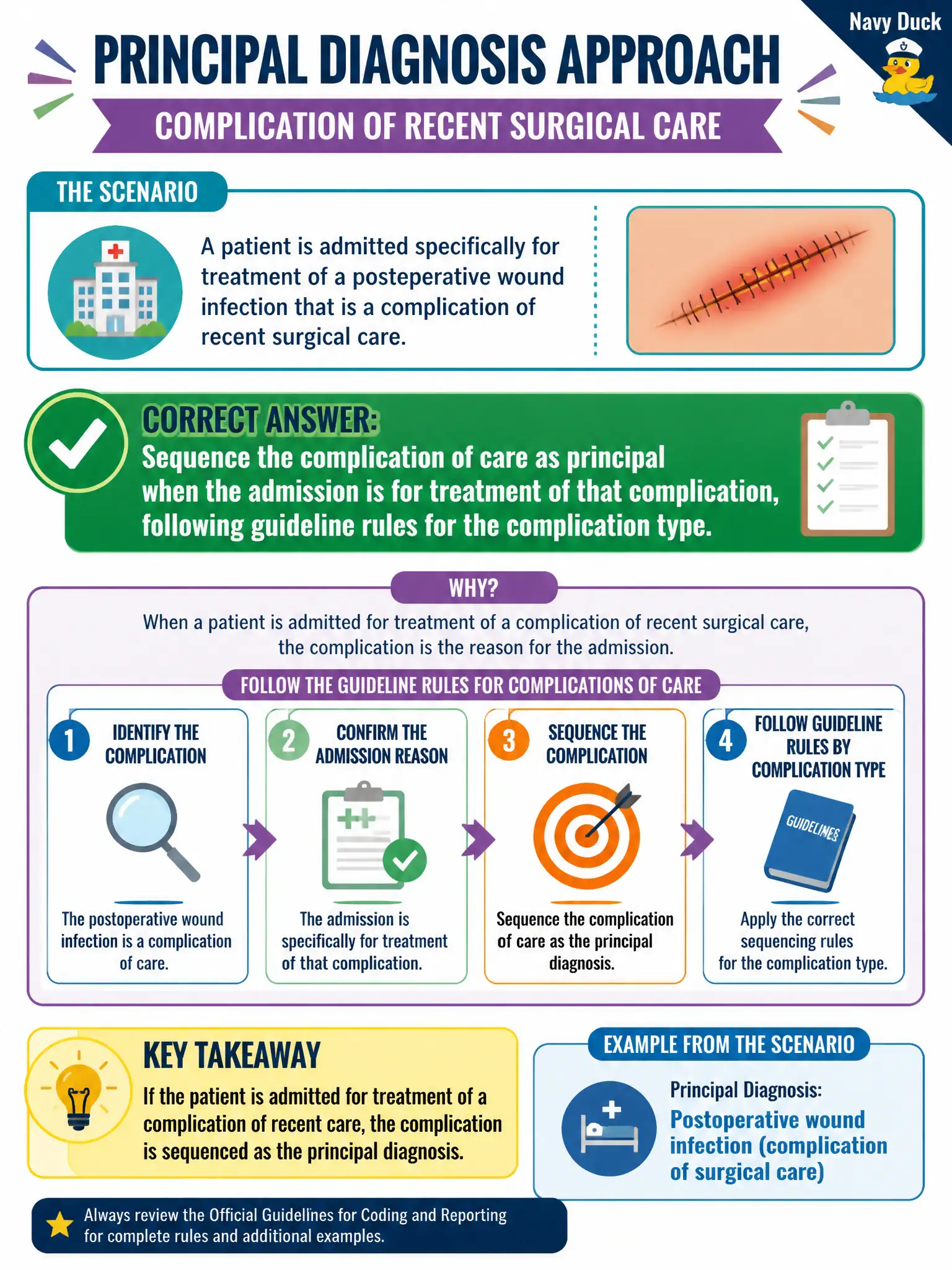
A patient is admitted specifically for treatment of a postoperative wound infection that is a complication of recent surgical care. Which principal diagnosis approach is typically appropriate?
Select an answer to reveal the explanation.
Short Explanation
If the whole admission is about fixing a postop complication, that complication usually takes the principal seat—then you still follow the fine print for that complication family. The old surgical problem list doesn't automatically steal the lead.
Full Explanation
When admission is specifically for treatment of a postoperative wound infection that is a complication of recent surgical care, principal diagnosis is typically the complication of care, sequenced per guideline rules for that complication type. Admissions to treat complications should not hide the complication behind the original surgical disease as if this were the index admission for that disease. Transparent complication principal selection supports honest civic quality and HAC-related analysis.
Always sequencing the original surgical diagnosis as principal and never coding the postoperative complication fails by concept when the admission is for treating the complication. Sequencing only a status-post Z code and omitting the infection fails because the active wound infection must be coded. Assigning the complication exclusively as a POA indicator without a diagnosis code fails—POA supplements diagnosis codes; it does not replace them.
Exam caveat: some complication codes have specific sequencing notes (e.g., code first or code also); follow Tabular instructions for the infection/complication category. Operational check: confirm admission reason is treatment of the postoperative wound infection; assign the complication code as principal per guidelines; code the original disease as additional when relevant; set POA appropriately (often N for post-admission complications, depending on timing).