
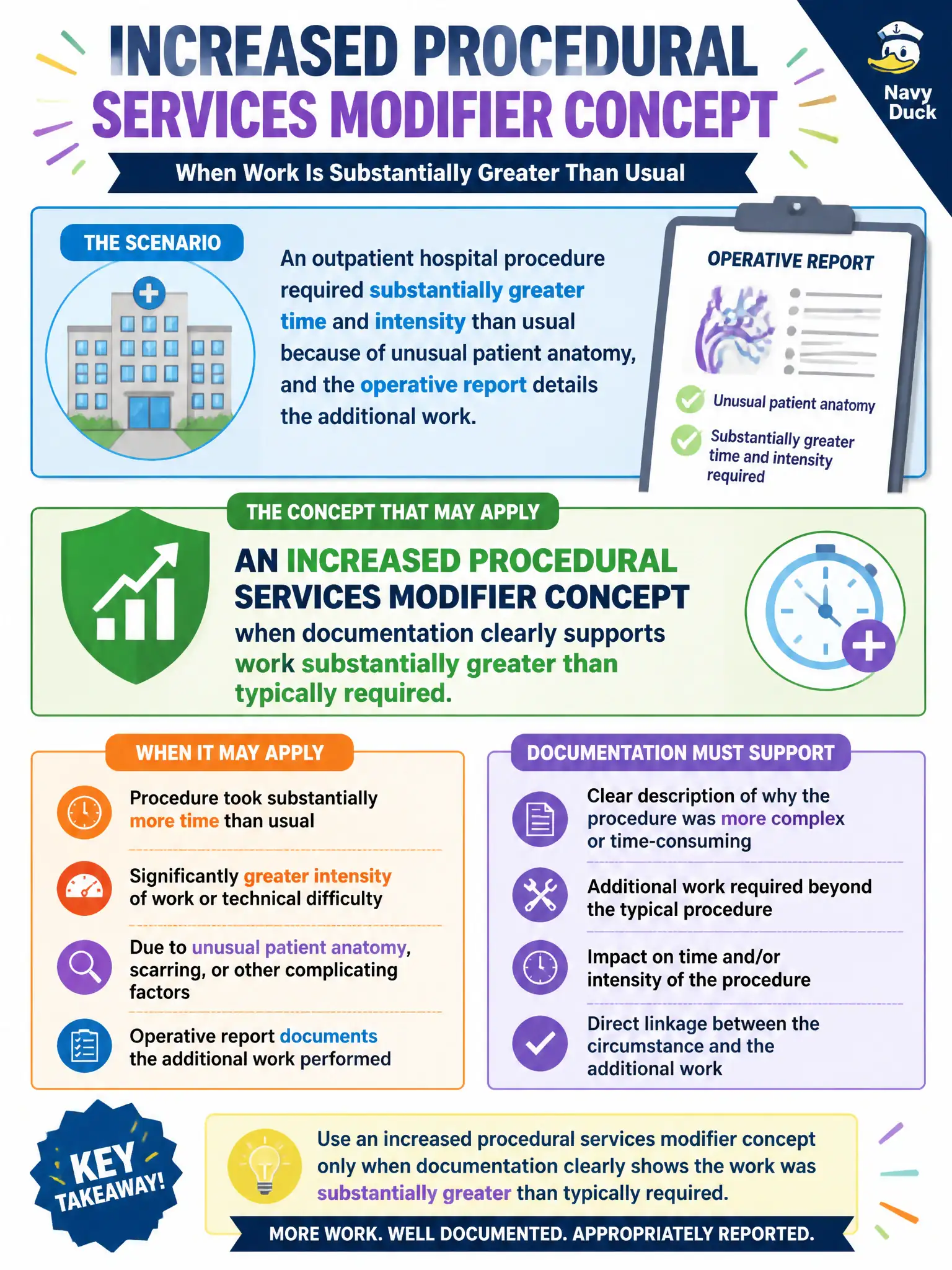
An outpatient hospital procedure required substantially greater time and intensity than usual because of unusual patient anatomy, and the operative report details the additional work. Which modifier concept may apply?
Select an answer to reveal the explanation.
Short Explanation
When a case goes far beyond the usual sweat and minutes—and the op report proves it—the increased procedural services idea is on the table. A tough day without that documentation is still just a tough day, not an automatic modifier.
Full Explanation
When an outpatient hospital procedure required substantially greater time and intensity than usual because of unusual patient anatomy, and the operative report details that additional work, an increased procedural services modifier concept may apply. Increased-services modifiers communicate that the service substantially exceeded the usual range, provided documentation clearly substantiates why. Used honestly, they allow municipal outpatient claims to reflect extraordinary operative effort without misusing reduction or discontinuation modifiers.
Reduced-services modifiers fail by concept here because anatomy that increases work is the opposite of a discretionary reduction in service. Discontinued-procedure modifiers fail because difficulty alone is not discontinuation; the procedure was completed with greater intensity, not stopped. Assistant-at-surgery modifiers alone fail because an assistant’s presence does not automatically establish increased intensity of the primary service; increased-services requires documented substantial additional work.
Exam caveat: “substantially greater than typically required” is a high bar—mere slightly longer OR time without unusual complexity usually does not justify the increased-services concept. Operational check: extract anatomy-driven extra steps, time, and intensity from the operative report; apply increased procedural services modifier only when documentation clearly supports substantial excess work; retain detailed narrative for payer review.