
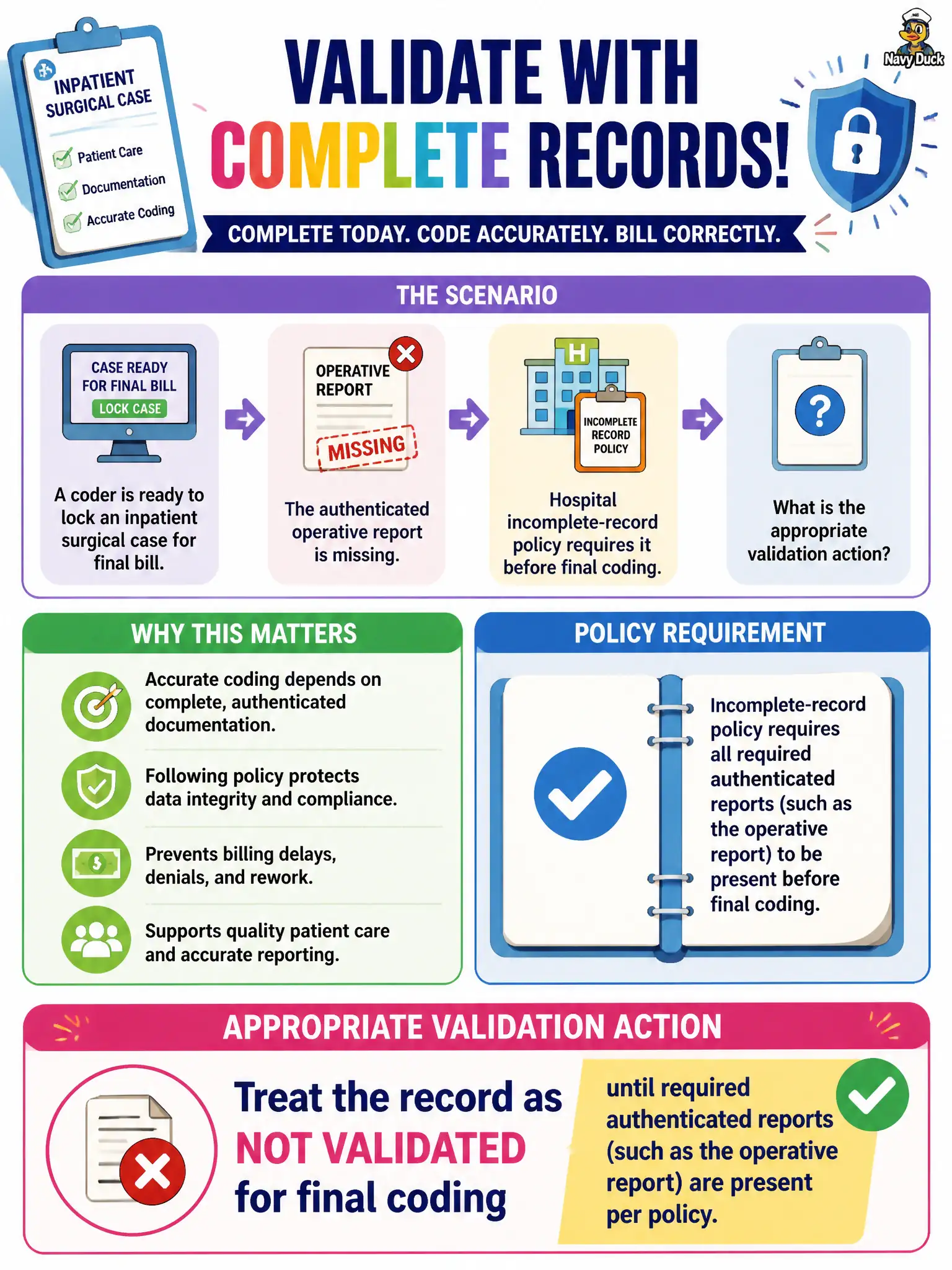
A coder is ready to lock an inpatient surgical case for final bill, but the authenticated operative report is missing and hospital incomplete-record policy requires it before final coding. What is the appropriate validation action?
Select an answer to reveal the explanation.
Short Explanation
Final coding without the required op report is like shipping a package without the packing list. Incomplete-record policy exists for a reason. Hold final coding until the authenticated reports are actually in the chart.
Full Explanation
Incomplete-record policies commonly require an authenticated operative report before final coding and billing of inpatient surgical cases. When a coder is ready to lock a case but the authenticated operative report is missing, the appropriate validation action is to treat the record as not validated for final coding until required authenticated reports are present per policy. Finalizing codes from preference cards and circulating nurse notes alone bypasses the surgeon's authenticated description of what was performed and risks incorrect procedure and device coding. Billing immediately and adding the operative report later without rechecking codes risks releasing an inaccurate abstract that never gets reconciled. Deleting surgical procedure codes so the missing report does not matter underreports care and fails documentation-compliance duties for municipal hospitals. Exam caveat: soft versus hard coding holds differ by facility, but CCS-style questions expect recognition that missing required operative documentation blocks final validated coding. Operational check for municipal operating-room cases: confirm operative-report presence and authentication, route deficiencies through HIM, and release final procedure codes only after the required report supports the code set.