
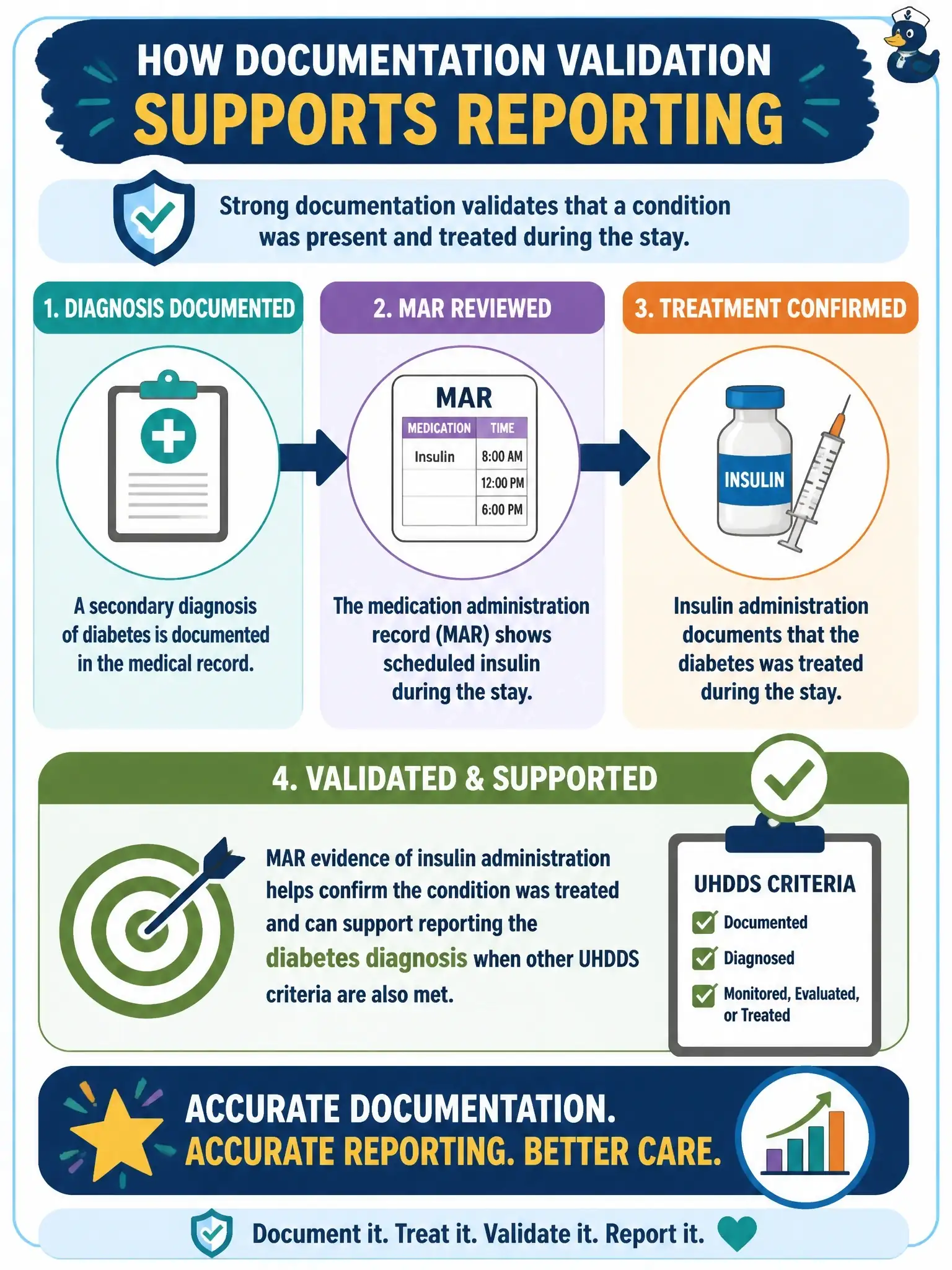
A secondary diagnosis of diabetes is listed, and the coder reviews the medication administration record (MAR) showing scheduled insulin during the stay. How does this documentation validation support reporting?
Select an answer to reveal the explanation.
Short Explanation
The MAR is your 'did we actually treat it?' receipt. Seeing insulin given helps show diabetes mattered this stay, but you still need a real provider diagnosis and reporting-criteria fit. Treatment evidence backs the code; it doesn't invent the diagnosis.
Full Explanation
Under UHDDS concepts, secondary diagnoses are reportable when they affect patient care through clinical evaluation, therapeutic treatment, diagnostic procedures, extended nursing care, or increased monitoring. A medication administration record showing scheduled insulin during the stay is strong corroboration that diabetes was therapeutically treated and can support reporting the diabetes diagnosis when provider diagnostic documentation and other UHDDS criteria are also met. The claim that insulin on the MAR replaces the need for any provider diagnosis of diabetes is wrong, because ancillary medication evidence alone does not establish a reportable diagnosis. The claim that MAR entries allow coding diabetes as the principal diagnosis automatically is also wrong; principal diagnosis still follows the reason for admission after study. The claim that insulin administration proves a diabetic complication code without further documentation overreaches: complication and manifestation coding still require supported diagnostic linkage, not merely drug administration. Exam caveat: align this teaching with Official Guidelines and facility query policy—treatment clues support validation and queries but do not invent diagnoses or complications. Operational check: confirm a provider diabetes statement, use the MAR to corroborate active treatment for secondary reporting criteria, and only then retain or refine the diabetes-related codes on the municipal inpatient abstract.