
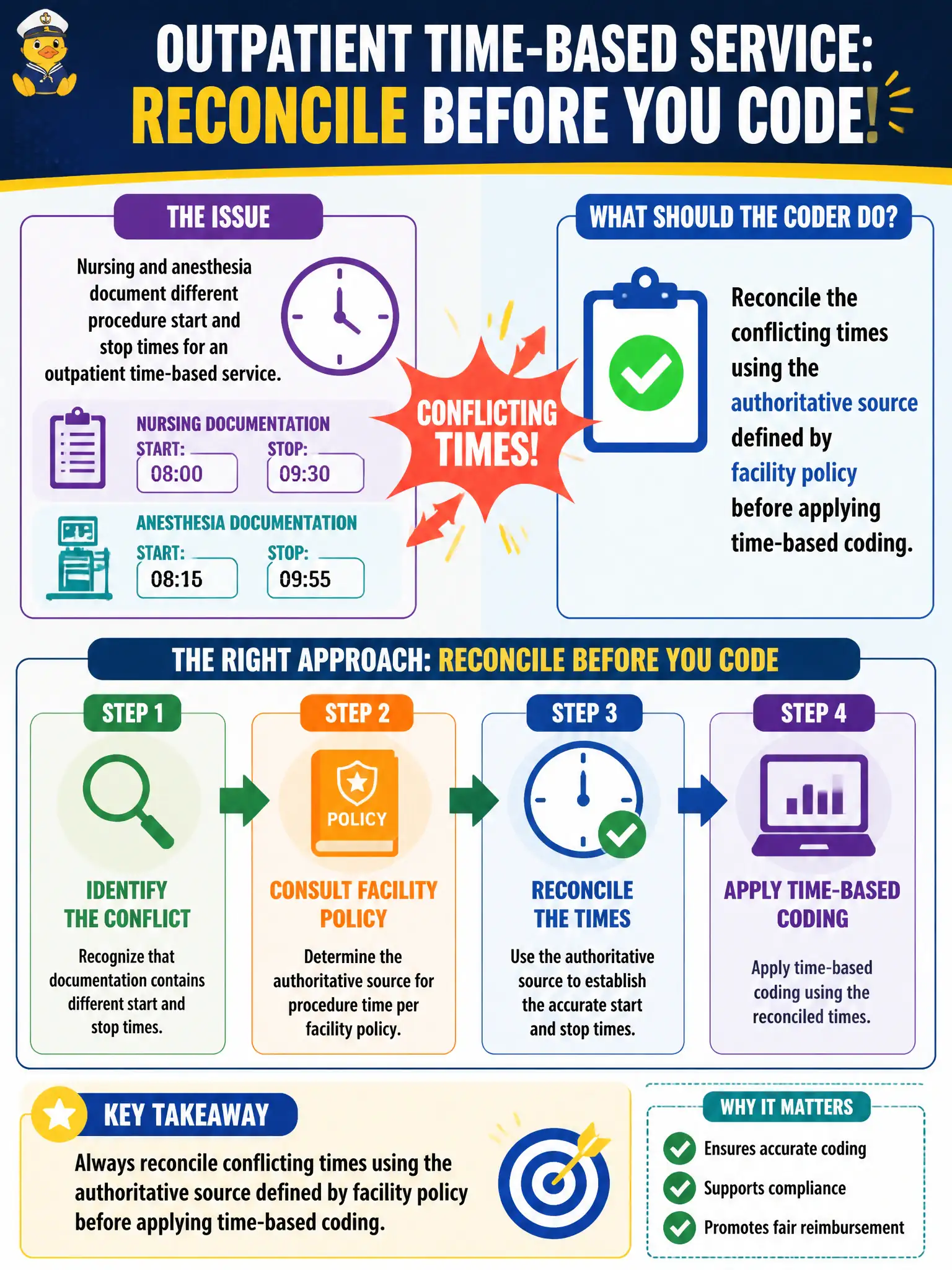
Nursing and anesthesia document different procedure start and stop times for an outpatient time-based service. What should the coder do?
Select an answer to reveal the explanation.
Short Explanation
Time-based coding is a stopwatch sport—two stopwatches with different readings means you fix the clock first. Reconcile nursing versus anesthesia times per policy before you convert minutes into a code.
Full Explanation
When nursing and anesthesia document different procedure start and stop times for an outpatient time-based service, the coder should reconcile the conflicting times using the authoritative source defined by facility policy before applying time-based coding. Duration accuracy protects civic outpatient payment integrity for time-driven codes. Always using nursing times because bedside clocks are closest to the patient fails without policy designation of the authoritative source. Averaging nursing and anesthesia times to create a midpoint duration invents a time that neither source documented. Coding a non-time-based procedure code solely to avoid resolving the time conflict fails when time governs correct code selection. Exam caveat: reconcile conflicting times per policy; do not average or dodge with a different code family. Operational check: apply the county facility’s time-source hierarchy (often anesthesia for procedural sedation/OR times), document the reconciliation, then select the time-based code. Update policy if conflicts are frequent between nursing and anesthesia clocks in municipal procedure areas. In municipal and county facility practice, record the rationale for the chosen coding path and the rejected alternatives in the abstract notes so auditors and future coders understand the clinical and compliance basis. Re-check the decision if new authenticated documentation arrives before final bill drop, and escalate persistent documentation gaps to CDI or compliance rather than normalizing unsupported shortcuts that would distort civic claims, quality metrics, or case-mix reporting.