
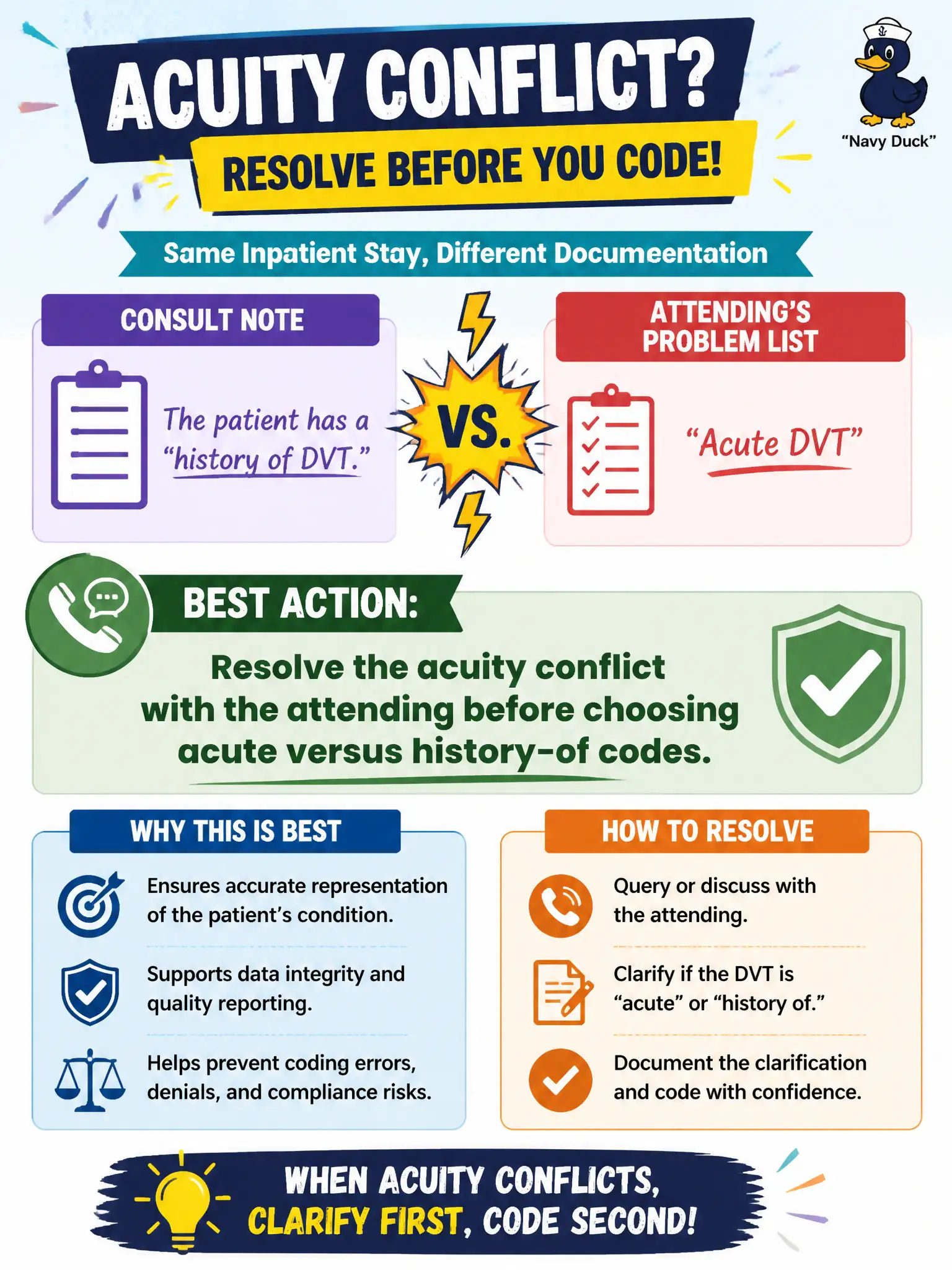
A consult documents “history of DVT,” while the attending’s problem list lists “acute DVT” during the same inpatient stay. What is the coder’s best action?
Select an answer to reveal the explanation.
Short Explanation
“Had a clot once” and “has a clot now” live in different code neighborhoods. When consult and attending disagree on acuity, get the attending to settle it before you pick a family.
Full Explanation
When a consult documents “history of DVT” while the attending’s problem list lists “acute DVT” during the same inpatient stay, the coder’s best action is to resolve the acuity conflict with the attending before choosing acute versus history-of codes. Acuity changes ICD-10-CM families and may affect CC/MCC assignment for county inpatients. Coding acute DVT because problem lists always override consult notes fails as an automatic hierarchy without resolution. Coding history of DVT only because consult specialists are more accurate fails when the attending asserts acuity for the current stay. Coding both acute DVT and history of DVT for the same site and episode fails and creates contradictory status coding. Exam caveat: history-of versus acute conflicts need attending clarification before code family selection. Operational check: query the attending at the municipal facility for current acuity, align problem lists and consult language, assign the authenticated code with correct POA, and evaluate CC/MCC impact only after acuity is settled. Educate teams that problem lists are not automatic winners over consult notes. In municipal and county facility practice, record the rationale for the chosen coding path and the rejected alternatives in the abstract notes so auditors and future coders understand the clinical and compliance basis. Re-check the decision if new authenticated documentation arrives before final bill drop, and escalate persistent documentation gaps to CDI or compliance rather than normalizing unsupported shortcuts that would distort civic claims, quality metrics, or case-mix reporting.