
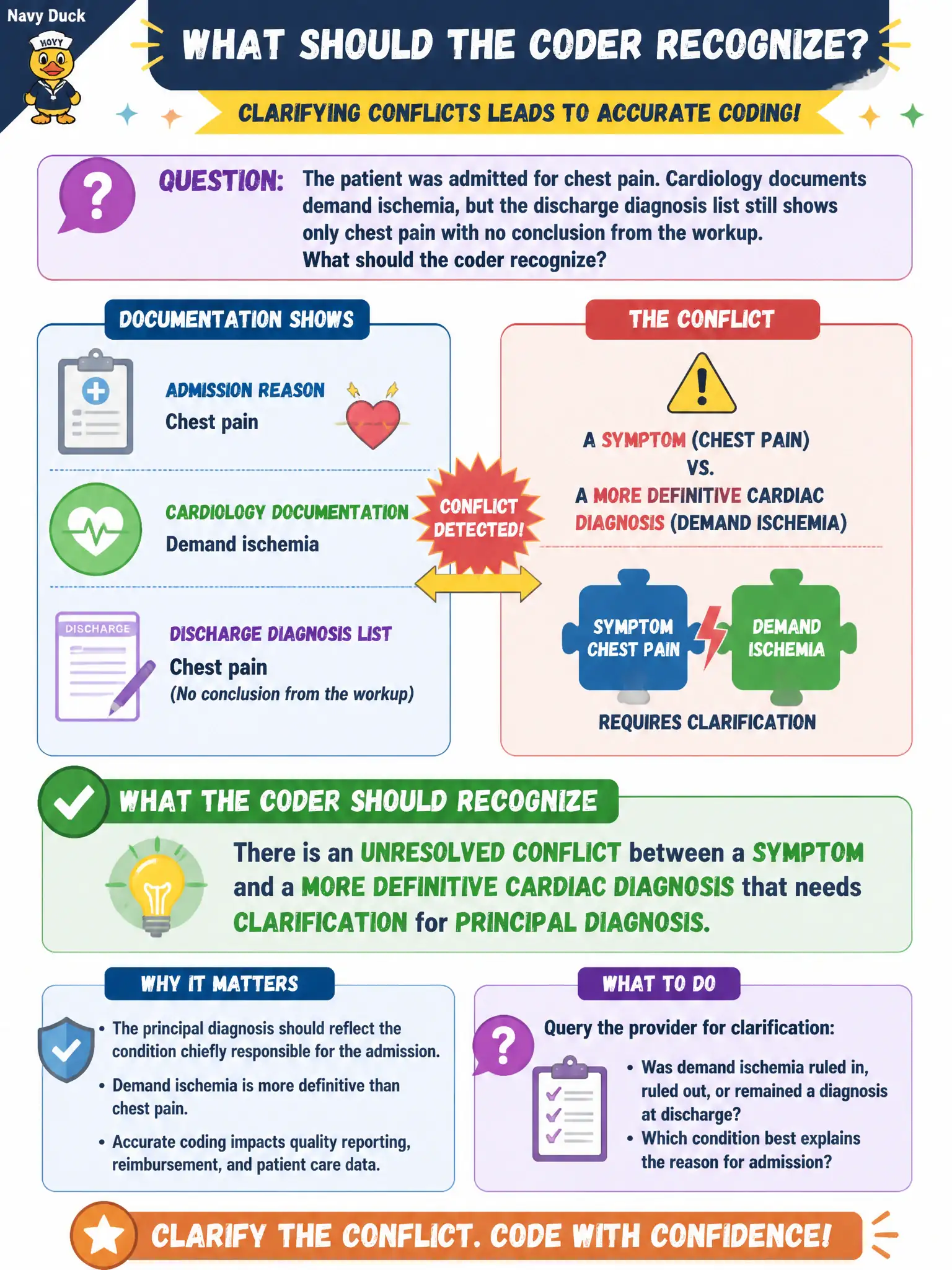
The patient was admitted for chest pain. Cardiology documents demand ischemia, but the discharge diagnosis list still shows only chest pain with no conclusion from the workup. What should the coder recognize?
Select an answer to reveal the explanation.
Short Explanation
Chest pain is the doorbell; demand ischemia may be what was found inside. If cardiology already named the finding but discharge still only lists the symptom, you have unfinished business—clarify before you crown a principal diagnosis.
Full Explanation
When the patient was admitted for chest pain, cardiology documents demand ischemia, but the discharge diagnosis list still shows only chest pain with no conclusion from the workup, the coder should recognize an unresolved conflict between a symptom and a more definitive cardiac diagnosis that needs clarification for principal diagnosis. After-study logic at county hospitals often moves from symptom to definitive finding when supported. Chest pain must not automatically remain principal merely because it was the admission symptom after a more definitive diagnosis is established. Demand ischemia is not always a secondary whenever chest pain appears anywhere; principal versus secondary depends on after-study responsibility for the admission. Coders should not replace chest pain with demand ischemia automatically without reviewing the discharge documentation and clarifying inconsistencies. Exam caveat: unresolved symptom-versus-definitive diagnosis conflicts require clarification for principal selection. Operational check: review cardiology and discharge documentation on the civic account, query which condition meets principal criteria after study, then sequence accordingly. Align problem lists so public cardiac abstracts reflect the completed workup.