
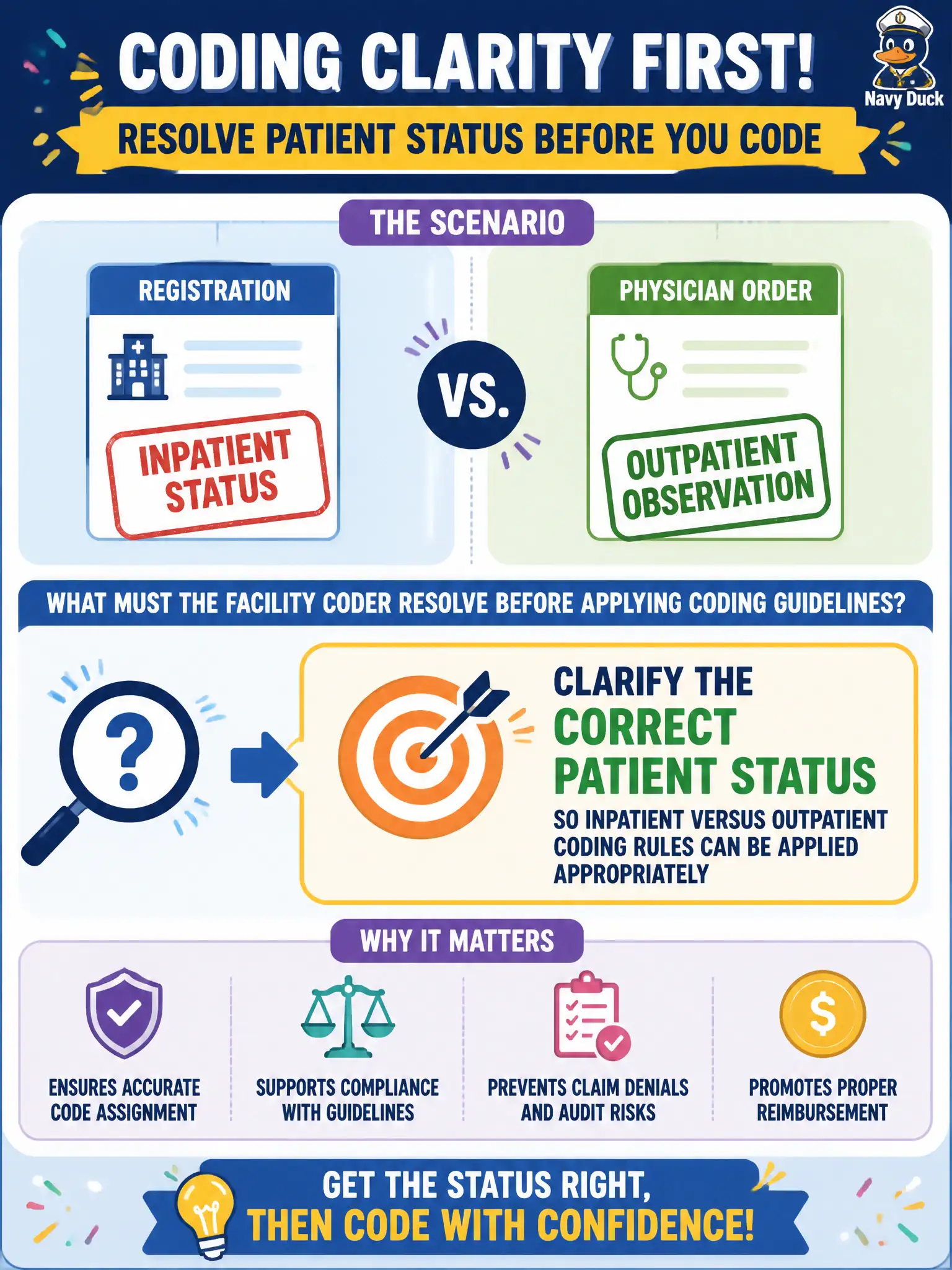
Registration shows inpatient status, but the physician order places the patient in outpatient observation. What must the facility coder resolve before applying coding guidelines?
Select an answer to reveal the explanation.
Short Explanation
Status is the rulebook you open first—inpatient and observation are not interchangeable chapters. When registration and the physician order disagree, fix the status before you pick guidelines or build the claim.
Full Explanation
When registration shows inpatient status but the physician order places the patient in outpatient observation, the facility coder must clarify the correct patient status so inpatient versus outpatient coding rules can be applied appropriately. Status drives guideline choice, claim type, and payment system for civic facilities. Always coding as inpatient because registration status controls reimbursement fails when the physician order establishes observation. Coding under observation rules only if length of stay exceeds two midnights invents a shortcut that confuses status determination with inpatient admission decision frameworks. Submitting two claims—one inpatient and one outpatient—to cover both documented statuses fails as dual billing for the same encounter conflict. Exam caveat: resolve inpatient-versus-observation status before applying coding guidelines. Operational check: use the hospital’s status clarification workflow with utilization review at the county facility, correct registration if needed, then code under the resolved status. Do not drop dual claims or force inpatient coding from registration alone. In municipal and county facility practice, record the rationale for the chosen coding path and the rejected alternatives in the abstract notes so auditors and future coders understand the clinical and compliance basis. Re-check the decision if new authenticated documentation arrives before final bill drop, and escalate persistent documentation gaps to CDI or compliance rather than normalizing unsupported shortcuts that would distort civic claims, quality metrics, or case-mix reporting.