
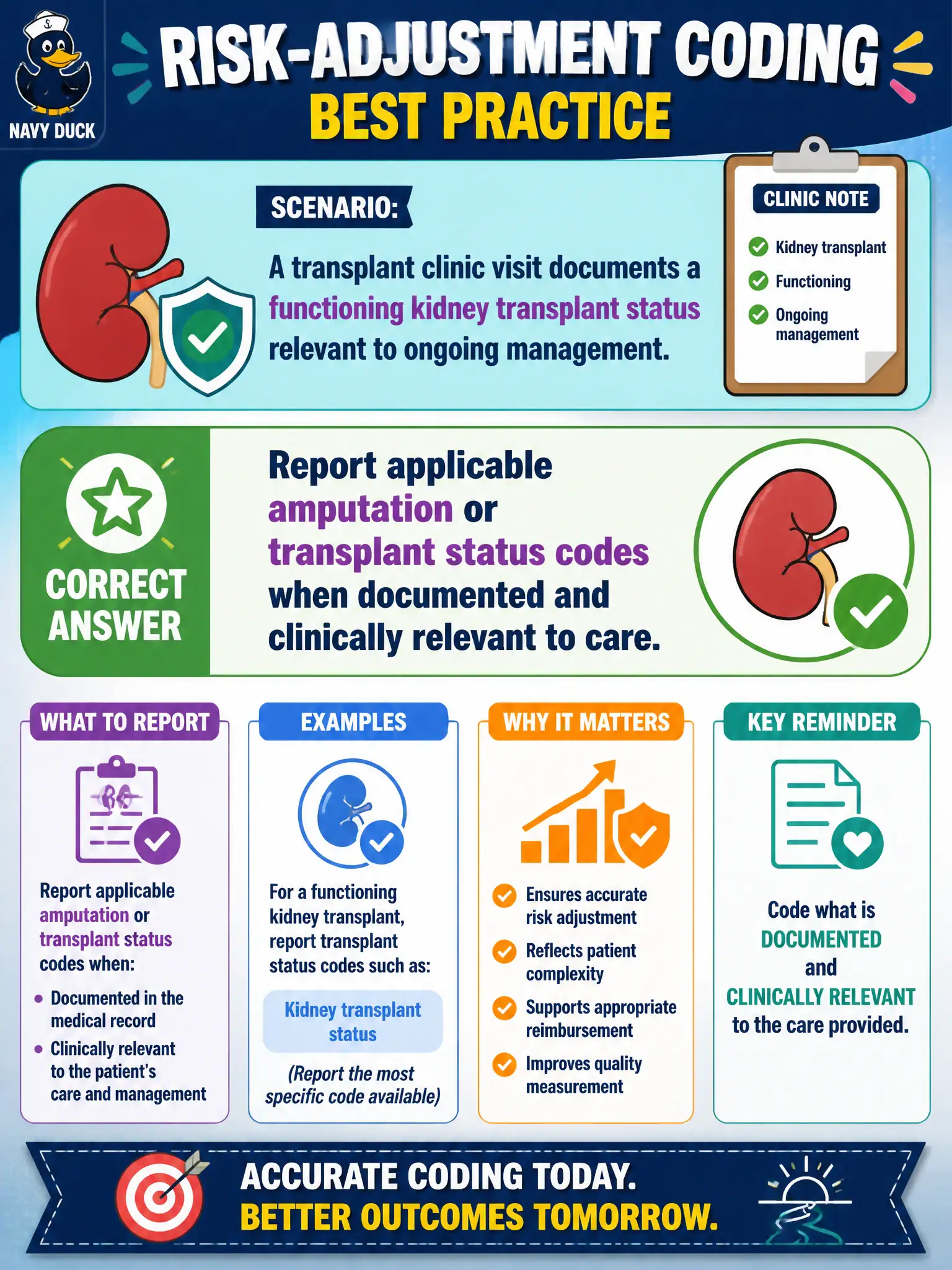
A transplant clinic visit documents a functioning kidney transplant status relevant to ongoing management. Which risk-adjustment coding practice is appropriate?
Select an answer to reveal the explanation.
Short Explanation
Status codes are the “permanent name tags” of the chart—amputation, transplant, and similar states can matter when documented and relevant. If the clinician is managing care around that status, coding it can belong in the risk story.
Full Explanation
When a transplant clinic visit documents a functioning kidney transplant status relevant to ongoing management, reporting applicable transplant (and, where documented, similar status concepts such as amputation status) codes is appropriate if clinically relevant to care. Status codes are permanent clinical name tags that can matter for risk adjustment and care context on professional claims in civic specialty clinics—not merely inpatient DRG ornaments.
Never reporting transplant or amputation status Z-codes because status codes supposedly cannot affect risk fails by concept because many status codes are risk-relevant when mapped and documented. Reporting transplant status only with inpatient facility DRG coding, never on professional claims, fails because ambulatory professional coding also reports status when appropriate. Replacing status codes with unspecified aftercare codes even when status is clearly documented fails because it discards precise status information.
Exam caveat: code status when it is documented and pertinent; do not add transplant status from an old list without current relevance/support. Operational check: for transplant follow-up visits, confirm status language in the assessment/plan and report the corresponding status ICD-10-CM alongside managed complications or immunosuppression as documented.