
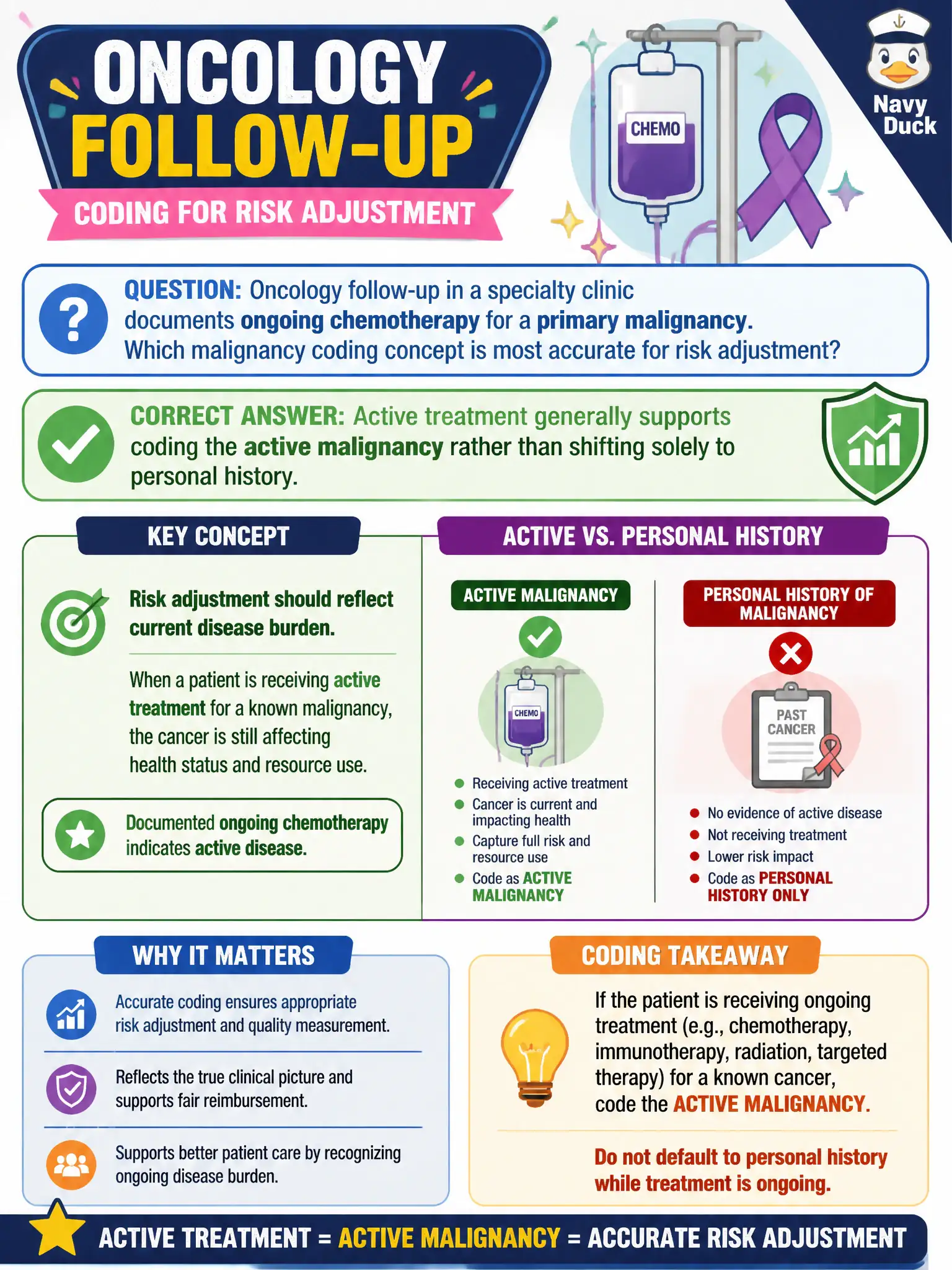
Oncology follow-up in a specialty clinic documents ongoing chemotherapy for a primary malignancy. Which malignancy coding concept is most accurate for risk adjustment?
Select an answer to reveal the explanation.
Short Explanation
If treatment is still fighting the cancer, it is usually still an active malignancy code—not a “history of” postcard. History codes fit when the disease is gone and you are only remembering it. Match the code to the treatment reality.
Full Explanation
Oncology follow-up that documents ongoing chemotherapy for a primary malignancy generally supports coding the active malignancy rather than shifting solely to personal history. Active treatment usually means the disease concept remains current for diagnosis coding and risk adjustment. Specialty clinics in civic cancer programs should match malignancy status codes to treatment reality.
Reporting only personal history whenever any past cancer diagnosis exists fails by concept because history codes are for resolved malignancy, not active treatment. Converting all active cancers to history codes after the first treatment dose fails because ongoing therapy indicates active disease management. Omitting malignancy codes during treatment visits because E/M codes supposedly carry the risk score fails because E/M CPT does not replace diagnosis-based HCC mapping.
Exam caveat: some sites of treated cancer versus history rules are nuanced (for example, certain leukemia/lymphoma conventions); apply ICD-10-CM guidelines for the specific neoplasm. Operational check: if chemotherapy/radiation/active antineoplastic therapy is documented for the primary cancer, prefer active malignancy coding and reserve history codes for completed, no-evidence-of-disease surveillance when guidelines support history.