
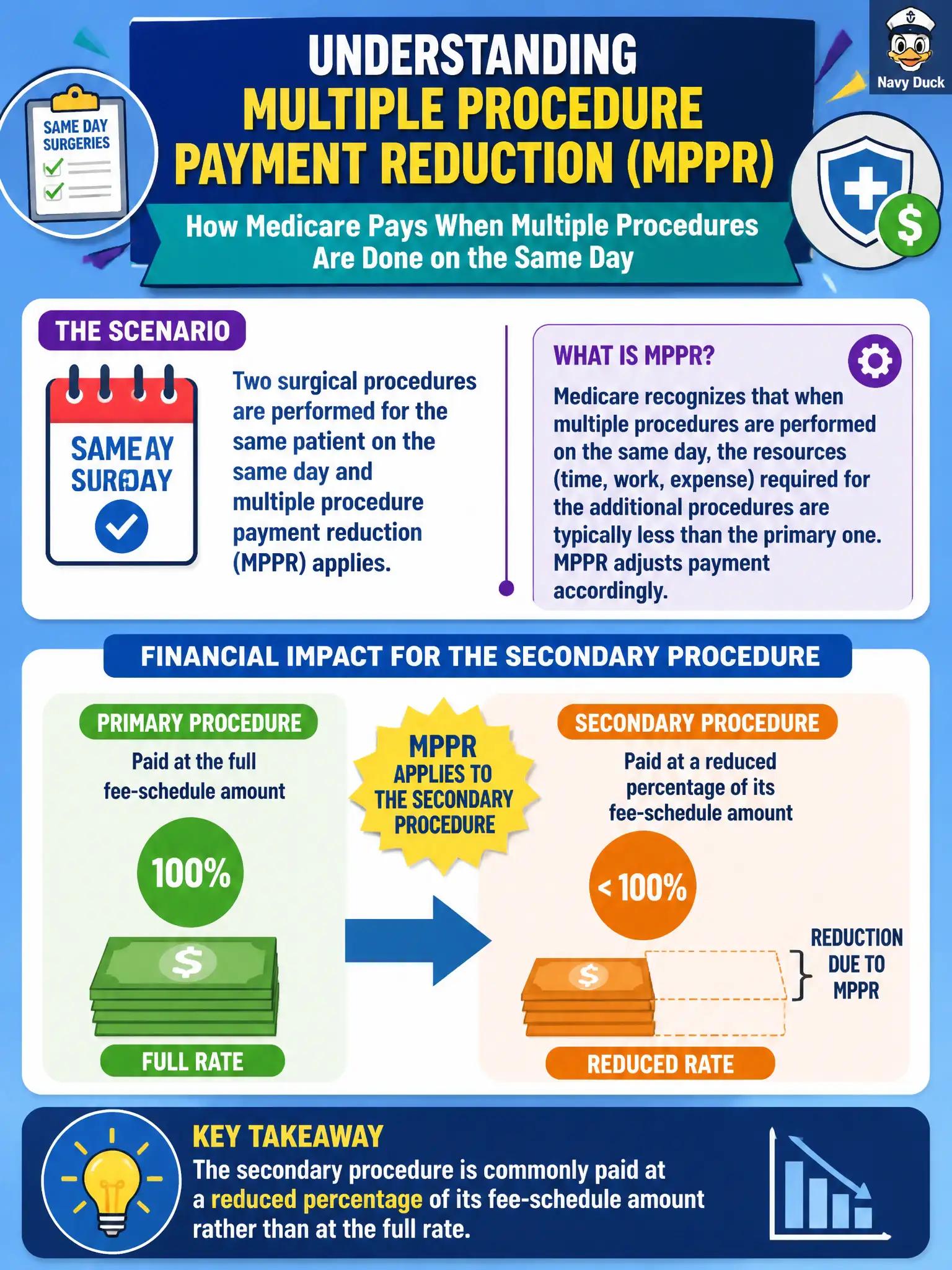
Two surgical procedures are performed for the same patient on the same day and multiple procedure payment reduction (MPPR) applies. What financial impact is expected for the secondary procedure under typical Medicare physician MPPR rules?
Select an answer to reveal the explanation.
Short Explanation
When two surgeries share the day, Medicare often pays the second one at a discount—not because the work vanished, but because overlapping practice costs are assumed. Expect a reduced percentage on the secondary line under MPPR, not a free full fee or an automatic noncover denial.
Full Explanation
When two surgical procedures are performed for the same patient on the same day and multiple procedure payment reduction applies, the secondary procedure is commonly paid at a reduced percentage of its fee-schedule amount rather than at the full rate under typical Medicare physician MPPR rules. Civic surgical practices should expect that reduction as normal pricing logic reflecting overlapping practice-expense assumptions—not as an automatic noncover denial.
Expecting both procedures always to pay at 100% with no reduction fails by concept because MPPR exists specifically to reduce secondary procedure payment. Treating the secondary procedure as automatically denied as noncovered fails because reduction is not noncoverage. Claiming MPPR increases the secondary procedure’s RVUs by 50% fails because MPPR decreases payment percentage; it does not inflate RVUs for complexity.
Exam caveat: which procedure is primary, bilateral surgery rules, and assistant surgery rules can interact with MPPR; rank procedures correctly before predicting payment. Operational check: after same-day multi-procedure claims, compare remits to expected reduced secondary percentages and appeal only if the payer applied MPPR incorrectly.