
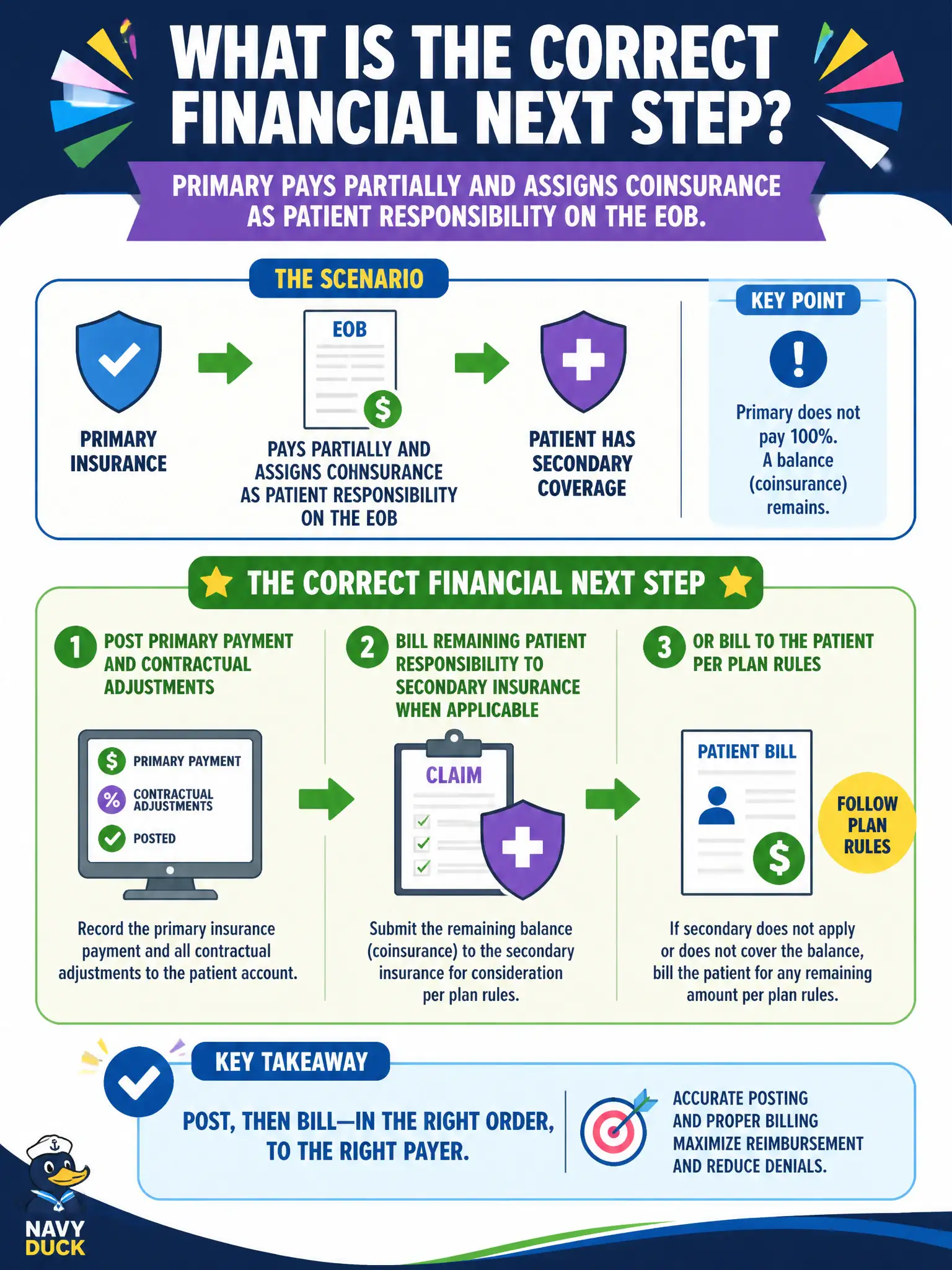
Primary insurance pays partially and assigns coinsurance as patient responsibility on the EOB. The patient also has secondary coverage. What is the correct financial next step?
Select an answer to reveal the explanation.
Short Explanation
Partial pay plus coinsurance is normal plumbing, not a crisis. Park the primary payment and adjustments, then send what’s left down the right pipe—secondary first if they have it, otherwise the patient per the plan. Skipping secondary or tossing everything to collections early leaves money and goodwill on the table.
Full Explanation
When primary insurance pays partially and assigns coinsurance as patient responsibility, and secondary coverage exists, the correct financial next step is to post the primary payment and contractual adjustments, then bill remaining patient responsibility to secondary insurance when applicable, or to the patient per plan rules. Coordination of benefits is routine plumbing in county multi-payer clinics and should not be skipped in favor of premature collections or blanket write-offs.
Ignoring EOB patient-responsibility fields and refunding the primary payment as a posting error fails by concept because partial payment plus coinsurance is normal adjudication, not proof of a posting mistake. Billing the entire original charge to collections immediately without secondary billing fails because it bypasses secondary adjudication and harms patients. Writing off coinsurance automatically for every patient with any secondary policy fails because write-offs require policy basis, not the mere existence of a secondary plan.
Exam caveat: some secondary plans carve out coinsurance differently; bill what the EOB assigns as PR only after confirming secondary rules. Operational check: post primary remits completely, generate secondary claims with primary EOB data attached as required, and statement the patient only for residual responsibility after secondary.