
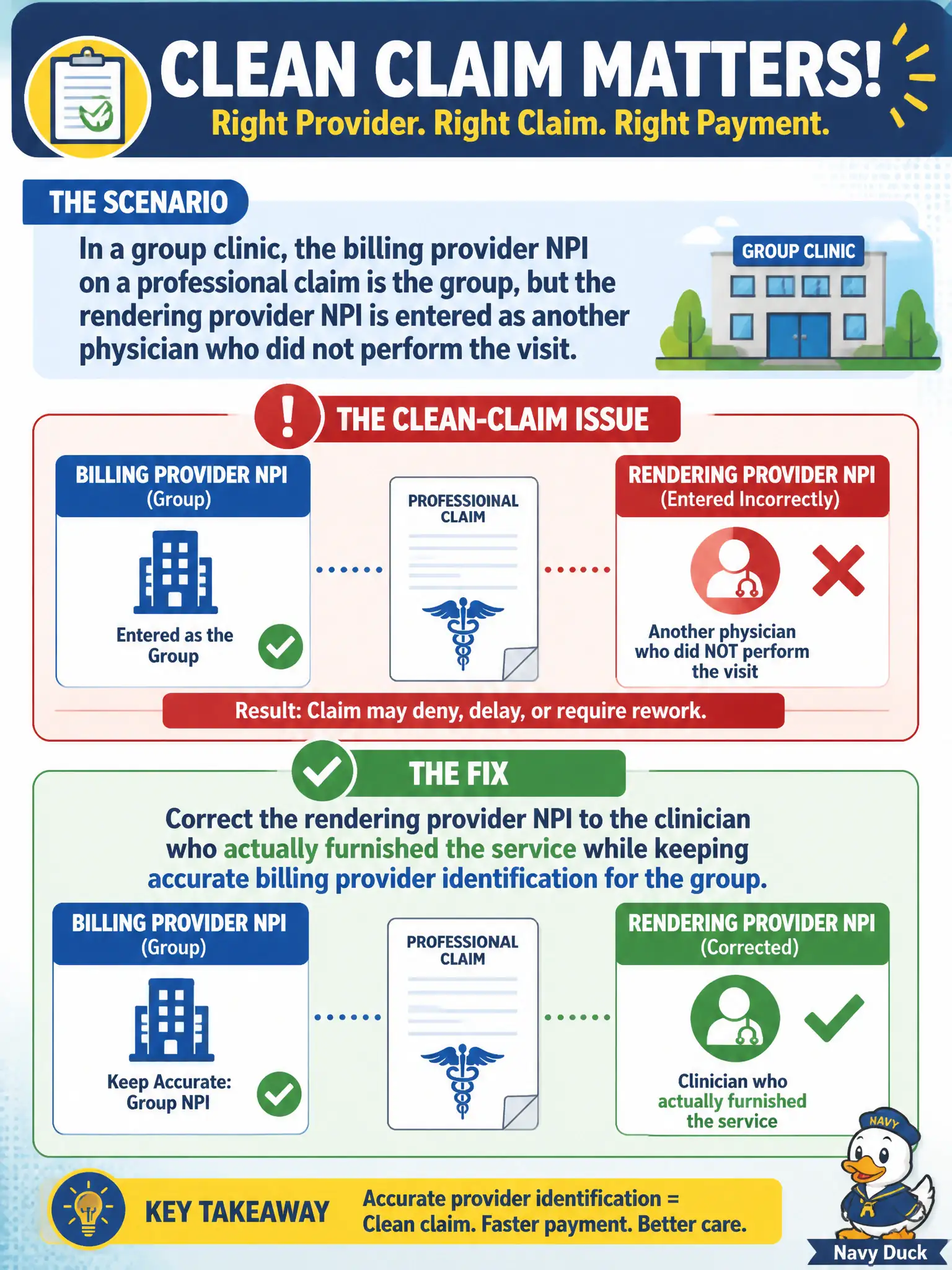
In a group clinic, the billing provider NPI on a professional claim is the group, but the rendering provider NPI is entered as another physician who did not perform the visit. What clean-claim issue must be fixed?
Select an answer to reveal the explanation.
Short Explanation
Group claims still need the real doctor’s fingerprint—the rendering NPI. If someone else’s number is sitting in that box, the claim is telling the wrong story about who did the work. Fix the rendering NPI to the clinician who actually saw the patient, and leave the group billing NPI where it belongs.
Full Explanation
On group clinic professional claims, the billing provider NPI may identify the group while the rendering provider NPI must identify the clinician who actually furnished the service. When charge entry lists another physician who did not perform the visit, the clean-claim issue is an incorrect rendering NPI. Fixing rendering identification while retaining accurate group billing identification preserves attribution integrity for civic multi-provider practices and payer enrollment edits.
Removing the rendering NPI because group billing supposedly never identifies the individual fails by concept because payers commonly require rendering provider identification on professional claims. Replacing the billing NPI with the patient’s member ID fails because member ID is not a billing provider identifier and breaks enrollment logic. Duplicating the same NPI in billing and rendering fields regardless of who saw the patient fails when the group bills as an organization and a specific clinician rendered care—or when the duplicated NPI is simply the wrong clinician.
Exam caveat: solo physician claims may show the same NPI in billing and rendering roles; group claims still need the true rendering clinician. Operational check: map scheduling provider to rendering NPI automatically, audit mismatches weekly, and correct claims before submission when coverage or float pools caused the wrong physician to populate.