
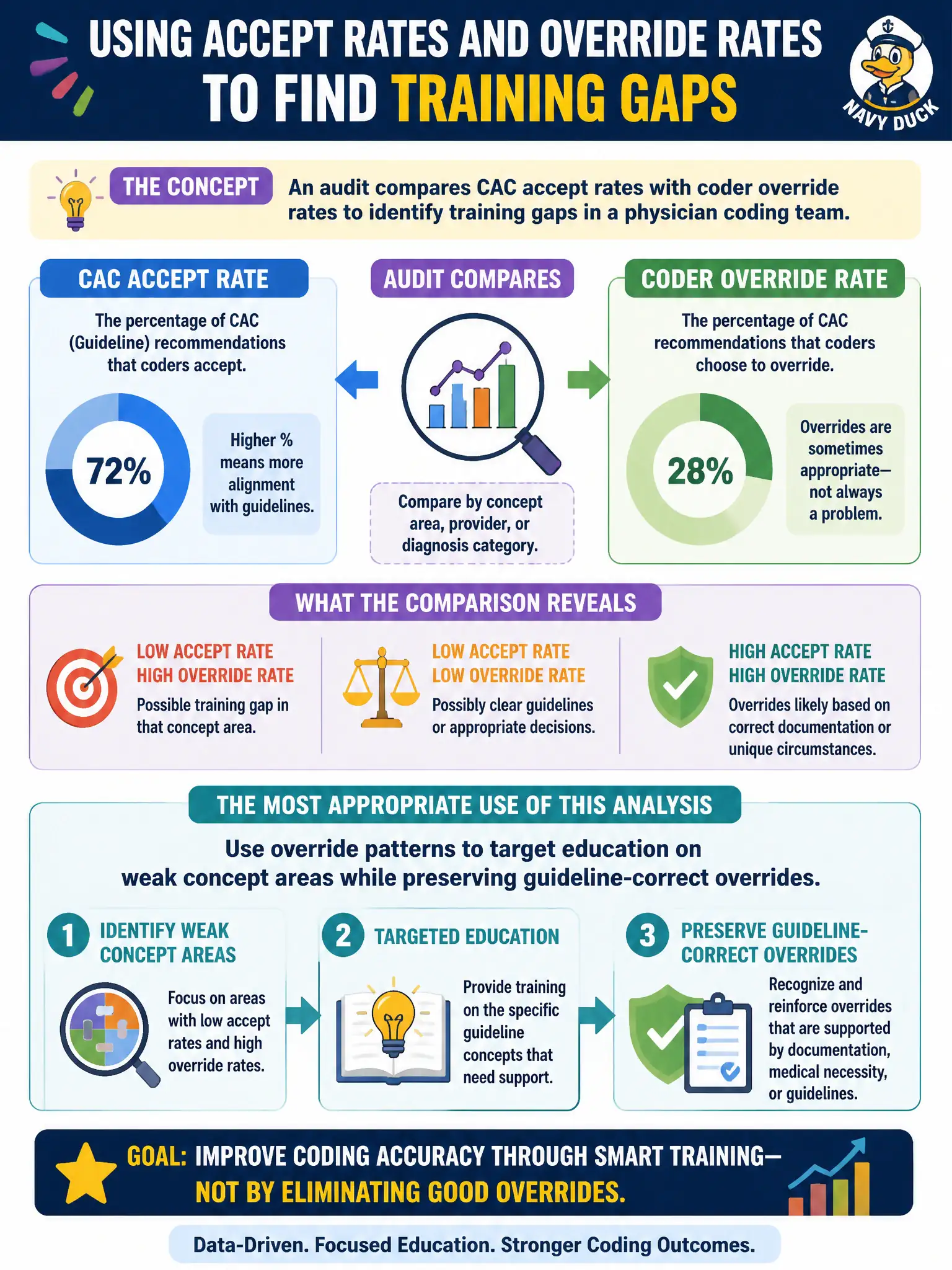
An audit compares CAC accept rates with coder override rates to identify training gaps in a physician coding team. What is the most appropriate use of that analysis?
Select an answer to reveal the explanation.
Short Explanation
Override rates are a teaching map, not a scoreboard for fear. When coders correctly reject bad engine suggestions, that is quality—not sabotage. Dig into the patterns, train the gaps, and keep the good overrides.
Full Explanation
CAC analytics that compare accept rates with coder override rates can reveal where engines systematically misfire and where staff need guideline refreshers. In a physician coding team supporting a county clinic network, the most appropriate use of that analysis is to target education on weak concept families while preserving guideline-correct overrides. Punishing correct rejections of unsupported CAC suggestions would incentivize blind acceptance, inflate accept-rate vanity metrics, and increase compliance risk for public programs. Leadership should pair dashboard metrics with quality review of a sample of both accepts and overrides. Punishing every override equally—including overrides that correctly reject unsupported CAC suggestions—fails as a perverse incentive against accurate coding. Raising accept-rate targets until staff stop questioning the engine fails compliance culture and substitutes automation deference for Official Guidelines. Disabling overrides so dashboards show 100% CAC acceptance fails by eliminating the human control that ethical coding requires. Exam caveat: high accept rates are not a quality KPI unless linked to accuracy audits; CCS-P-aligned operations favor coding accuracy and ethical override behavior over engine deference. Operational check: stratify overrides by concept family and payer, audit a statistically useful sample for correctness, retrain on true knowledge gaps, celebrate and protect correct overrides in performance reviews, and report accuracy and denial-prevented outcomes—not raw accept rate—to municipal clinic leadership.