
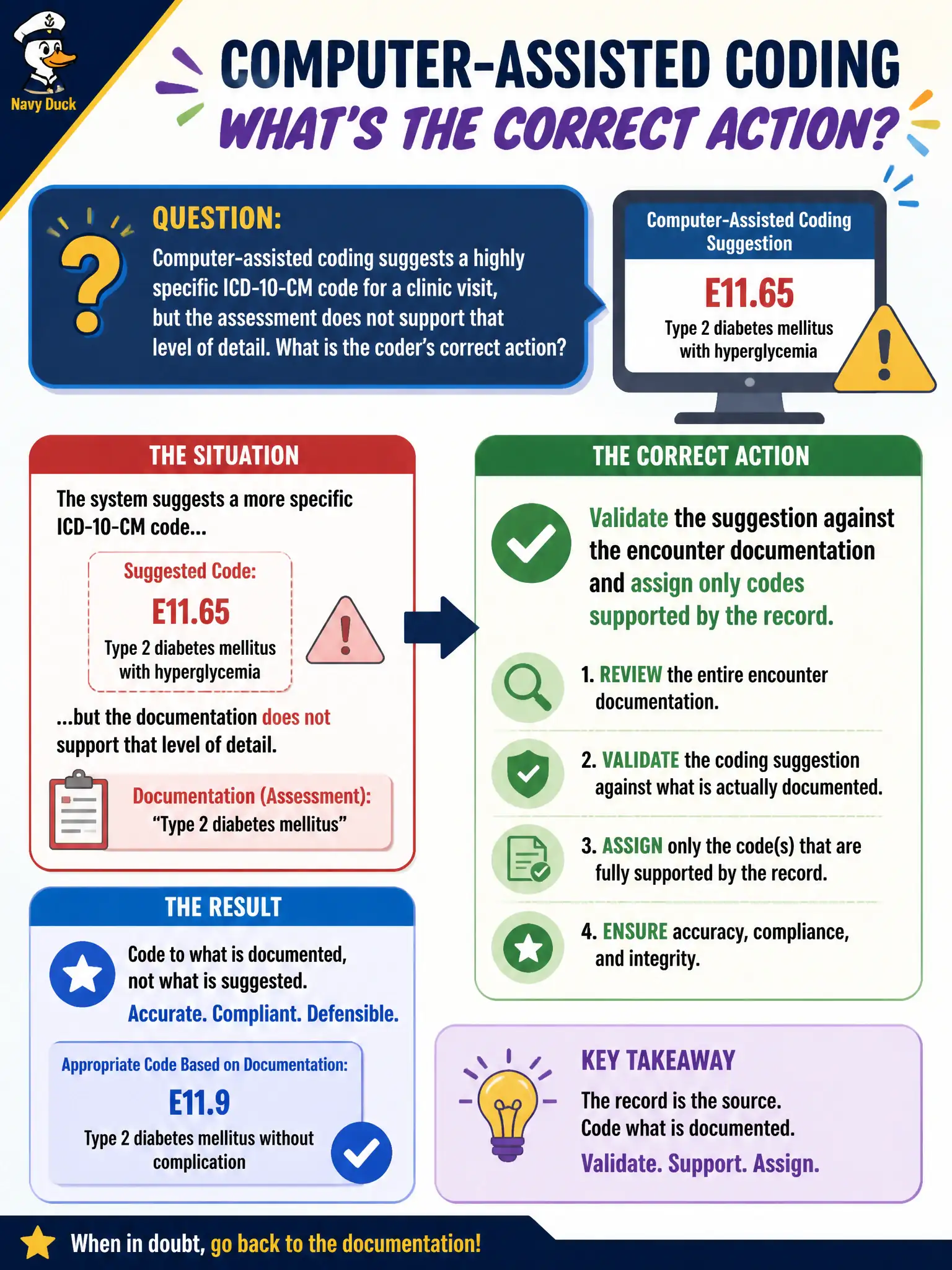
Computer-assisted coding suggests a highly specific ICD-10-CM code for a clinic visit, but the assessment does not support that level of detail. What is the coder’s correct action?
Select an answer to reveal the explanation.
Short Explanation
CAC is a helpful highlighter, not an autopilot. If the engine offers a ultra-specific code the assessment never supports, you validate and override. Documentation—not the algorithm—owns the final code.
Full Explanation
Computer-assisted coding and NLP tools propose codes from language patterns, but final ICD-10-CM assignment for physician encounters remains a human coding responsibility. When CAC suggests a highly specific code that the assessment does not support, the CCS-P coder validates the suggestion against the encounter documentation and assigns only codes supported by the record—or queries when clinical indicators warrant clarification. Blind acceptance of unsupported specificity creates compliance risk for public clinics and quality reporting. Accepting every CAC suggestion to maximize engine accept rates fails because accept-rate KPIs are not coding authority. Deleting the assessment to keep the CAC code so analytics look clean fails by falsifying the record trail. Coding the CAC suggestion plus every problem-list entry regardless of today’s documentation fails encounter-based coding rules. Exam caveat: higher specificity is correct only when documented; engines often over-specify from templated or historical text. Operational check: compare CAC output line-by-line to today’s assessment/plan, reject unsupported specificity, query when indicators exist without a stated diagnosis, and report chronic false-positive CAC patterns to the county HIM analytics lead.