
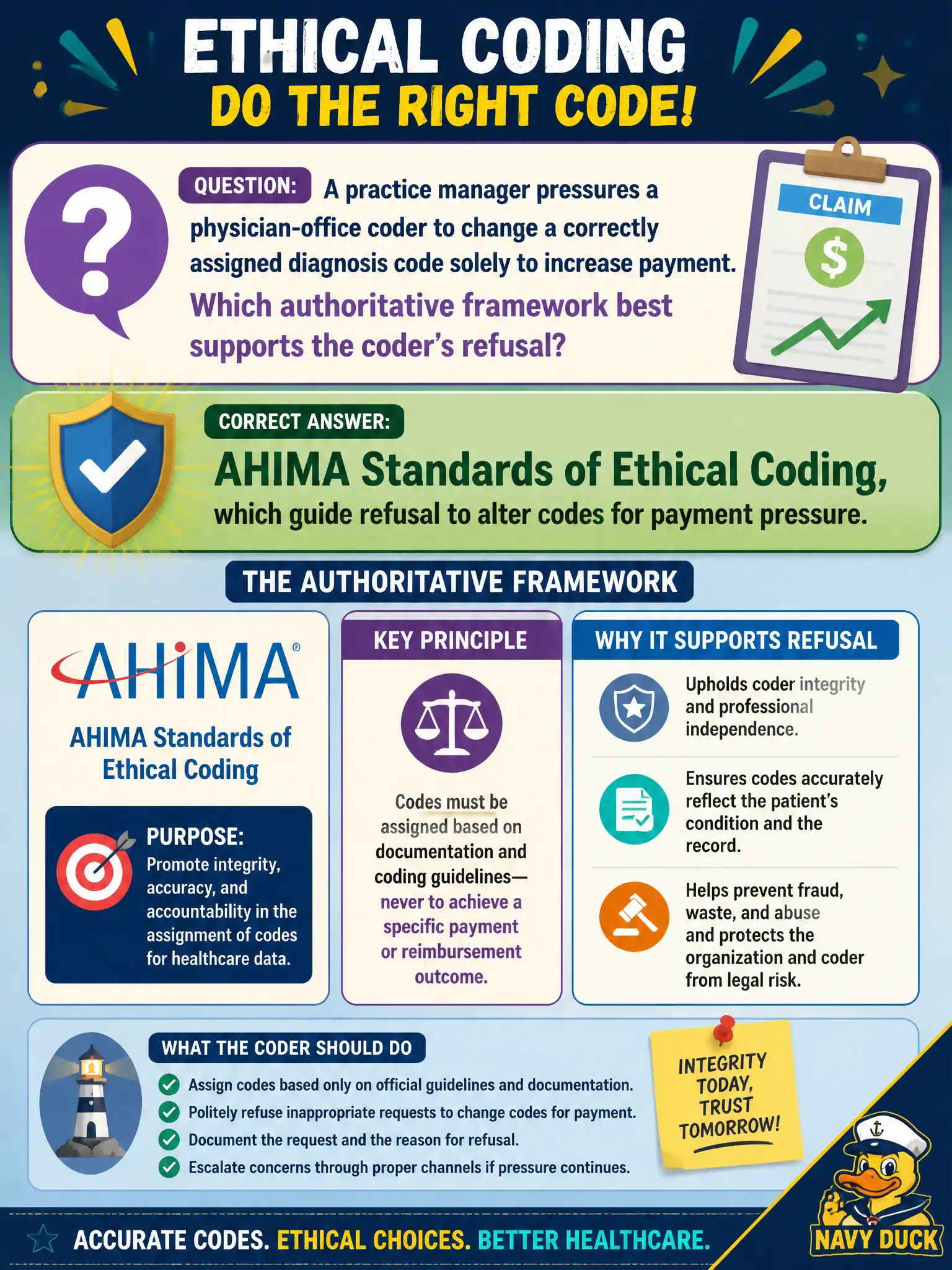
A practice manager pressures a physician-office coder to change a correctly assigned diagnosis code solely to increase payment. Which authoritative framework best supports the coder’s refusal?
Select an answer to reveal the explanation.
Short Explanation
Payment pressure is not a coding guideline. AHIMA’s Standards of Ethical Coding give you a clear backbone: do not change accurate codes just to juice reimbursement. Protect the record and the patient—money pressure does not rewrite ethics.
Full Explanation
AHIMA Standards of Ethical Coding require accurate, complete coding based on documentation and official guidelines, and they support refusing requests to manipulate codes solely for payment. When a practice manager pressures a physician-office coder in a public clinic to change a correctly assigned diagnosis solely to increase payment, those ethical standards—together with applicable law and organizational compliance policy—are the professional framework that best supports refusal. The coder should escalate through compliance channels rather than alter codes under financial pressure. Marketing ROI targets from the business office fail as coding authority and incentivize unethical upcoding. A competing coder’s personal preference sheet with no organizational adoption fails as informal non-authority. An unsigned sticky note of higher-paying codes fails as an illegitimate shadow chargemaster and a compliance red flag. Exam caveat: ethical refusal is not optional courtesy—unsupported code changes for payment can create false-claims exposure for the civic practice and the individuals involved. Operational check: decline the change in writing to the compliance mailbox, preserve the original supported codes, reference AHIMA ethical standards and clinic policy, and request a documented compliance determination before any code alteration.