
In a teaching clinic billing Medicare for a resident-involved E/M visit, whose documentation and presence rules primarily determine whether the service is billable as a teaching-physician professional service?
Select an answer to reveal the explanation.
Short Explanation
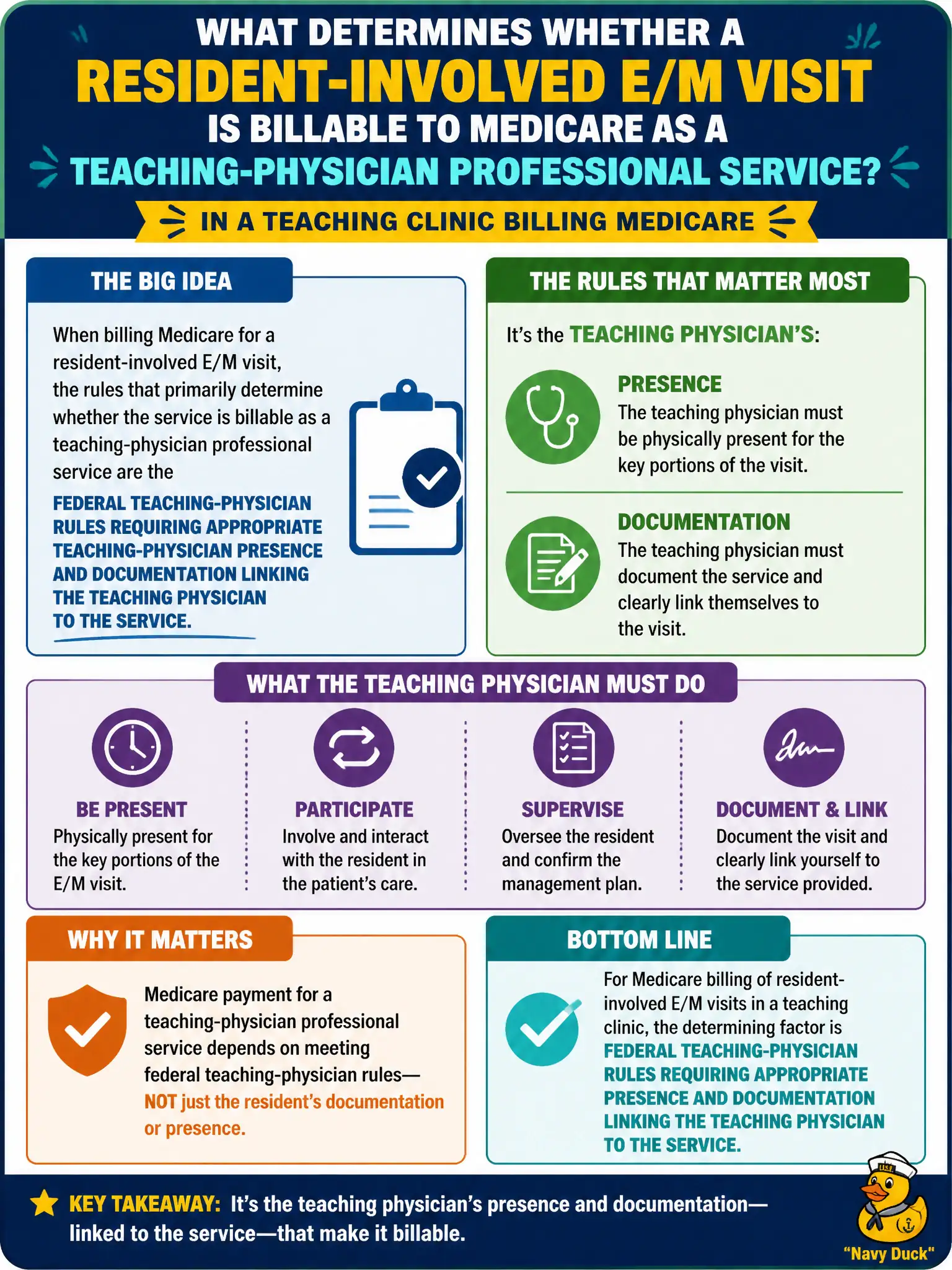
Residents write drafts; Medicare still wants the attending’s fingerprints on the billable service. Federal teaching-physician rules decide if that visit can go out under the teaching physician.
Full Explanation
Medicare teaching-physician regulations specify when resident-involved services are billable under the teaching physician, including presence and documentation requirements that link the teaching physician to the key portions of the E/M service. In a teaching civic clinic billing Medicare, those federal teaching-physician rules—not the resident note alone—primarily determine whether the encounter is billable as a teaching-physician professional service. Coders must validate presence/documentation attestations before releasing the claim. Relying only on the resident’s note fails because a resident note alone is generally insufficient to support teaching-physician billing. Applying state board of nursing rules for resident supervision fails by using the wrong regulatory framework for physician resident services. Trusting an encoder’s default teaching flag without chart review fails because software flags do not prove presence or linking documentation. Exam caveat: primary-care exception and specialty-specific teaching nuances exist—know when limited exceptions apply rather than assuming one presence standard fits every clinic service. Operational check: confirm teaching-physician presence pathway used, verify linking attestation language in the EHR, ensure the billable provider is the teaching physician under Medicare rules, and sample teaching claims in the municipal compliance audit each month.