
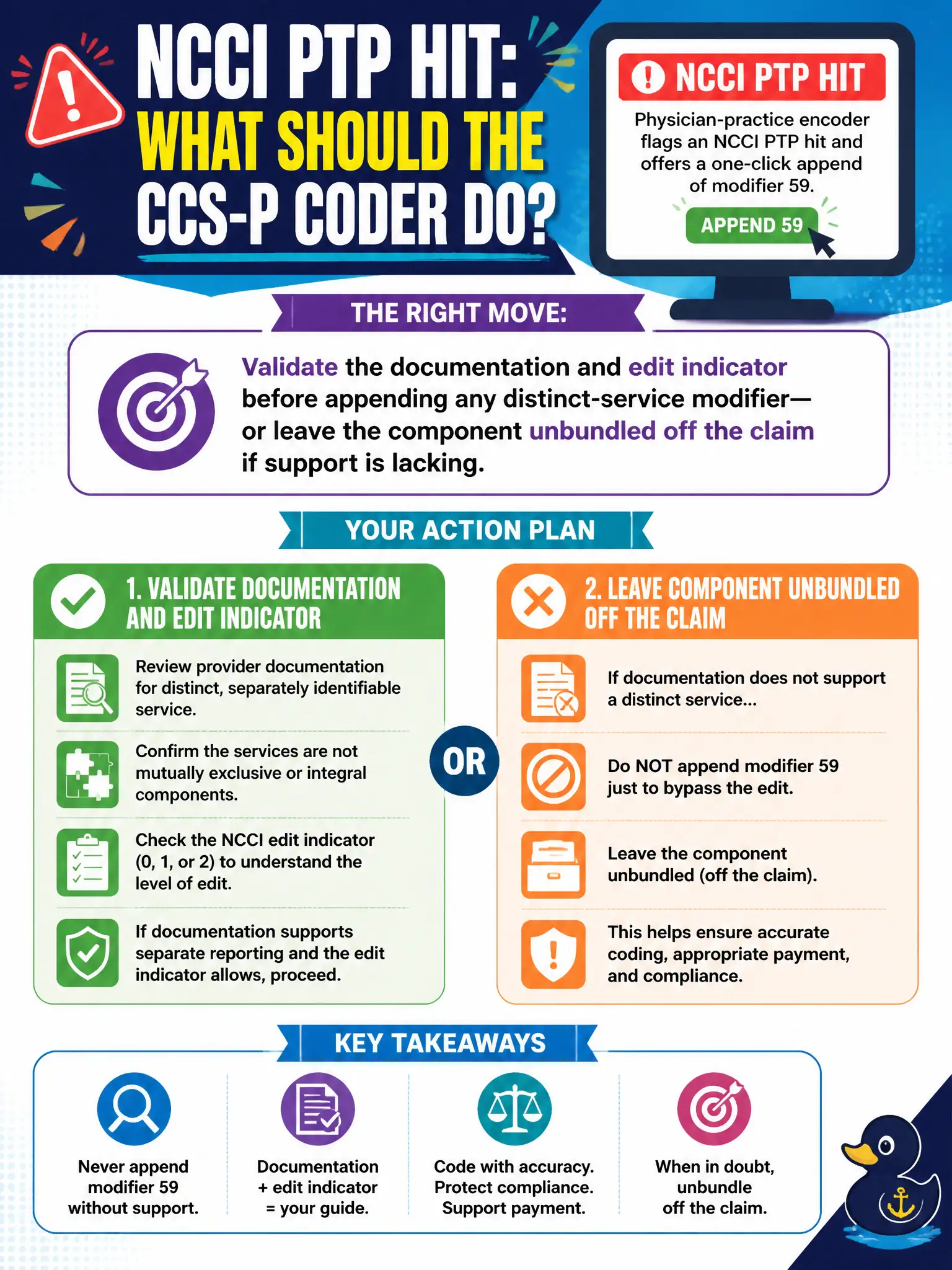
A physician-practice encoder flags an NCCI PTP hit and offers a one-click append of modifier 59. What should the CCS-P coder do?
Select an answer to reveal the explanation.
Short Explanation
One-click 59 is tempting, like accepting every GPS shortcut through a lake. Open the note, check the indicator, and only then decide—or drop the bundled piece.
Full Explanation
Physician-practice encoders that surface NCCI PTP alerts and offer one-click modifier 59 are workflow aids, not CMS publications and not a substitute for coding judgment. In a county multi-specialty clinic, the CCS-P coder must validate two gates before any distinct-service modifier: whether the published modifier indicator permits override, and whether documentation supports a truly distinct procedural service. If either gate fails, the coder leaves the component unbundled off the claim (reports the comprehensive payable service only) rather than accepting an automated bypass. Always accepting the encoder’s modifier suggestion to keep claims moving fails because speed does not create distinctness and auto-59 is a classic compliance finding. Deleting the Column 1 code whenever any edit appears fails by discarding the comprehensive service that should usually remain when a component is bundled. Forwarding without review because encoders are “authoritative CMS publications” fails by mistaking vendor software for federal edit policy. Exam caveat: indicator “0” cannot be overridden even if the encoder suggests a modifier; indicator “1” still needs chart support matched to 59 or the appropriate X{EPSU} modifier under payer preference. Operational check: open the note and the current DOS PTP indicator, refuse one-click 59 when support is absent, document the accept/reject decision on the civic coding worksheet, and escalate recurring auto-modifier prompts to compliance for scrubber rule redesign.