
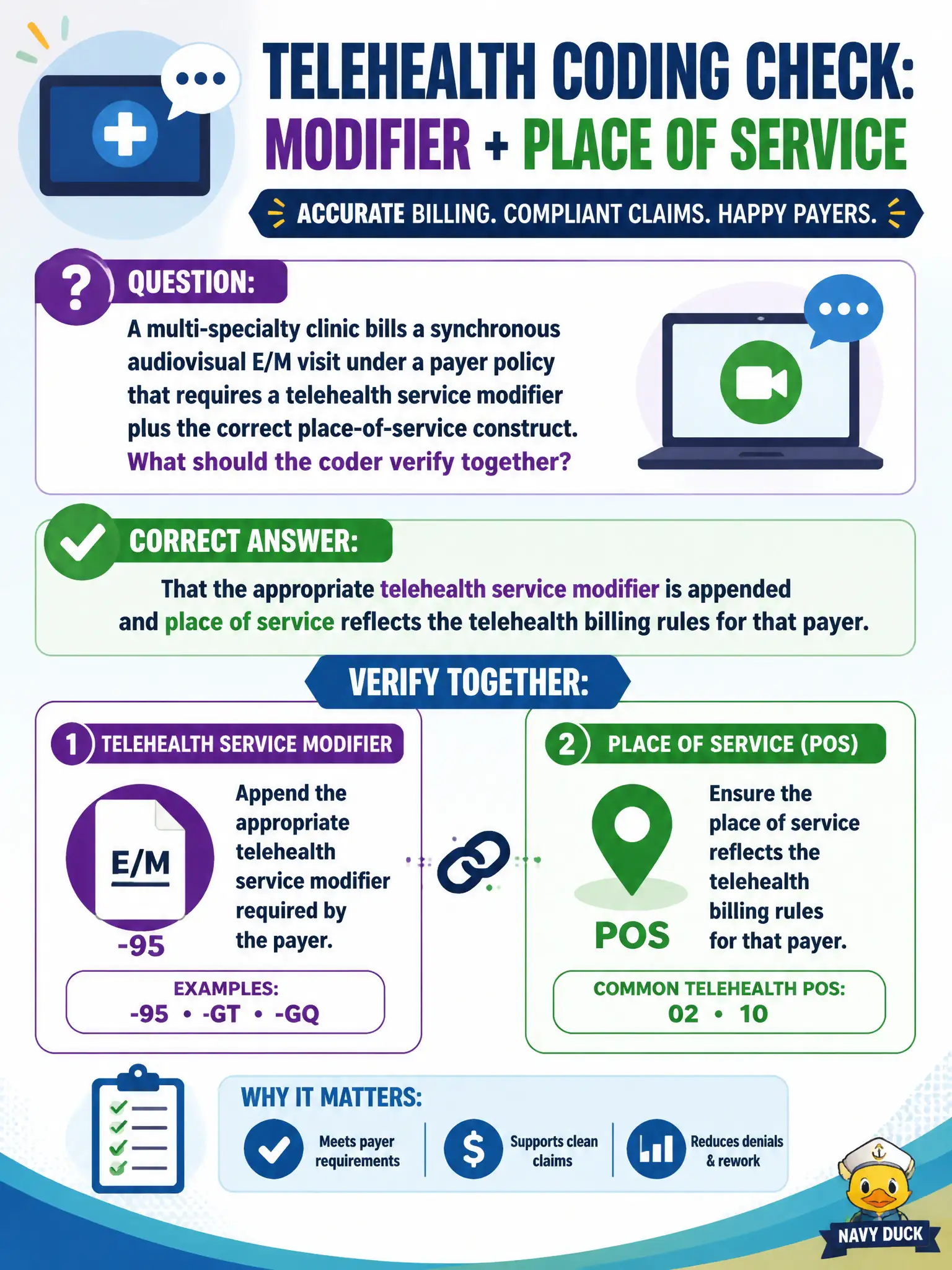
A multi-specialty clinic bills a synchronous audiovisual E/M visit under a payer policy that requires a telehealth service modifier plus the correct place-of-service construct. What should the coder verify together?
Select an answer to reveal the explanation.
Short Explanation
Video visits are a two-knob radio: service modifier and place of service both have to be tuned for that payer. You do not turn the visit into a hospital DRG, slap on reduced-services, or leave POS blank and hope the modifier carries the whole song.
Full Explanation
For a synchronous audiovisual E/M billed under a payer policy that requires a telehealth service modifier plus the correct place-of-service construct, verify both knobs together: append the appropriate telehealth service modifier and ensure place of service reflects that payer’s telehealth billing rules. Dual compliance keeps virtual access programs for civic patients payable and measurable without converting outpatient video care into inpatient or reduced-service fiction.
Assigning only a facility DRG because video visits are always hospital inpatient services misstates outpatient telehealth as inpatient prospective payment. Adding modifier 52 because telehealth is inherently a reduced service invents reduction without elective incomplete procedural work. Omitting place of service so the modifier alone defines the setting leaves claims incomplete under payer POS requirements.
Exam caveat: POS values (home versus clinic originating sites) and modifier sets differ by payer and by date of service rules. Operational check: confirm audio-video modality, append the required telehealth modifier, set POS per payer telehealth policy, level the E/M by MDM or time, and retain modality and location documentation for audit.