
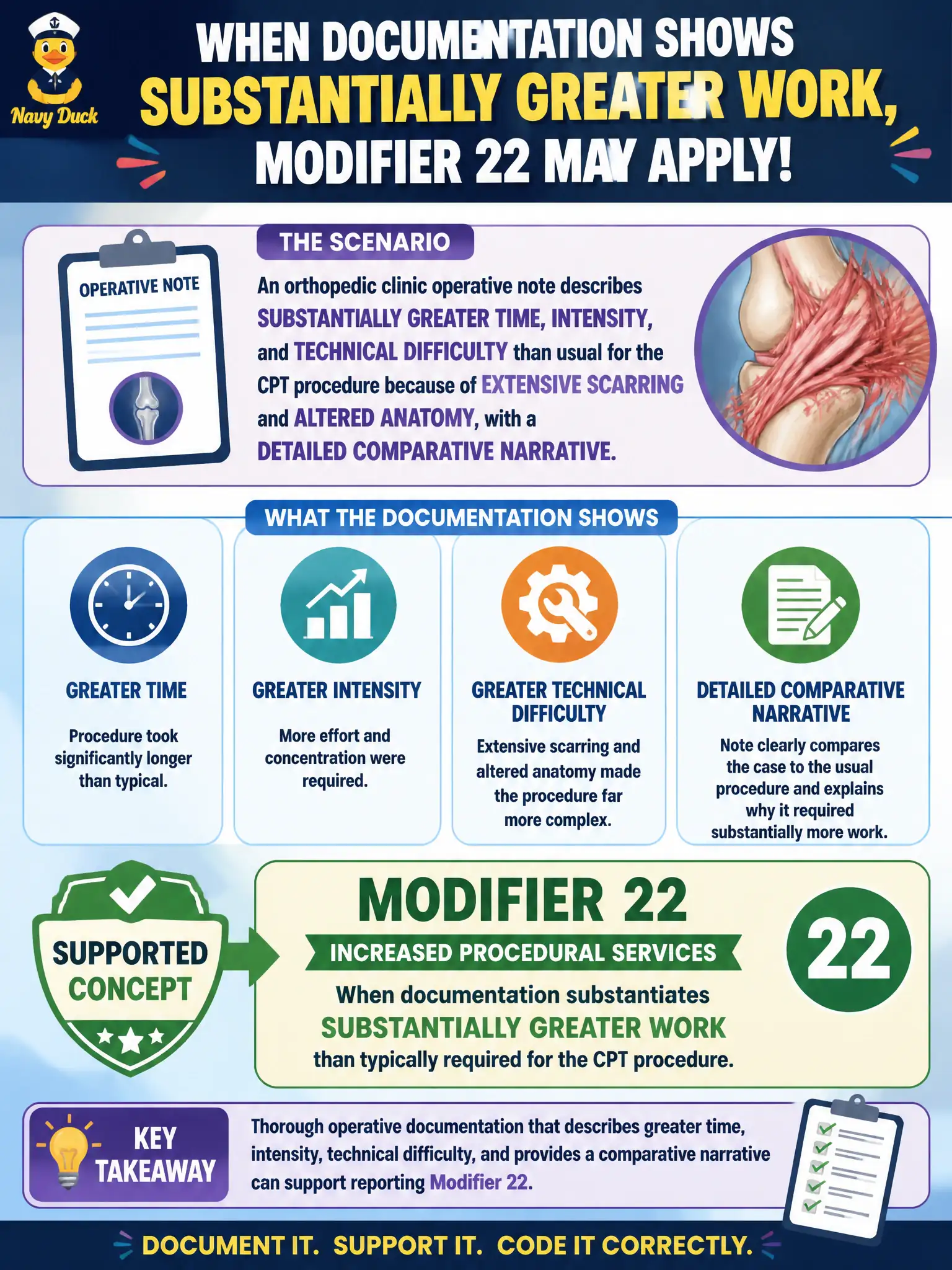
An orthopedic clinic operative note describes substantially greater time, intensity, and technical difficulty than usual for the CPT procedure because of extensive scarring and altered anatomy, with a detailed comparative narrative. Which modifier concept may be supported?
Select an answer to reveal the explanation.
Short Explanation
Extra struggle is not the same as doing less, listing the code twice, or unbundling. When the note proves the case was way harder than typical—and explains why—modifier 22 is the increased-service concept payers expect to see with that story.
Full Explanation
Modifier 22 may be supported when an orthopedic clinic operative note describes substantially greater time, intensity, and technical difficulty than usual for the CPT procedure because of extensive scarring and altered anatomy, with a detailed comparative narrative. Increased-procedural-service reporting should be exceptional and well evidenced so community surgical claims seeking additional payment remain credible to public and commercial payers.
Modifier 52 because greater difficulty always means the service was reduced claims the opposite of increased work. Modifier 51 because increased work is reported by listing a second identical procedure code invents duplicate coding instead of increased-service reporting. Modifier 59 because scarring automatically creates a distinct procedural service confuses anatomic difficulty with a separately reportable distinct procedure.
Exam caveat: many payers require a special report comparing typical versus actual work and may still deny additional payment—documentation is necessary but not sufficient. Operational check: quantify extra time and technical factors, compare to the usual service, append modifier 22 only when substantially greater work is clear, attach the comparative narrative, and avoid 52/51/59 as substitutes for increased difficulty.