
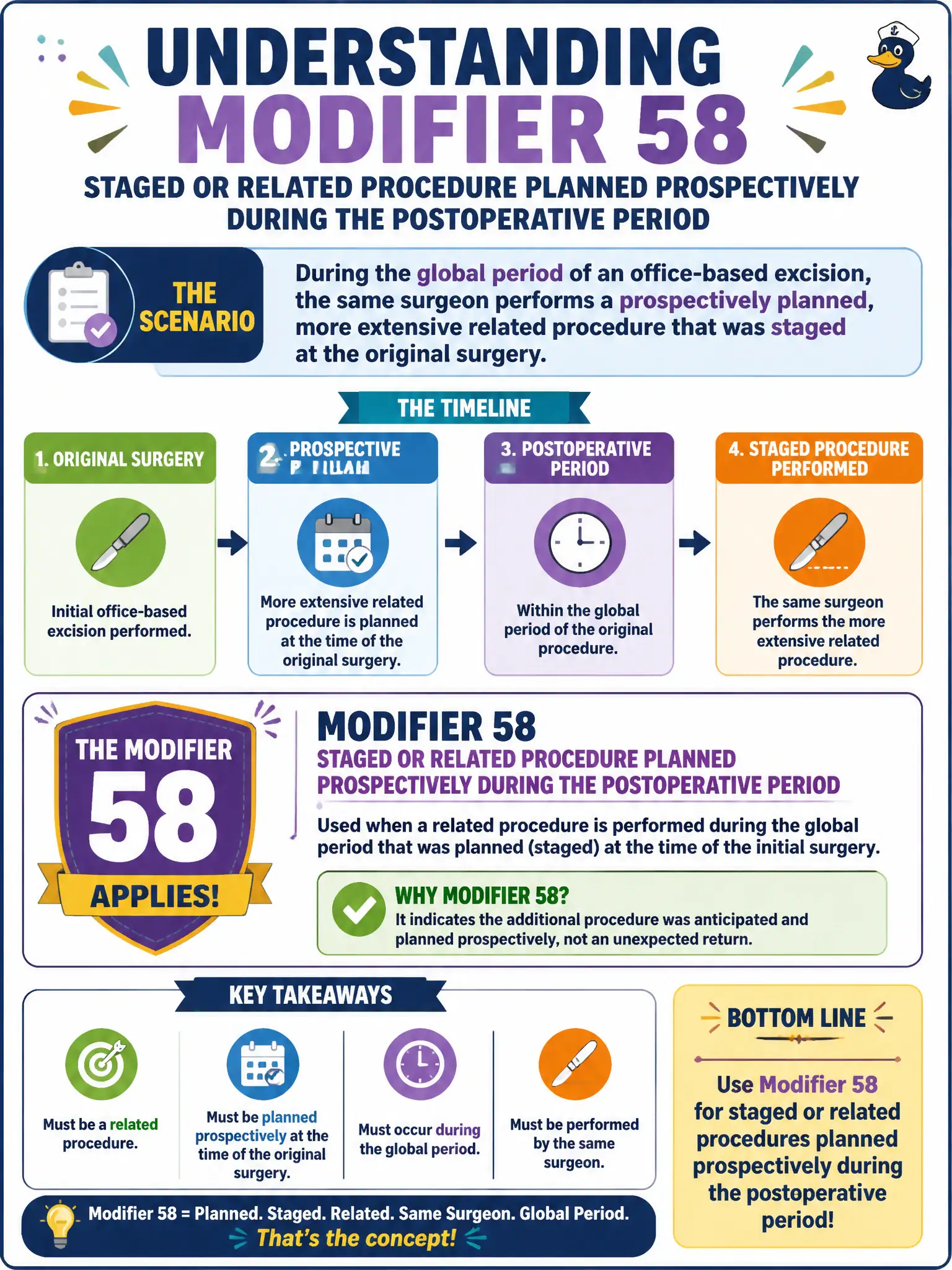
During the global period of an office-based excision, the same surgeon performs a prospectively planned, more extensive related procedure that was staged at the original surgery. Which modifier concept applies?
Select an answer to reveal the explanation.
Short Explanation
Staged work that was on the roadmap from day one is not a surprise trip back for a complication. Modifier 58 is the ‘we planned the sequel’ idea—more extensive or staged related care inside the global, not 78, 79, or an E/M modifier.
Full Explanation
Modifier 58 reports a staged or related procedure during the postoperative period that was planned prospectively at the time of the original surgery (or is more extensive/therapeutic than the original as defined). Staged roadmaps in community surgical oncology and reconstructive pathways rely on 58 to distinguish planned sequels from complication returns or unrelated operations.
Modifier 78 for return to the operating room for a related complication only addresses unplanned complication returns, not prospectively planned staged work. Modifier 79 for an unrelated procedure during the postoperative period is for unrelated problems, not staged related plans. Modifier 24 for an unrelated E/M service during the global period applies to unrelated E/M visits, not staged surgical procedures.
Exam caveat: the prospective plan should be evident in the original operative documentation or staging note. Operational check: confirm global period, related staged/more extensive intent planned earlier, append modifier 58 to the staged procedure, and avoid 78/79/24 as stand-ins when the clinical story is a planned sequel Accurate modifier selection in county and community practices also reduces avoidable denials that divert staff time from patient access..