
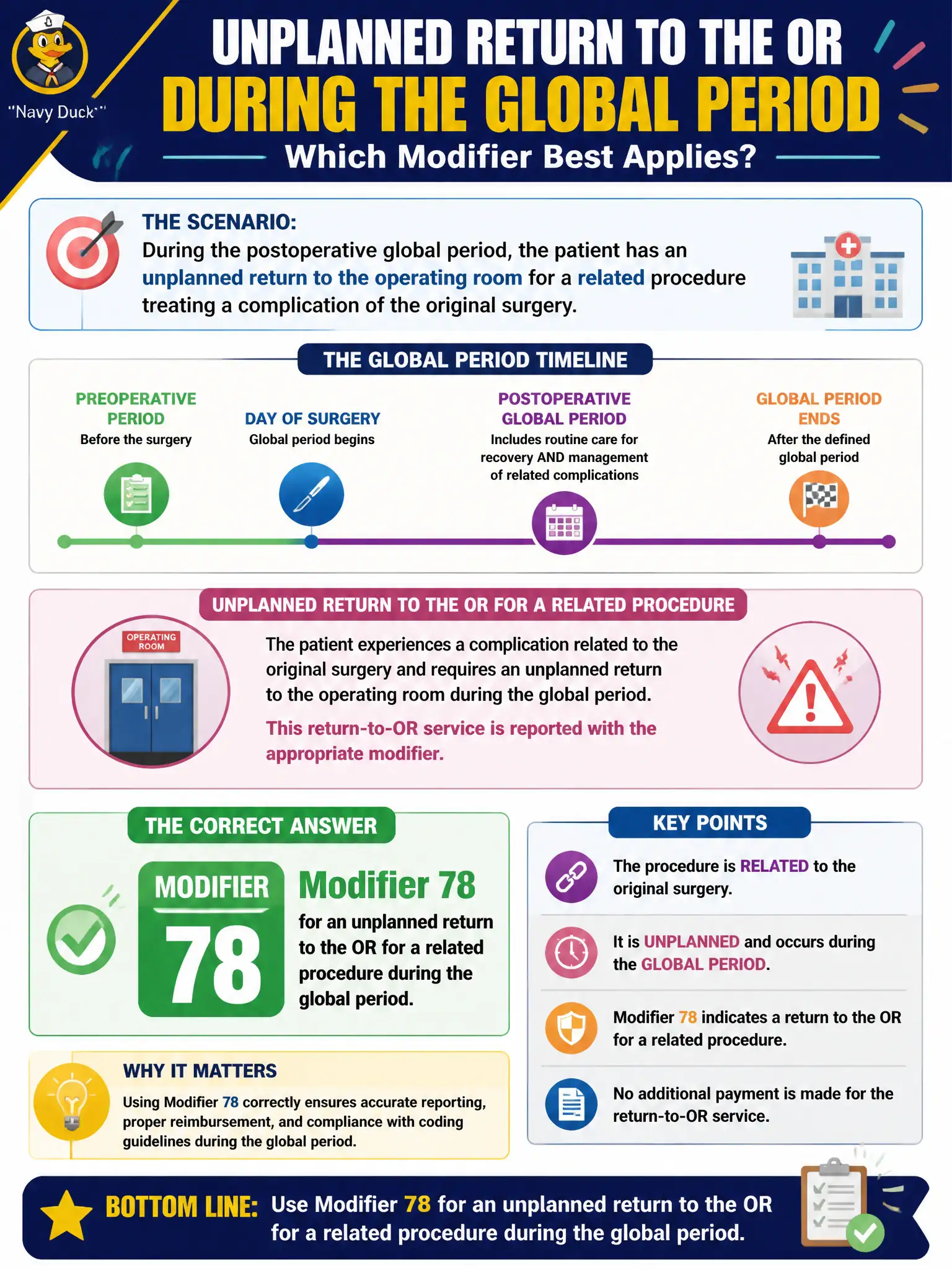
During the postoperative global period, the patient has an unplanned return to the operating room for a related procedure treating a complication of the original surgery. Which modifier best applies to that return-to-OR service?
Select an answer to reveal the explanation.
Short Explanation
Complication drags the patient back to the OR related to the original surgery—modifier 78. That’s the unplanned return ticket during the global window.
Full Explanation
Modifier 78 applies to an unplanned return to the operating room for a related procedure treating a complication during the postoperative global period. That concept distinguishes complication-driven returns from staged planned work or unrelated procedures. Transparent 78 reporting in community surgical programs supports complication surveillance without pretending the return was unrelated or prospectively staged.
Modifier 79 because complications are always treated as unrelated procedures misstates related complication care as unrelated. Modifier 58 for staged procedures planned prospectively at the original surgery is for planned staged/related more extensive work, not unplanned complication returns. Modifier 24 on the surgical code for the return to the OR misuses an unrelated postoperative E/M modifier on a surgical return-to-OR line.
Exam caveat: payer definitions of “operating room” and global days still control whether 78 applies—office suture removal for a minor issue is not automatically 78. Operational check: confirm global period, relatedness to the original surgery, unplanned return for complication, OR/procedure-room setting as required, append modifier 78, and narrate the complication clearly for audit.