
A specialist sees a hospitalized patient after another physician requests an opinion, examines the patient, and sends a written report back, and the payer still recognizes consult codes. Which documentation set best supports reporting a consultation rather than shared ongoing care?
Select an answer to reveal the explanation.
Short Explanation
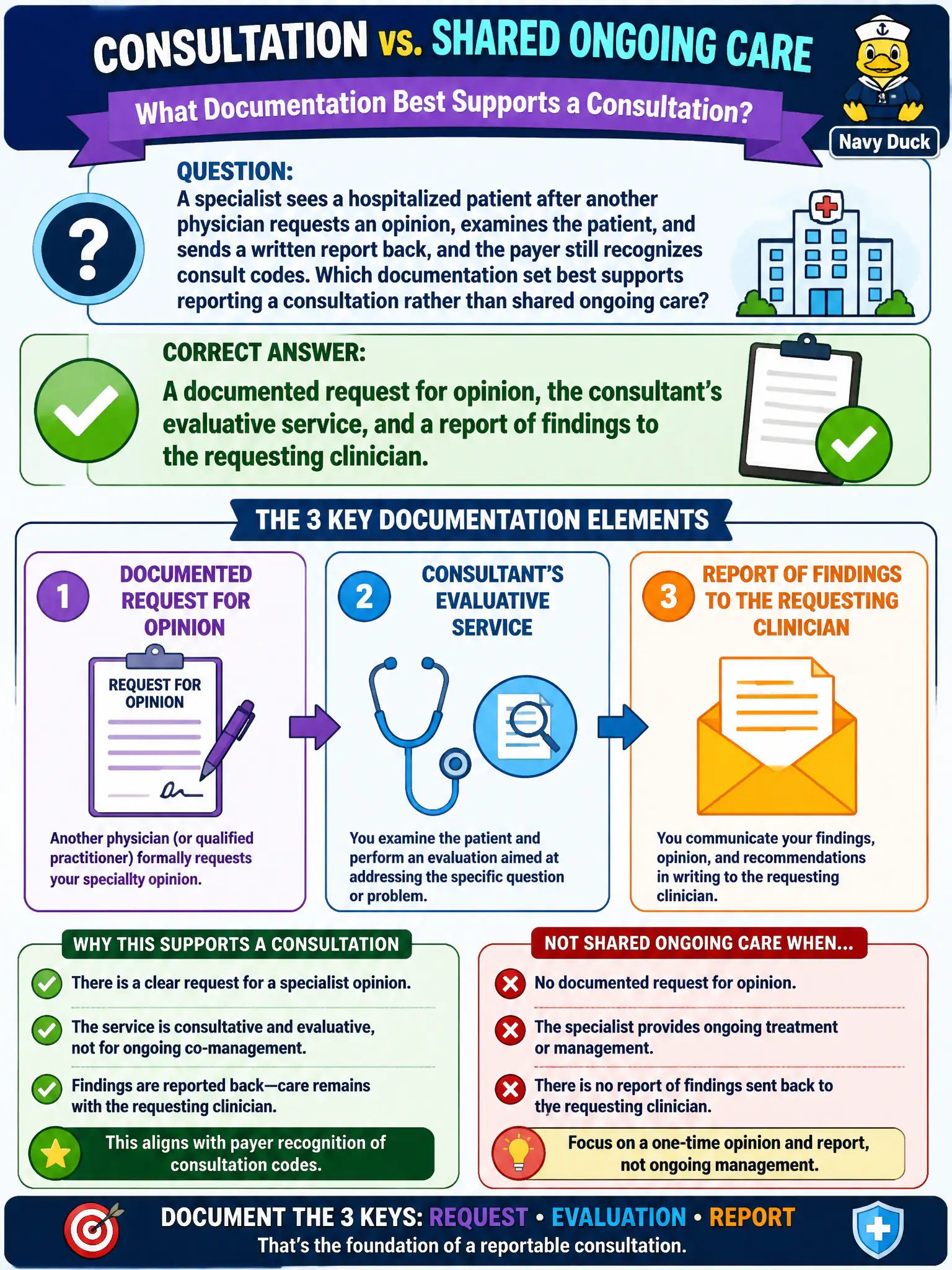
A real consult is a three-beat song: someone asks for your take, you evaluate, and you write back. Without request, opinion work, and a report, it starts looking like shared care—not a consult. Keep that paper trail clean.
Full Explanation
Consultation reporting (when the payer still recognizes consult codes) rests on a documented request for opinion, the consultant’s evaluative service, and a report of findings to the requesting clinician. That three-part documentation set distinguishes a true consult from shared ongoing care in community hospitals and specialty clinics.
Only a verbal hallway chat with no charted request or written report fails consult documentation standards. Assumption of complete transfer of care with the consultant becoming the attending of record converts the encounter into ongoing management rather than consultation. Routine subsequent hospital visits with no consult request in the record support subsequent hospital care, not consult coding.
Exam caveat: many Medicare Part B policies no longer pay CPT consultation codes—confirm payer recognition before selecting consult families. Operational check: locate the request, perform and document the evaluation, send or chart a report to the requester, and only then consider consult codes if the payer still accepts them;In public and nonprofit clinics, accurate professional coding also supports transparent stewardship of Medicaid, Medicare, and grant-funded visits, reducing rework from denials that delay revenue needed for community access..