
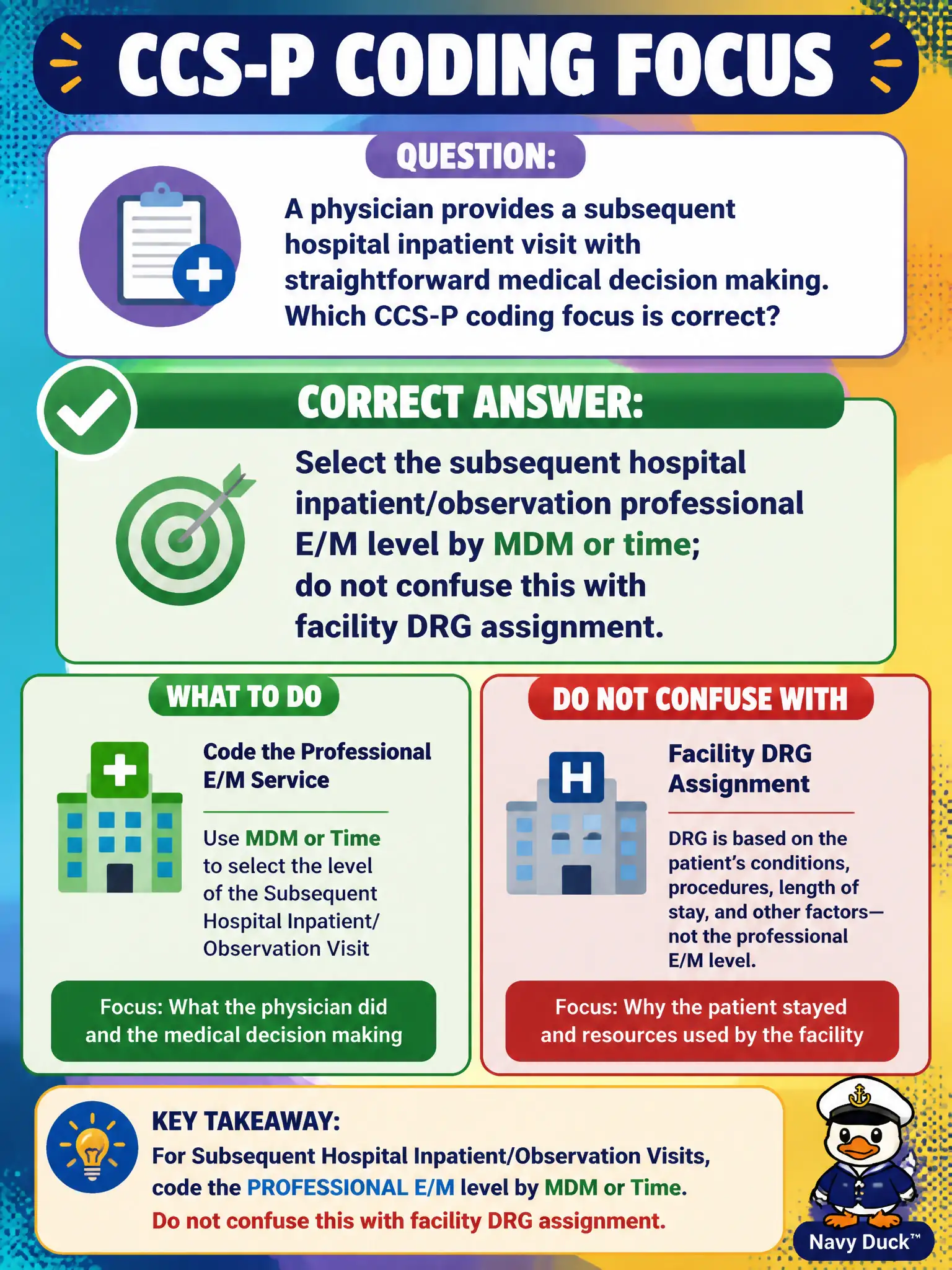
A physician provides a subsequent hospital inpatient visit with straightforward medical decision making. Which CCS-P coding focus is correct?
Select an answer to reveal the explanation.
Short Explanation
Day-two bedside check with light MDM is a subsequent hospital professional visit—not the hospital’s DRG and not an office ‘new patient’ sticker. Level it with MDM or time in the subsequent hospital family. Save discharge codes for actual discharge work.
Full Explanation
A subsequent hospital inpatient visit with straightforward medical decision making is leveled with the subsequent hospital inpatient/observation professional E/M family by MDM or time. Do not confuse the physician’s professional leveling with facility DRG assignment. Clear separation keeps attending follow-up claims in community hospitals aligned with daily professional work rather than hospital payment groups.
Assigning the hospital’s DRG on the professional claim for subsequent visits misapplies inpatient prospective payment to physician billing. Always using new-patient office codes for inpatient follow-up ignores site of service and established inpatient subsequent-care categories. Reporting only discharge day management for every subsequent inpatient day invents discharge work on non-discharge days.
Exam caveat: subsequent care is not initial hospital care and is not discharge management—match the day’s purpose. Operational check: document subsequent inpatient visit content and MDM or time, select the subsequent hospital professional level, and leave DRG assignment to the facility claim;In public and nonprofit clinics, accurate professional coding also supports transparent stewardship of Medicaid, Medicare, and grant-funded visits, reducing rework from denials that delay revenue needed for community access..