
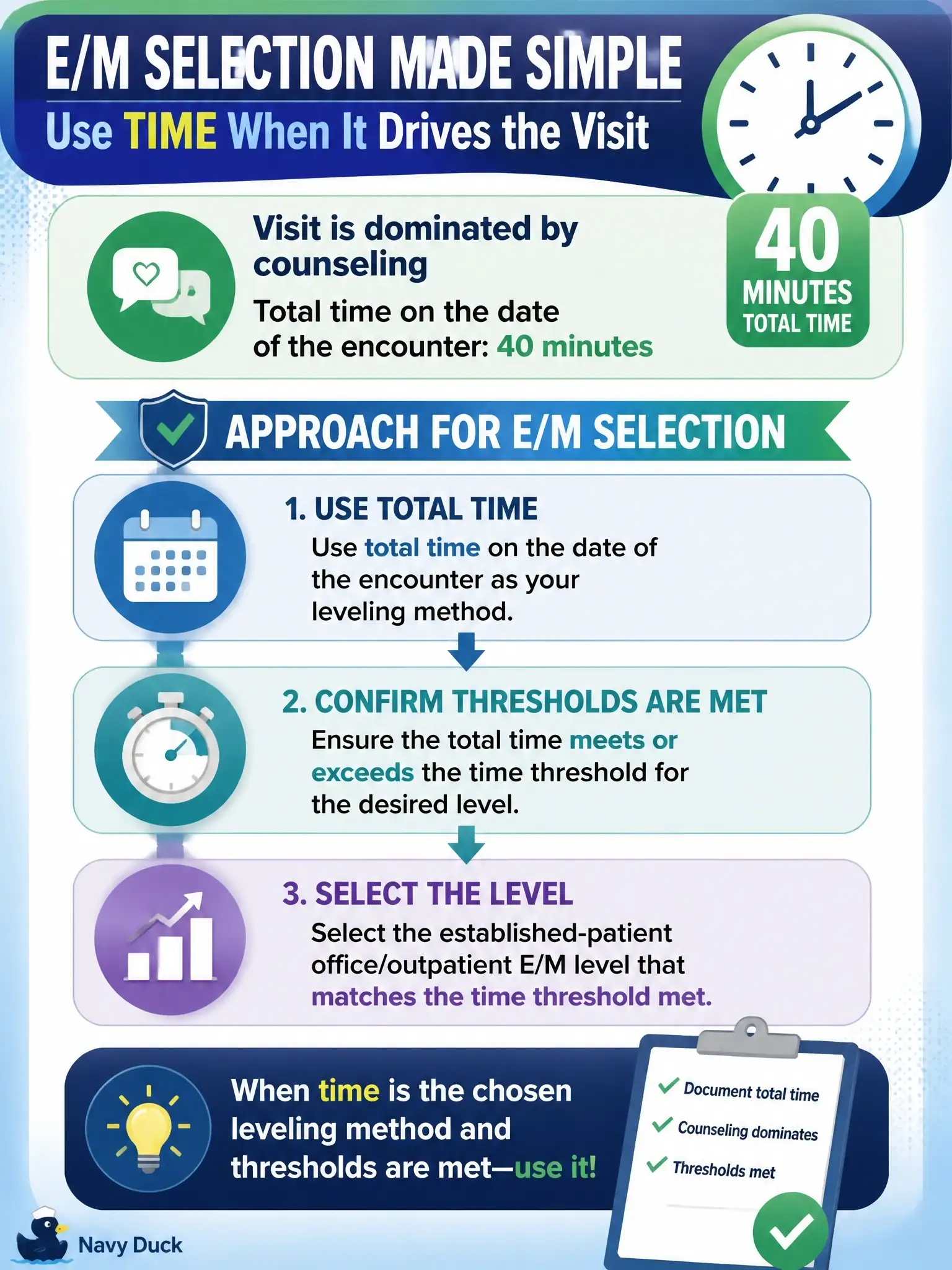
An established patient office visit is dominated by counseling, with 40 minutes of total time on the date of the encounter documented. How should E/M selection be approached?
Select an answer to reveal the explanation.
Short Explanation
When the clock—not the medical decision-making puzzle—levels the visit, forty minutes of documented total time on the date of the encounter points to the matching established outpatient evaluation and management code. You don’t invent critical care or a second new-patient visit out of thin air.
Full Explanation
When an established patient office visit is dominated by counseling and forty minutes of total time on the date of the encounter is documented, select the established-patient office/outpatient evaluation and management level using total time when time is the chosen leveling method and thresholds are met. Time-based leveling in community clinics recognizes extended counseling work that may not map to high medical decision-making but still consumes substantial clinician time.
Using only prolonged inpatient critical care codes for any visit over thirty minutes invents critical illness and inpatient constructs from an outpatient counseling visit. Ignoring time and always forcing straightforward medical decision-making regardless of documentation discards a valid leveling pathway. Billing two separate new-patient visits for the same established patient on one date violates both new/established rules and single-encounter logic.
Exam caveat: choose either medical decision-making or total time consistently for that encounter and meet the published minute thresholds for the code selected. Operational check: sum total time on the date of the encounter (face-to-face and non-face-to-face clinician time as allowed), confirm established status, and pick the matching established office evaluation and management level without inventing critical care.