
A pain clinic performs trigger-point injections into three muscles. How should units and sites be conceptualized?
Select an answer to reveal the explanation.
Short Explanation
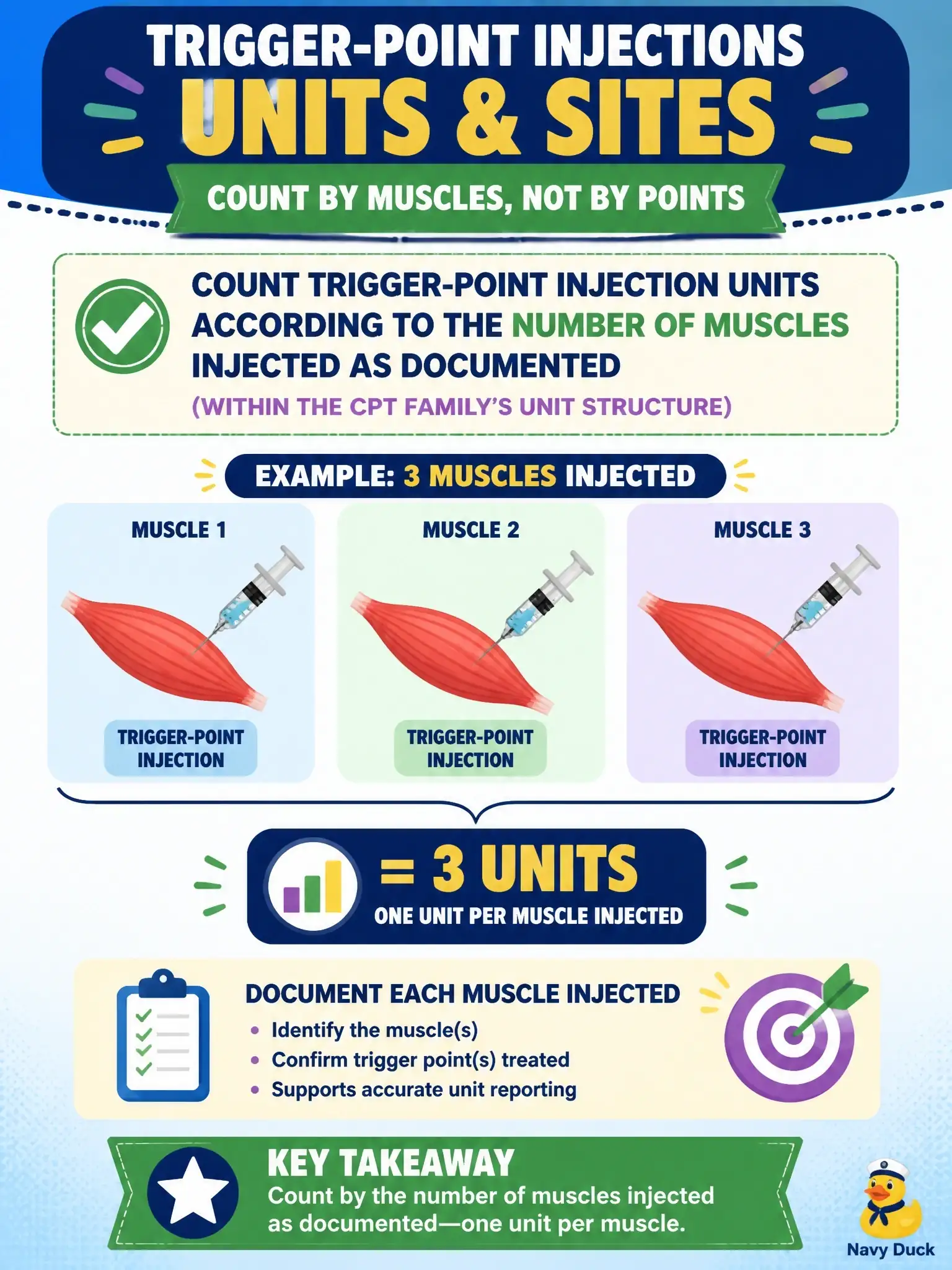
Three sore muscle knots aren’t one mystery shot and aren’t three joint replacements. Count trigger-point injection units by the number of muscles you documented as injected, within the CPT family’s unit structure.
Full Explanation
Trigger-point injections into three muscles are coded by counting muscles injected within the CPT family’s unit structure, not by converting soft-tissue injections into major joint arthroplasty. Counting trigger-point injection units according to the number of muscles injected as documented, within the CPT family’s unit structure, is the correct approach. Document each muscle treated and report units accordingly so pain-clinic claims in community settings reflect actual injection sites, support medical necessity review, and remain defensible when Medicaid or commercial auditors sample high-volume injection sessions. Reporting three major joint arthroplasties instead of trigger-point injections wildly misstates myofascial injection work as reconstructive orthopedic surgery. Always reporting one unit regardless of how many muscles were injected undercounts documented multi-muscle treatment and distorts utilization metrics. Using only acupuncture codes for any intramuscular pain injection substitutes an unrelated modality family for trigger-point injection coding when needles and injectate follow the trigger-point construct. Exam caveat: some families use muscle-count bands or site rules that are not strictly “one unit per muscle”—follow the specific CPT unit instructions for that year. Operational check: list muscles injected in the procedure note, map the count to the trigger-point family’s unit structure, align diagnoses to myofascial pain as documented, and verify laterality or site modifiers only when required.