
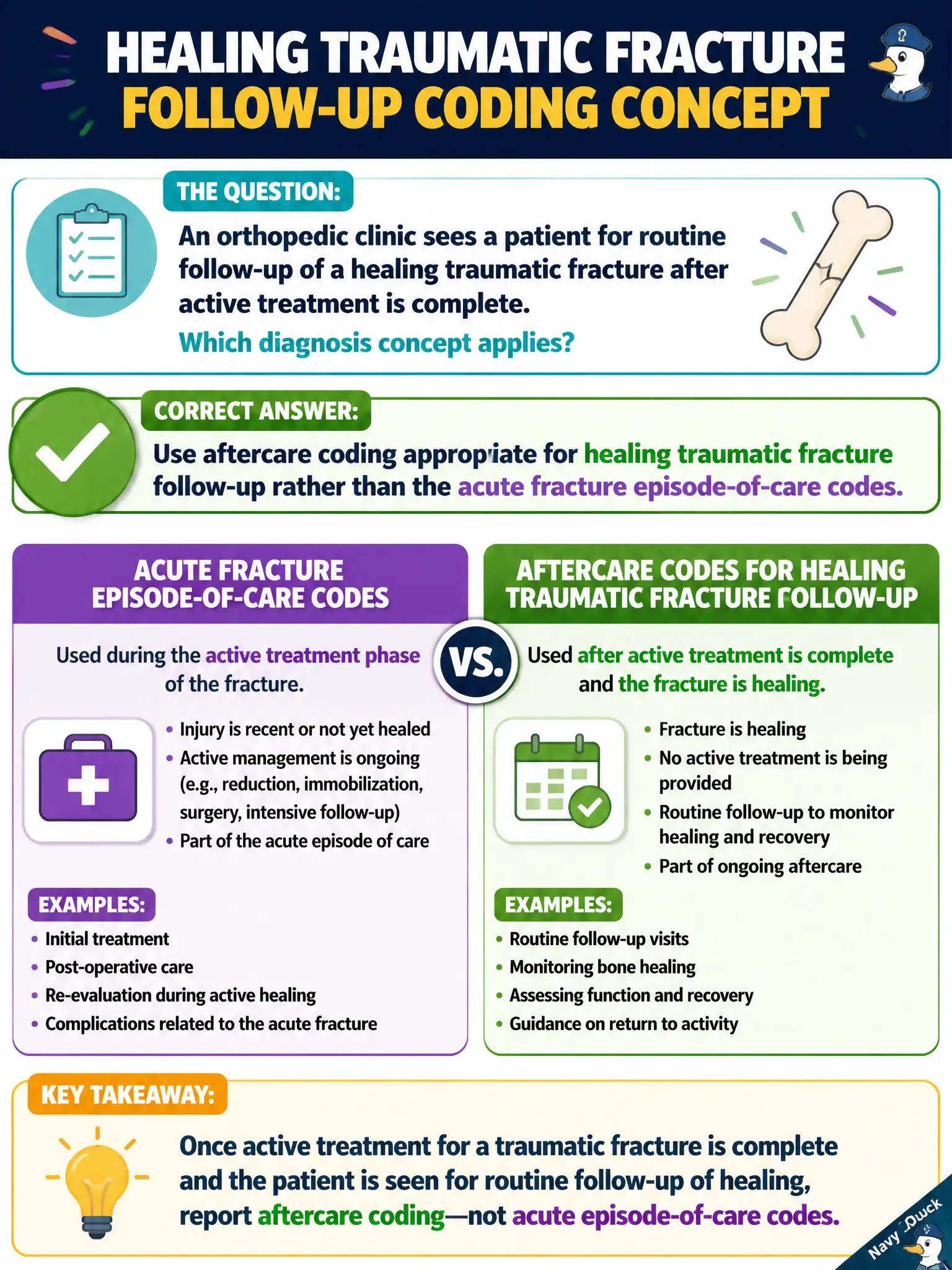
An orthopedic clinic sees a patient for routine follow-up of a healing traumatic fracture after active treatment is complete. Which diagnosis concept applies?
Select an answer to reveal the explanation.
Short Explanation
Once the break is in healing follow-up mode, you’re not re-living day-one trauma coding. Aftercare (or the fracture seventh-character aftercare pathway, depending on the code family) is the right gear. Keep acute fracture coding for active treatment, not routine healing checks.
Full Explanation
After active treatment of a traumatic fracture is complete, subsequent encounters for routine healing are reported with aftercare concepts or the appropriate fracture seventh character for subsequent care, per guideline and category instructions. When an orthopedic clinic sees a patient for routine follow-up of a healing traumatic fracture after active treatment is complete, use aftercare coding appropriate for healing traumatic fracture follow-up rather than acute fracture episode-of-care codes as if initial treatment continues. Continuing to code the acute traumatic fracture as if initial treatment is still underway fails healing-follow-up documentation. Assigning a personal history of fracture code only and never using aftercare concepts during healing follow-up fails; history is generally after healed status, not during routine healing aftercare. Coding a current open wound code whenever cast removal is discussed invents a wound without support. Exam caveat: traumatic fracture aftercare versus seventh-character subsequent pathways depend on category instructions—follow the code family in use. Operational check: confirm healing follow-up after active treatment, select aftercare or subsequent-encounter fracture coding as instructed, and avoid acute-initial or history-only shortcuts.