
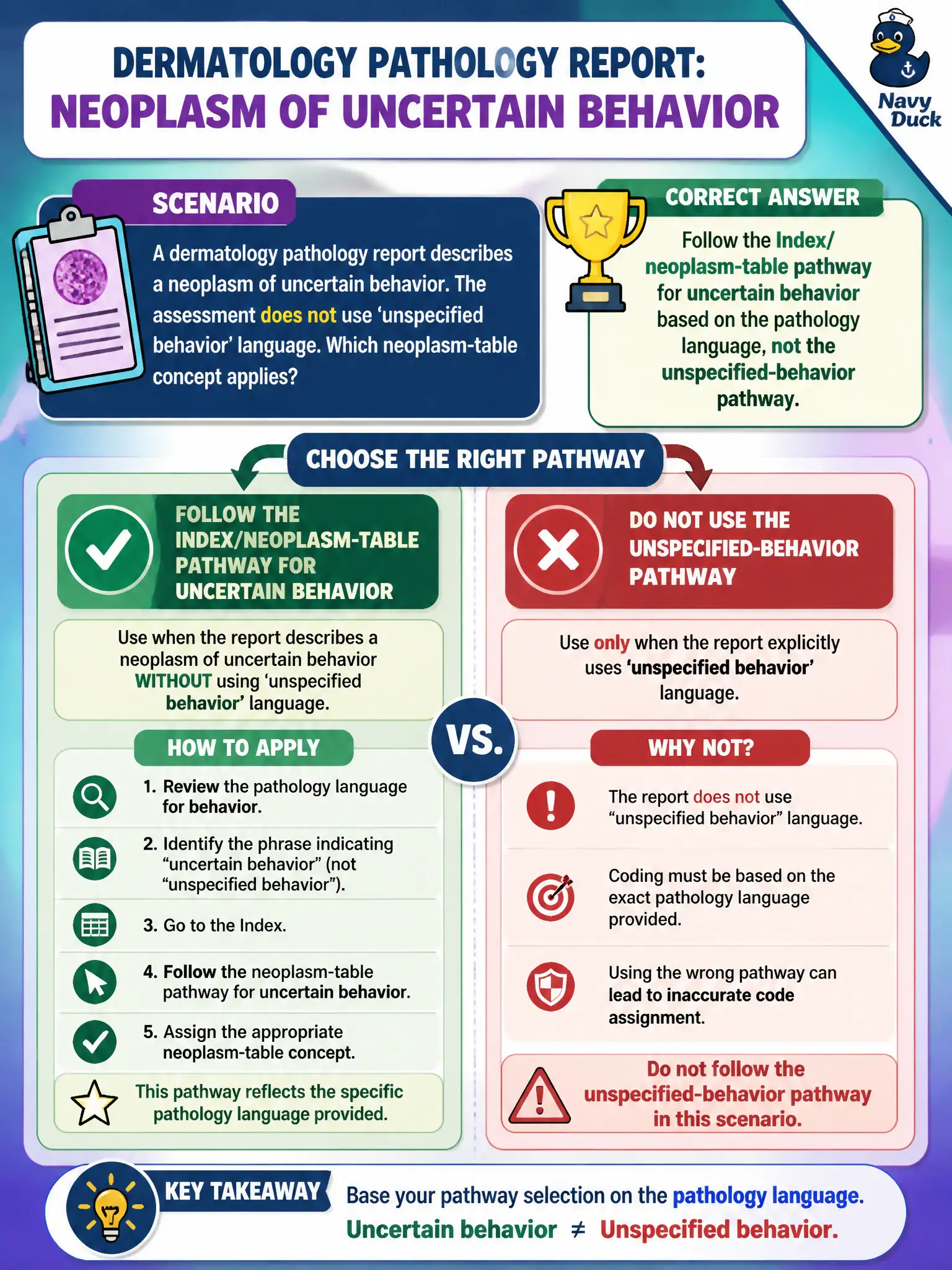
A dermatology pathology report describes a neoplasm of uncertain behavior. The assessment does not use ‘unspecified behavior’ language. Which neoplasm-table concept applies?
Select an answer to reveal the explanation.
Short Explanation
‘Uncertain’ and ‘unspecified’ sound alike but they’re different Index doors. Uncertain behavior is a histology call—think ‘we’re not sure how this will act.’ Unspecified means the note never told you the behavior. Match the pathology words to the right table path.
Full Explanation
ICD-10-CM distinguishes neoplasms of uncertain behavior from neoplasms of unspecified behavior. When a dermatology pathology report describes a neoplasm of uncertain behavior and the assessment does not use unspecified behavior language, follow the Index and neoplasm-table pathway for uncertain behavior based on the pathology language, not the unspecified-behavior pathway. Coding as malignant neoplasm because uncertain behavior always means cancer fails; uncertain behavior is its own classification concept. Coding as benign neoplasm whenever behavior is not stated as malignant fails when pathology says uncertain. Using personal history of malignant neoplasm for any skin lesion pending further excision fails for an active neoplasm under evaluation. Exam caveat: uncertain versus unspecified is driven by histology language—match the pathology words precisely. Operational check: read uncertain behavior in the pathology report, select the uncertain-behavior neoplasm table path for the site, and avoid malignant, benign, unspecified, or history defaults. In civic and community clinic workflows, document the chosen pathway in the coding rationale so auditors can see how the record supported specificity, sequencing, and instructional-note compliance on the professional claim.