
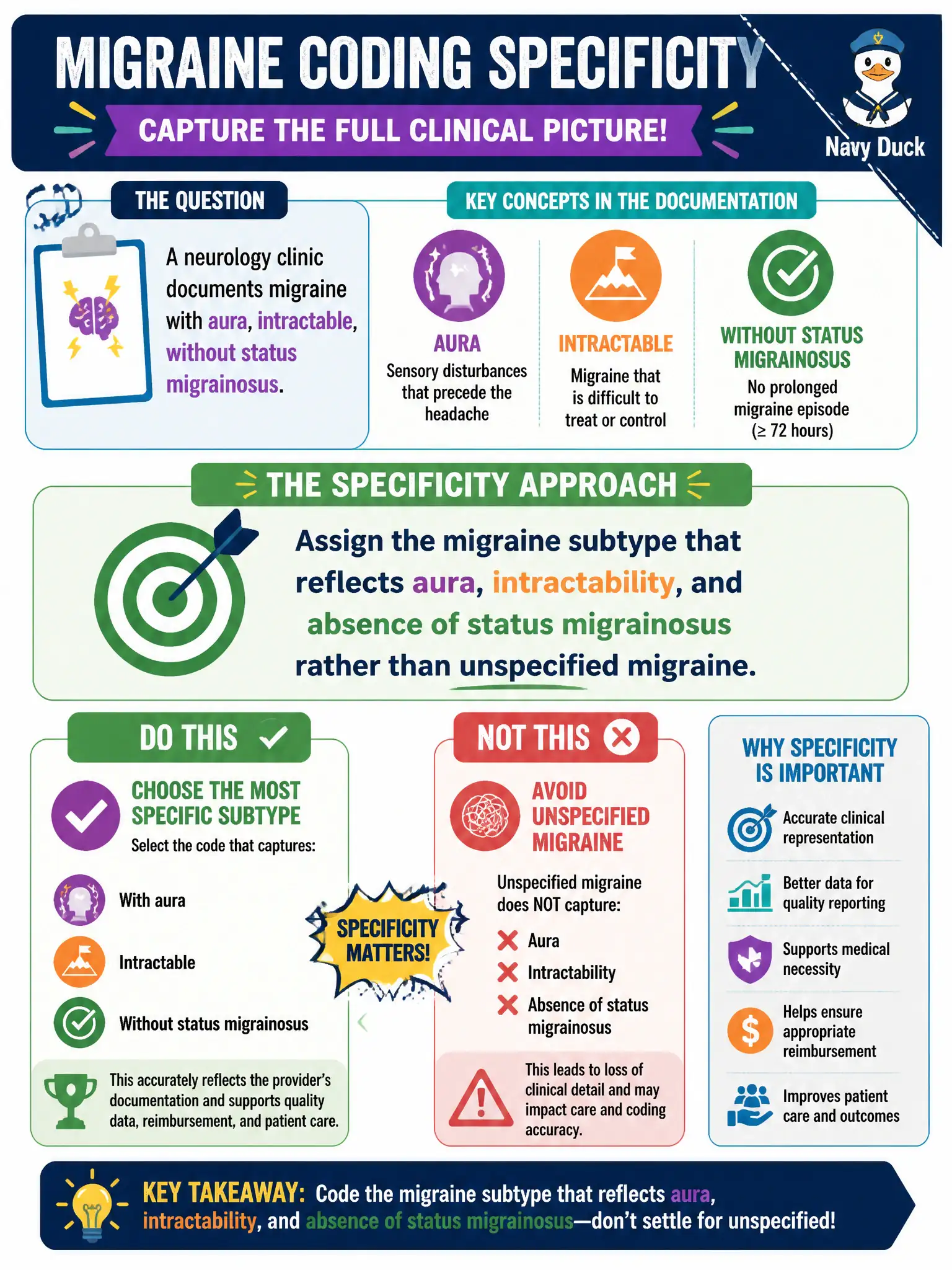
A neurology clinic documents migraine with aura, intractable, without status migrainosus. What specificity approach is required?
Select an answer to reveal the explanation.
Short Explanation
Migraine codes care about aura, whether it's intractable, and status migrainosus—use the combo the neurologist wrote. Don't flatten it to unspecified migraine or reinvent it as tension headache or a seizure.
Full Explanation
Migraine ICD-10-CM categories capture clinically important axes such as with or without aura, intractable versus not intractable, and with or without status migrainosus. When a neurology clinic documents migraine with aura, intractable, without status migrainosus, assign the migraine subtype that reflects those details rather than unspecified migraine. Always coding unspecified migraine because neurology notes supposedly prohibit aura and status axes fails; those axes exist to be used when documented. Coding tension-type headache only whenever abortive medication is prescribed fails without documentation changing the diagnosis to tension-type headache. Reporting seizure disorder automatically if aura is documented fails; migraine aura is not coded as epilepsy without a seizure diagnosis. Exam caveat: intractable and status migrainosus have specific clinical meanings—do not infer them from medication lists alone; rely on provider documentation. Operational check: extract aura status, intractability, and status migrainosus presence or absence from the note, select the matching migraine code, and reject tension-headache or seizure substitutions unsupported by the assessment. In civic and community clinic workflows, document the chosen pathway in the coding rationale so auditors can see how the record supported specificity, sequencing, and instructional-note compliance on the professional claim.