
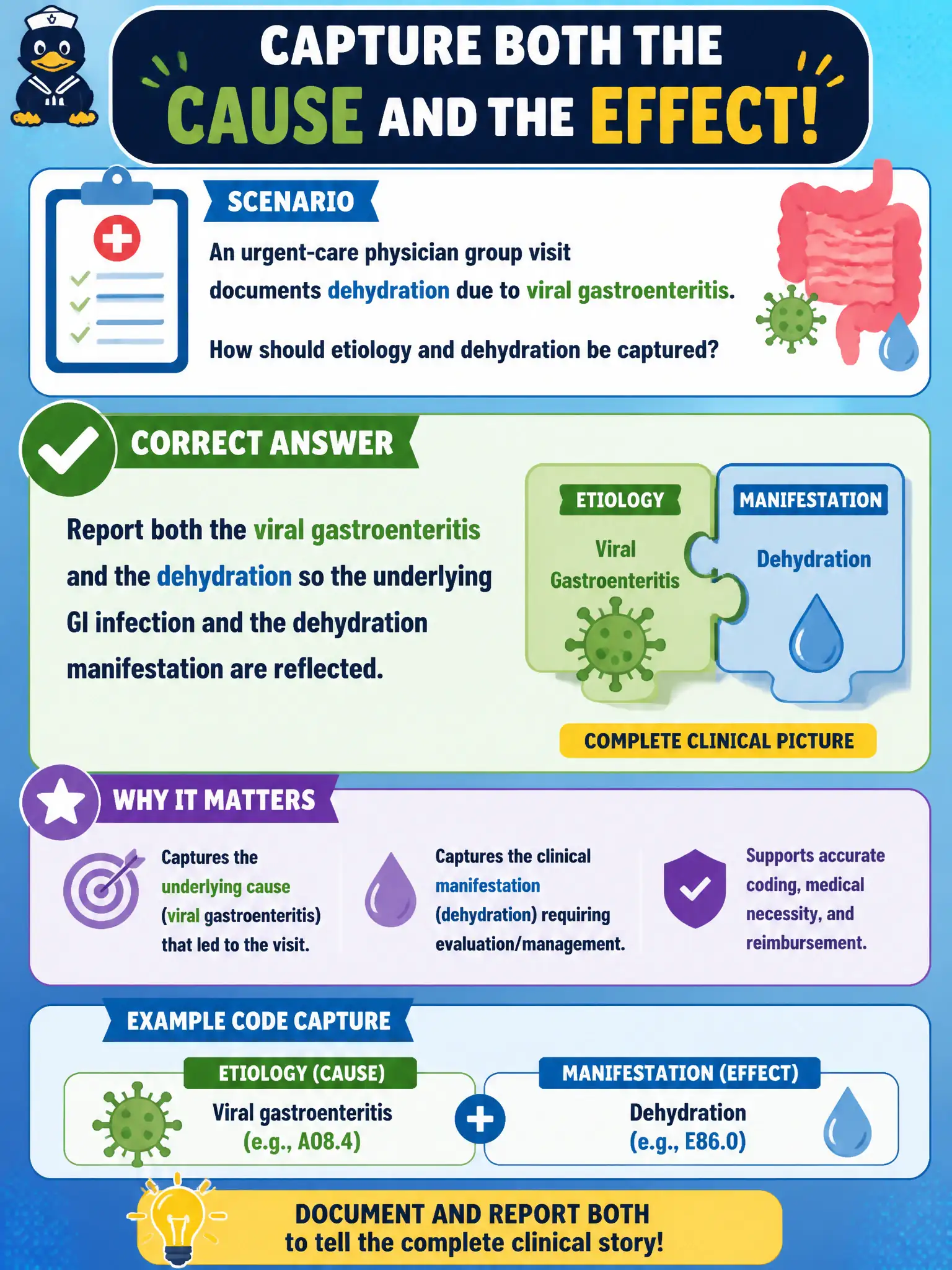
An urgent-care physician group visit documents dehydration due to viral gastroenteritis. How should etiology and dehydration be captured?
Select an answer to reveal the explanation.
Short Explanation
The stomach bug caused the dry tank—so code both. Viral gastroenteritis is the why; dehydration is the complication being treated. Skipping either half leaves the story incomplete.
Full Explanation
When dehydration is documented as due to viral gastroenteritis at an urgent-care physician group visit, both the underlying infectious gastroenteritis and the dehydration should be reported so etiology and the treated fluid deficit are reflected on the professional claim. Coding only dehydration and never reporting the gastroenteritis fails to capture the cause of the volume loss. Coding only viral gastroenteritis and omitting dehydration because fluid loss is inherent fails when dehydration is separately documented and treated; associated dehydration is reportable. Coding heat exhaustion instead of gastroenteritis whenever oral intake is reduced fails when the documented cause is viral gastroenteritis, not environmental heat illness. Exam caveat: sequencing may emphasize the condition that occasioned the visit or follow instructional notes—read the assessment for which problem drove care while still reporting both supported diagnoses. Operational check: confirm viral gastroenteritis and dehydration are both documented, assign both concepts, avoid heat-related substitutes, and ensure the claim narrative matches urgent-care treatment of GI infection with dehydration. In civic and community clinic workflows, document the chosen pathway in the coding rationale so auditors can see how the record supported specificity, sequencing, and instructional-note compliance on the professional claim.