
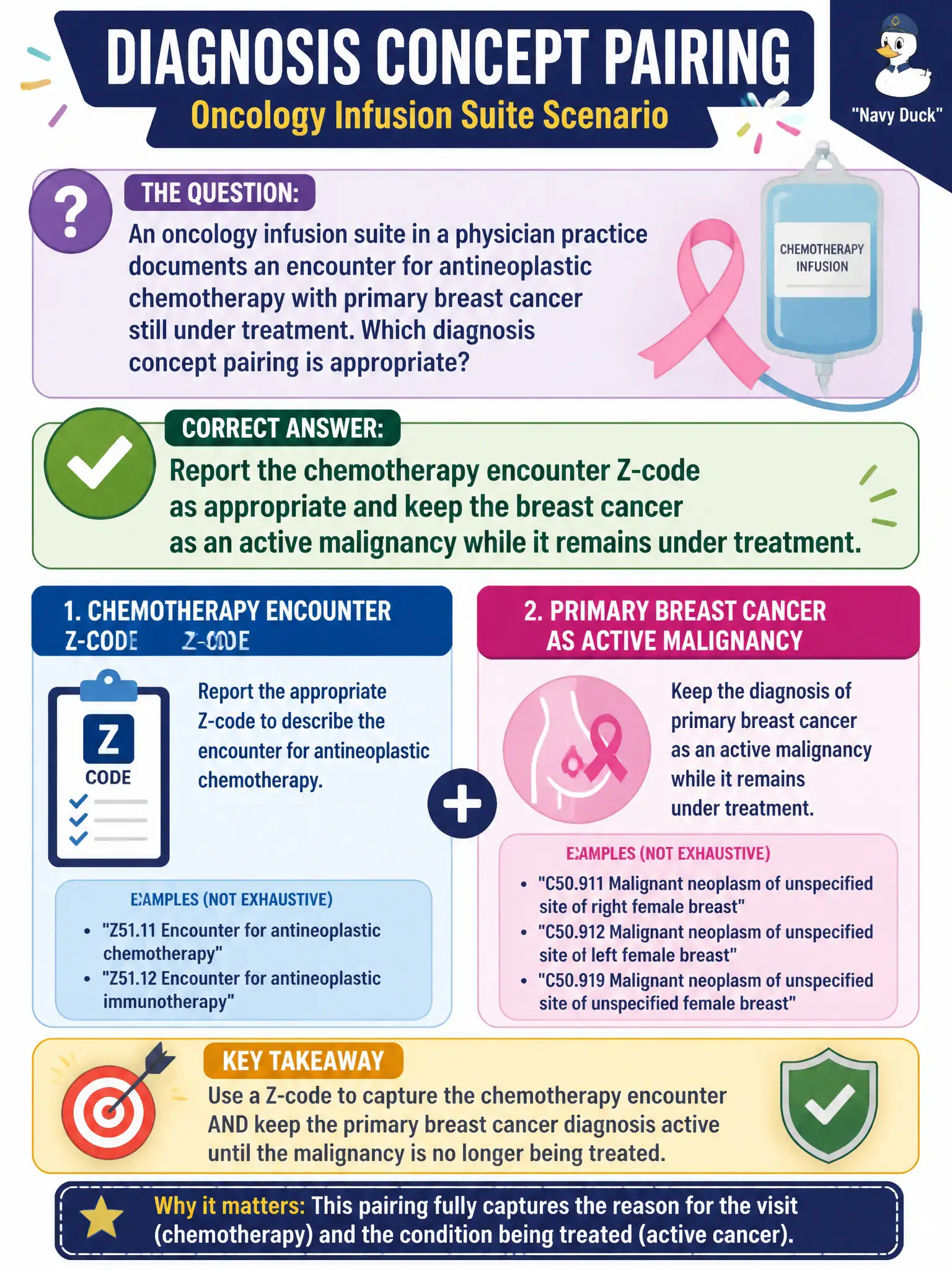
An oncology infusion suite in a physician practice documents an encounter for antineoplastic chemotherapy with primary breast cancer still under treatment. Which diagnosis concept pairing is appropriate?
Select an answer to reveal the explanation.
Short Explanation
Chemo day with cancer still being treated: you need the encounter-for-chemo concept and the active breast cancer—not a history code that pretends it's over. History waits until treatment is done and the record says so.
Full Explanation
Encounters for antineoplastic chemotherapy commonly use an encounter-for-chemotherapy diagnosis sequenced per Official Guidelines, with the malignancy under treatment also coded as active disease. In a physician-practice oncology infusion suite documenting chemotherapy for primary breast cancer still under treatment, report the chemotherapy encounter concept as appropriate and keep breast cancer as an active malignancy. Coding personal history of breast cancer only because chemotherapy is given fails: ongoing antineoplastic therapy means the malignancy remains active for coding purposes. Omitting encounter diagnosis and reporting only anemia of chemotherapy if labs are drawn fails to represent the chemotherapy encounter and cancer under treatment, though anemia may be additional when documented. Coding screening mammogram encounter status instead of chemotherapy fails when the visit is infusion treatment, not screening. Exam caveat: sequencing of the encounter Z-code versus the cancer code follows current guideline instruction for encounters solely for chemotherapy versus encounters for treatment of complications. Operational check: confirm cancer is still under treatment, assign the chemo encounter concept and active breast cancer codes per current sequencing rules, and reserve personal-history cancer codes for completed therapy with history documentation.