
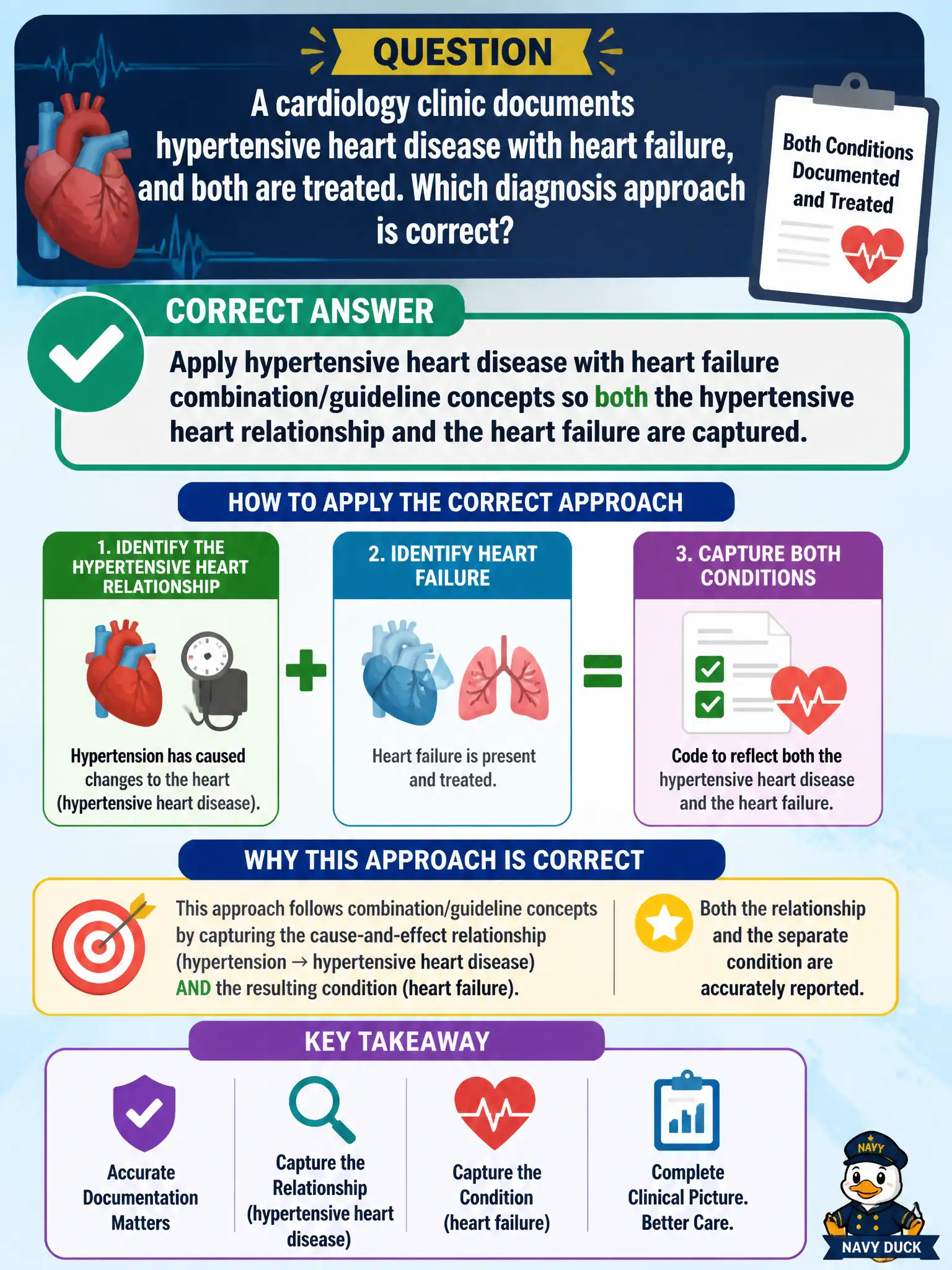
A cardiology clinic documents hypertensive heart disease with heart failure, and both are treated. Which diagnosis approach is correct?
Select an answer to reveal the explanation.
Short Explanation
When the cardiologist ties hypertension to heart disease with failure, don't peel it apart into plain HTN. Use the hypertensive-heart-with-failure pathway and still identify the heart failure type/detail the note supports.
Full Explanation
ICD-10-CM provides combination concepts and guideline instruction for hypertensive heart disease with heart failure. When a cardiology clinic documents hypertensive heart disease with heart failure and both are treated, apply those combination and guideline concepts so the hypertensive heart relationship and the heart failure are captured. Coding essential hypertension alone and never reporting heart failure fails when hypertensive heart disease with failure is documented and managed. Coding heart failure only and omitting hypertension fails when the record establishes the hypertensive heart disease relationship rather than isolated heart failure. Using a temporary elevated blood pressure reading code fails when chronic hypertensive heart disease is the documented condition, not a one-time reading. Exam caveat: additionally identify heart failure type or systolic-diastolic detail when documented, per instructional notes, without dropping the hypertensive heart combination framework. Operational check: confirm the note links hypertension to heart disease with failure, select the hypertensive-heart-with-failure pathway, add heart-failure specificity supported by the record, and reject transient elevated BP coding.