
An allergy clinic documents anaphylaxis due to peanut ingestion, initial encounter. Which coding approach best reflects the documented food-induced anaphylaxis concept?
Select an answer to reveal the explanation.
Short Explanation
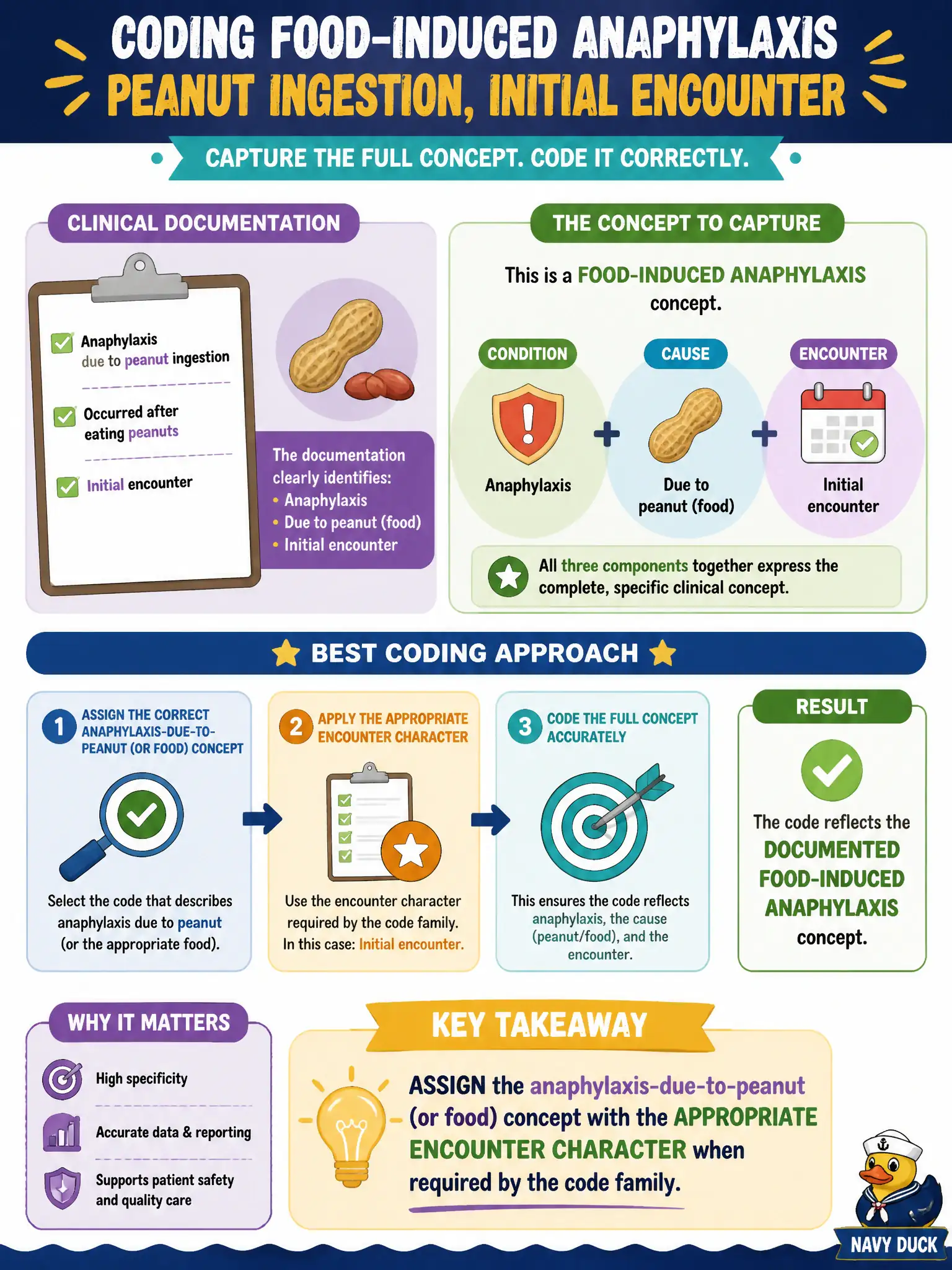
Peanut-triggered anaphylaxis is a specific story—code the anaphylaxis from the food, not a soft 'allergy status' placeholder. If that code family needs an encounter character, use initial for this first active treatment visit.
Full Explanation
Food-induced anaphylaxis is coded from adverse food reaction and anaphylaxis concepts that identify the responsible food when documented. For an allergy clinic documenting anaphylaxis due to peanut ingestion at initial encounter, assign the anaphylaxis-due-to-peanut or documented-food concept and apply the appropriate encounter character when the code family requires a seventh character. Coding only food aversion without anaphylaxis fails because aversion underrepresents a documented acute anaphylactic emergency managed in clinic. Coding unspecified allergy status only and omitting anaphylaxis fails specificity and severity representation for medical necessity and clinical accuracy on the physician claim. Reporting toxic effect of seafood automatically for any nut allergy fails because peanut ingestion does not support seafood toxic-effect coding. Exam caveat: confirm whether the selected T-code family requires an encounter seventh character; initial applies to active treatment of the anaphylactic event. Operational check: identify the food named as peanut, confirm anaphylaxis rather than mild allergy wording, assign the matching anaphylaxis pathway, and complete any required encounter character for this clinic visit.