
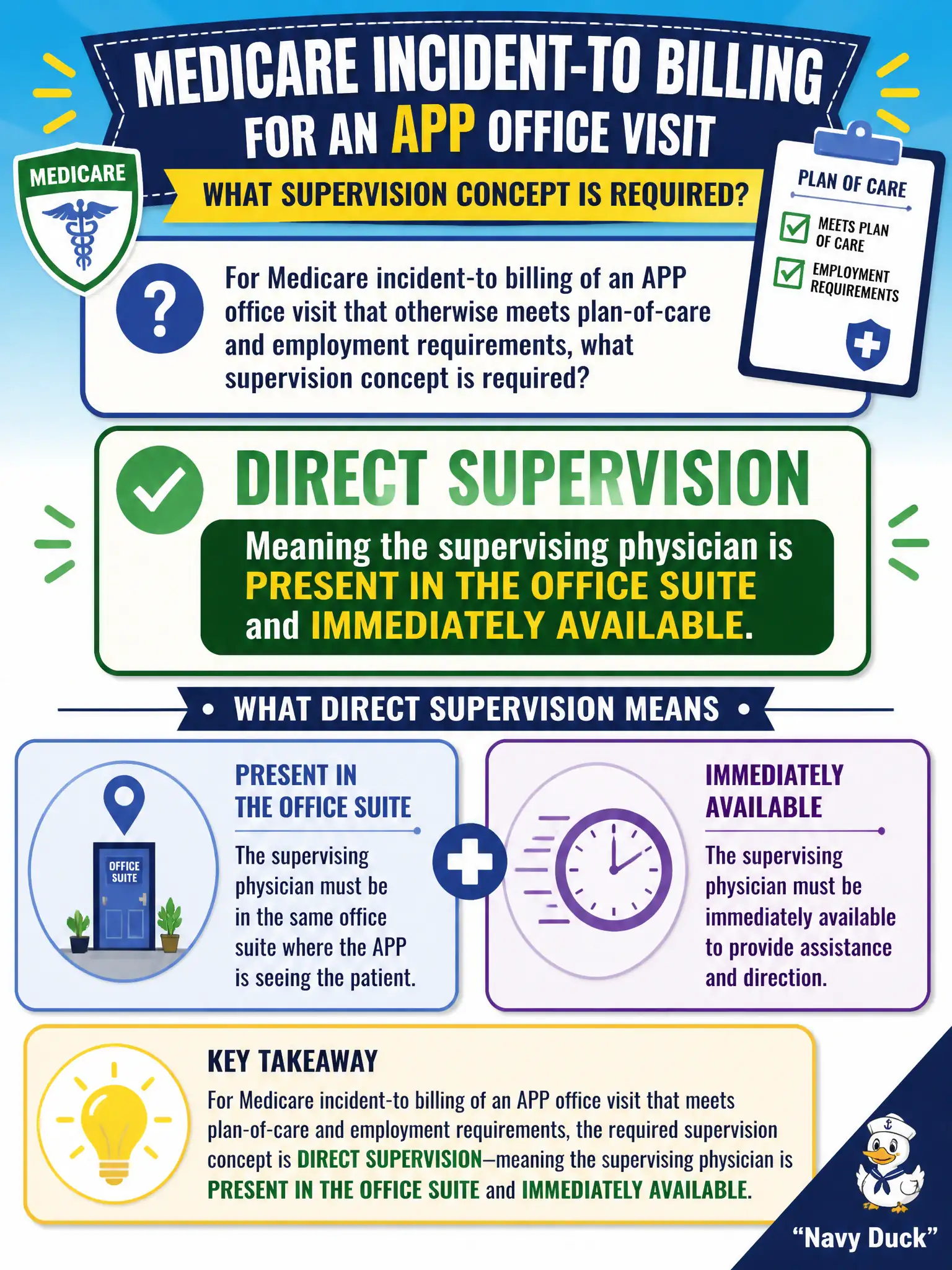
For Medicare incident-to billing of an APP office visit that otherwise meets plan-of-care and employment requirements, what supervision concept is required?
Select an answer to reveal the explanation.
Short Explanation
Incident-to wants the supervising physician in the office suite—not across town and not “I’ll co-sign next month.” Think lifeguard on the pool deck, not on call from home. Presence is the classic direct-supervision piece.
Full Explanation
For Medicare incident-to billing of an APP office visit that otherwise meets plan-of-care and employment requirements, the supervision standard is direct supervision: the supervising physician must be present in the office suite and immediately available. In a county clinic professional-fee setting, suite presence—not citywide availability or delayed chart co-signature—is the classic incident-to supervision concept. Teaching that presence requirement keeps incident-to claims defensible under public-program review.
Relying on general supervision with the physician somewhere in the same city fails by concept because incident-to demands a higher presence standard than general supervision. Claiming no supervision is needed if the APP has independent state licensure fails because state independent practice does not erase Medicare incident-to supervision rules when billing under the physician. Treating chart review within 30 days after the visit as sufficient fails because retrospective co-signature is not a substitute for direct supervision at the time of service.
Exam caveat: telehealth and evolving CMS supervision flexibilities can modify presence constructs for defined periods or services; apply the rule in force for the date of service rather than outdated emergency waivers by habit. Operational check: document which supervising physician was in the suite and immediately available for the APP encounter before dropping an incident-to claim under the physician NPI.