
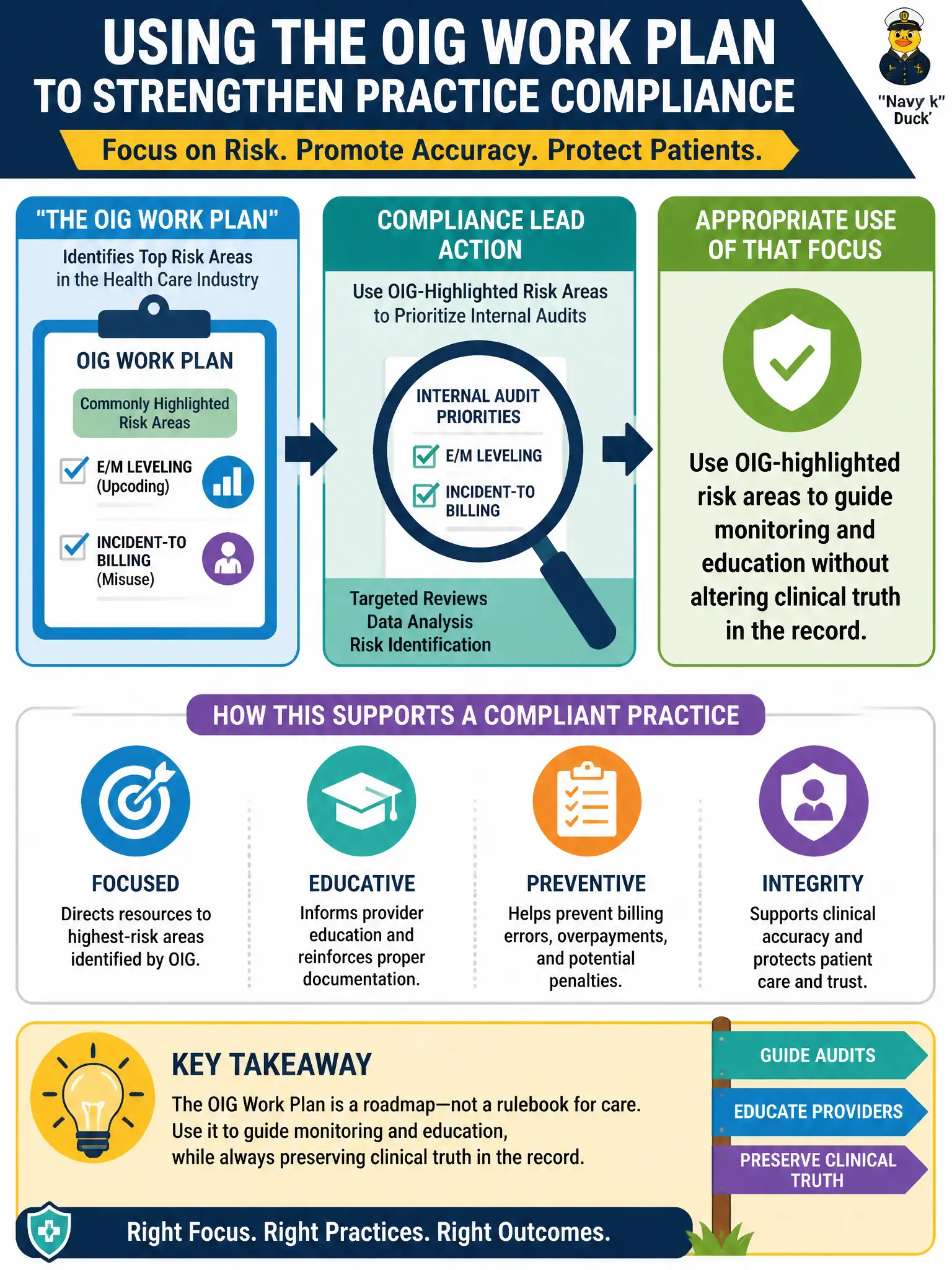
A physician-practice compliance lead uses the OIG Work Plan to prioritize internal audits of E/M leveling and incident-to billing. Which use of that focus is appropriate?
Select an answer to reveal the explanation.
Short Explanation
The OIG Work Plan is a spotlight, not a script rewrite. Point your audits at hot zones like E/M and incident-to, then fix process and teaching—don't cook the notes to look 'safer.'
Full Explanation
OIG Work Plan topics identify areas of enforcement and audit interest such as E/M coding and incident-to services. Compliant programs in physician practices use those topics to prioritize prospective or retrospective reviews, education, and controls. When a civic clinic compliance lead uses the OIG Work Plan to prioritize internal audits of E/M leveling and incident-to billing, the appropriate use is guiding monitoring and education without altering clinical truth in the record. Work Plan focus does not authorize falsifying documentation or suppressing medically necessary coding. Changing documented clinical findings so audited charts match a preferred code mix fails as falsification. Ignoring OIG risk areas because Work Plan items never apply to professional-fee clinics fails—many Work Plan topics specifically target physician services. Stopping coding of E/M entirely until the next Work Plan publishes fails operationally and is not required. Exam caveat: use Work Plan as a risk radar for the compliance program, not as a coding guideline that replaces CPT/ICD rules. Operational check: map Work Plan topics to clinic services, schedule focused audits, educate on findings, leave clinical documentation truthful, and report remediation metrics to the county compliance committee.