
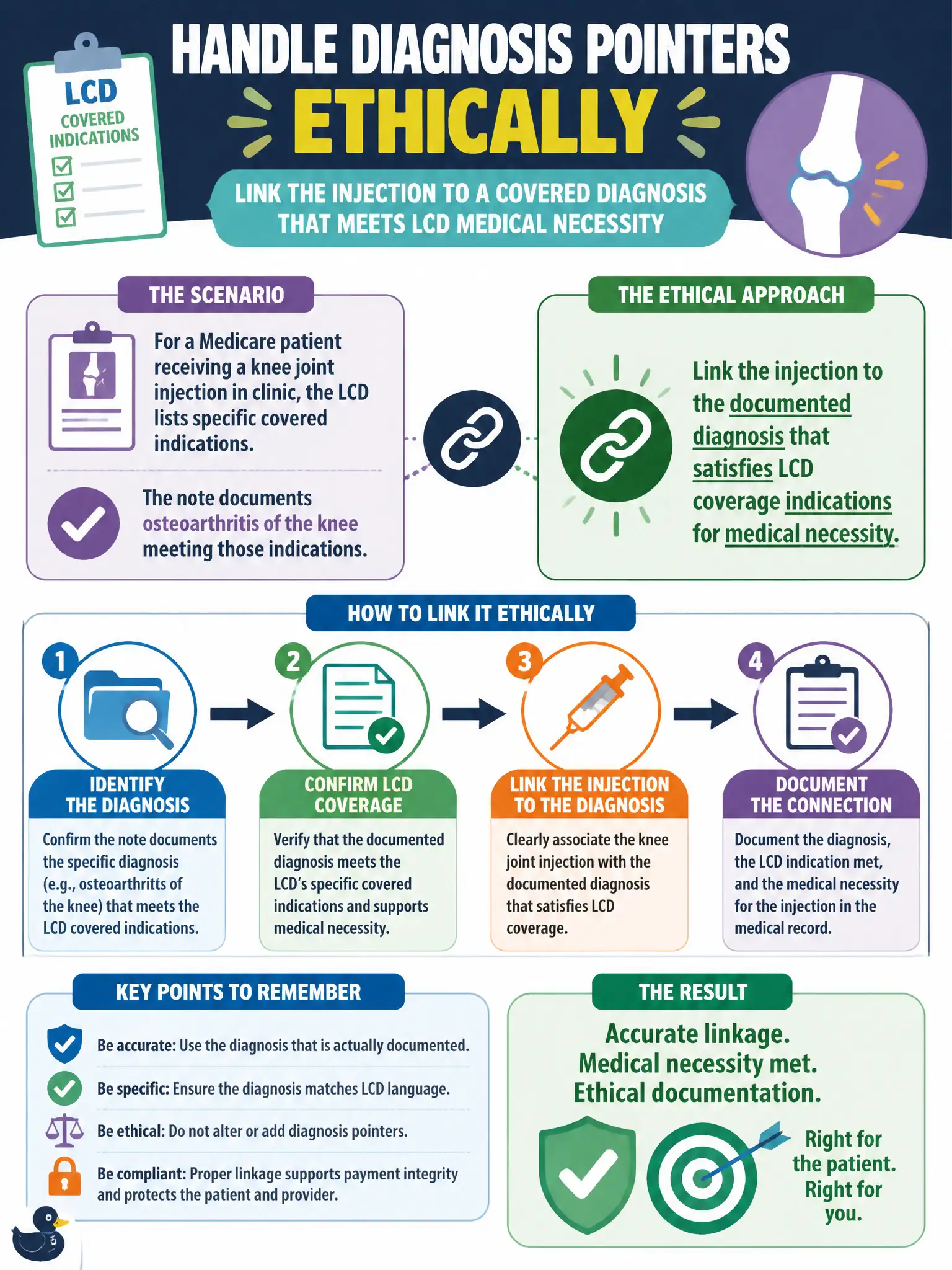
For a Medicare patient receiving a knee joint injection in clinic, the LCD lists specific covered indications. The note documents osteoarthritis of the knee meeting those indications. How should diagnosis pointers be handled ethically?
Select an answer to reveal the explanation.
Short Explanation
LCDs tell you which diagnoses the payer considers a fair reason for the shot. If the note has the covered arthritis diagnosis, point the injection there—don't hide behind an unrelated code just to game something else.
Full Explanation
Ethical coding includes aligning diagnosis-to-procedure linking with coverage criteria such as LCDs/NCDs when those policies define medical necessity for the service. For a Medicare patient receiving a knee joint injection in a civic clinic, when the note documents osteoarthritis of the knee meeting LCD indications, the coder links the injection to that documented diagnosis that satisfies coverage indications. Linking to unrelated diagnoses to force payment, or ignoring coverage concepts, conflicts with CMS and AHIMA ethical expectations. Pointing the injection to unrelated hypertension to avoid “overusing” arthritis fails medical-necessity linking. Omitting diagnosis pointers because LCDs are optional educational materials fails—LCDs are coverage policy for the jurisdiction. Always pointing every procedure to the first diagnosis regardless of clinical relationship fails pointer integrity. Exam caveat: the diagnosis must be documented and clinically related; you cannot invent an LCD-favored code that the note does not support. Operational check: open the active MAC LCD for joint injection, confirm osteoarthritis documentation meets indications, set the CPT diagnosis pointer accordingly, and save the LCD citation in the municipal orthopedics coding file.