
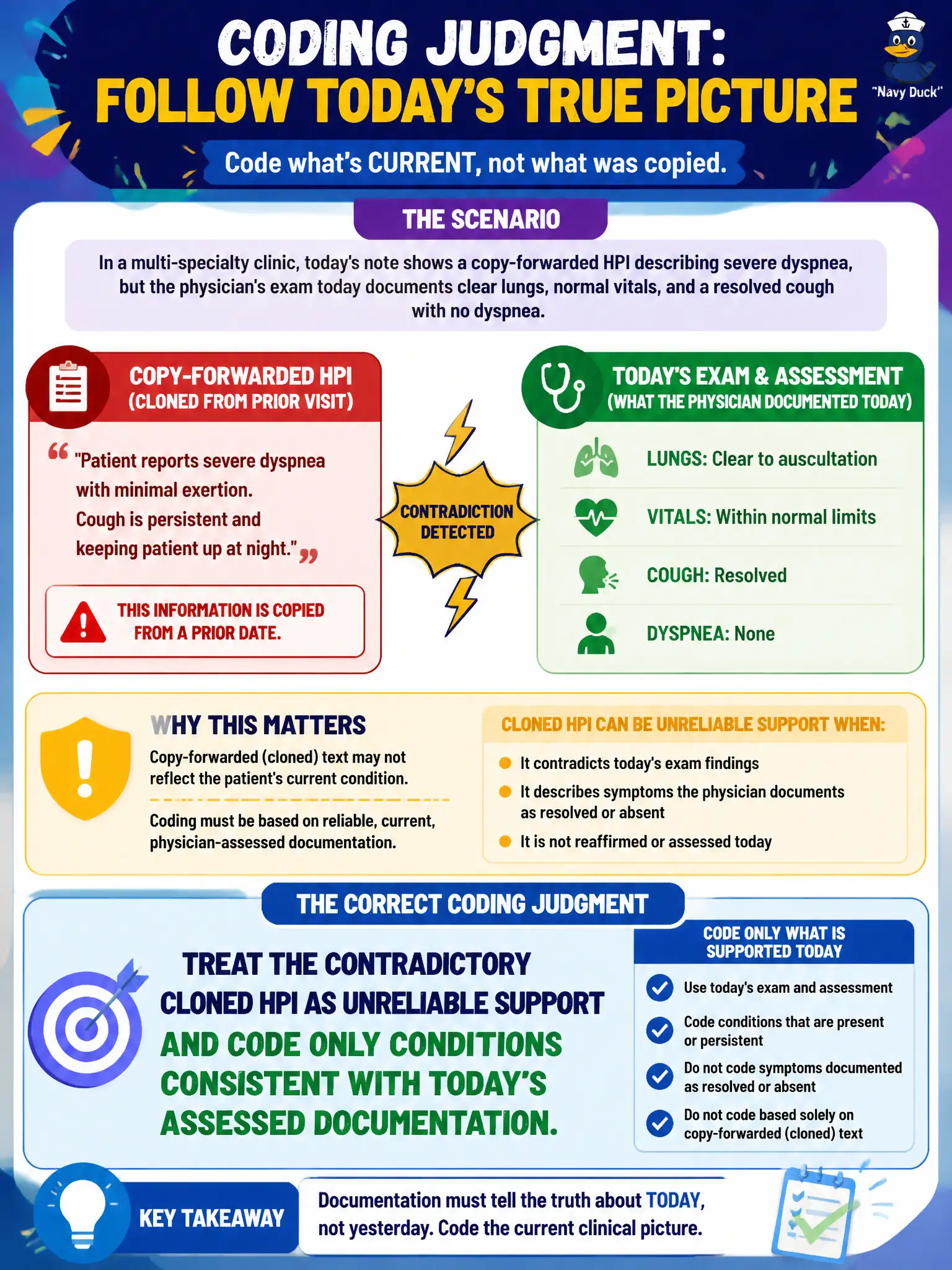
In a multi-specialty clinic, today's note shows a copy-forwarded HPI describing severe dyspnea, but the physician's exam today documents clear lungs, normal vitals, and a resolved cough with no dyspnea. Which coding judgment is correct?
Select an answer to reveal the explanation.
Short Explanation
Copy-forward can paste last month's story into today's visit like a sticky note that never got updated. When the HPI says one thing and today's exam says the opposite, you don't code the stale contradiction—you stick with what the provider actually assessed today.
Full Explanation
Cloned or copy-forwarded documentation that contradicts the current encounter is not reliable support for diagnosis coding on a physician claim. When today’s civic clinic note shows a copy-forwarded HPI describing severe dyspnea but today’s exam documents clear lungs, normal vitals, and resolved cough without dyspnea, the coder should treat the contradictory cloned HPI as unreliable and code only conditions consistent with today’s assessed documentation. Query or leave unsupported conflicts uncoded rather than forcing codes from unreliable narrative. Coding acute dyspnea from copy-forwarded HPI because cloned text “still counts” fails documentation integrity standards. Preferring the oldest copy-forwarded HPI over today’s exam fails chronology and clinical sense. Coding both resolved and current symptoms without reviewing cloning contradictions fails quality and compliance review expectations. Exam caveat: cloning is not automatically fraudulent, but contradictory cloning cannot support codes that today’s assessed findings refute. Operational check: compare carried-forward HPI to today’s exam/assessment, exclude contradicted symptoms/diagnoses, educate providers on template hygiene, and escalate systemic cloning patterns to the county compliance committee.