
An emergency-management office wants MPLS and broadband both forwarding with preference rather than leaving broadband cold until MPLS dies. Which dual-transport approach matches that intent?
Select an answer to reveal the explanation.
Short Explanation
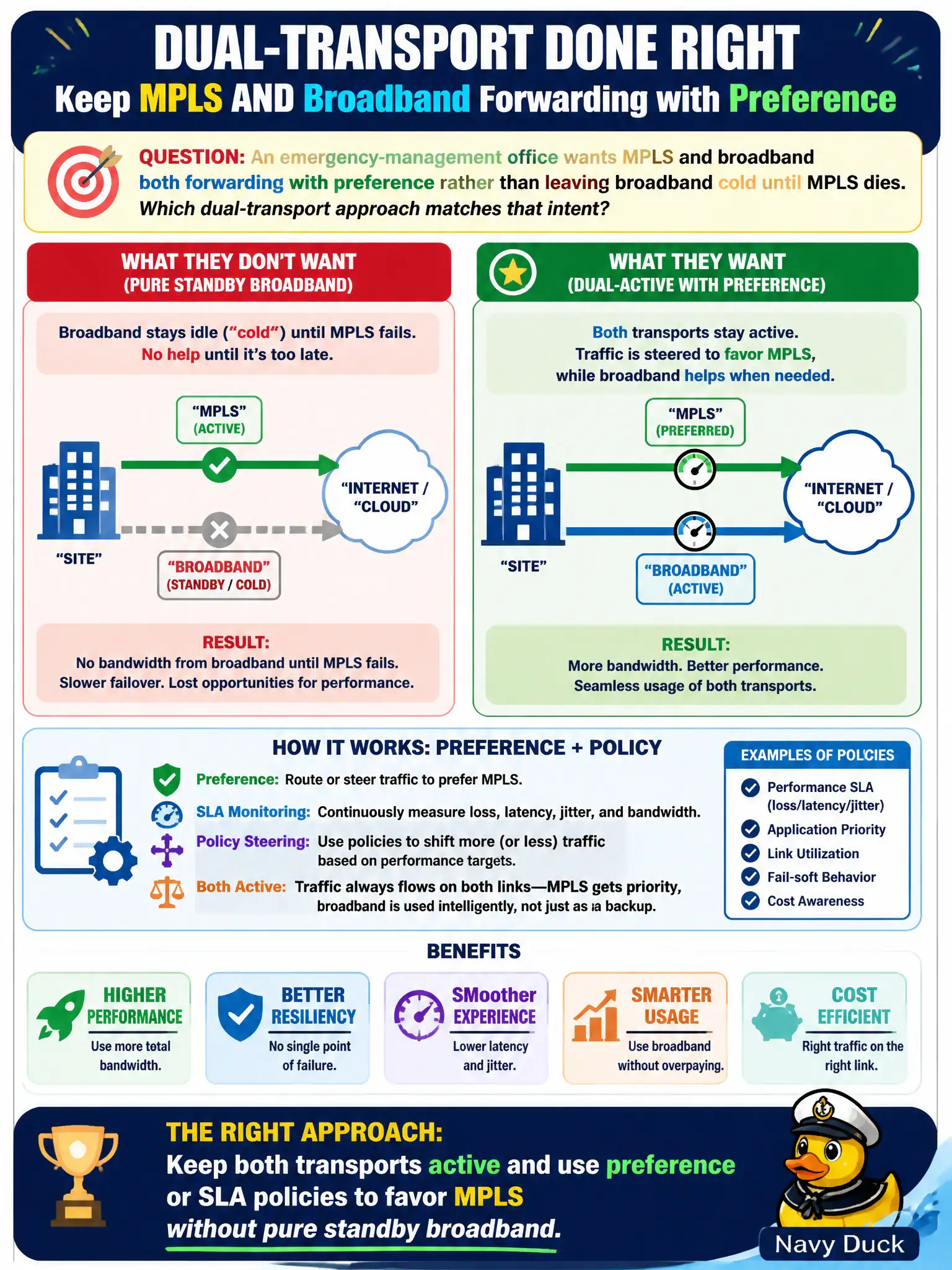
Active-active with preference means both roads stay open, but ambulances still prefer the better MPLS lane until SLAs say otherwise. Leaving broadband administratively shut is classic cold standby, not what emergency management asked for. Bridging the underlays together without overlay tunnels throws away SD-WAN’s path control.
Full Explanation
An emergency-management office wanting MPLS and broadband both forwarding with preference—not leaving broadband cold until MPLS dies—should keep both transports active and use preference or SLA policies to favor MPLS without pure standby broadband. Active-active dual transport with preference is the standard civic SD-WAN approach for usable failover and capacity.
Shutting the broadband TLOC administratively until MPLS has been down for twenty-four hours is cold standby and delays recovery.
Running only bridging between the two underlays with no overlay tunnels on either color abandons SD-WAN encapsulation.
Pinning all traffic permanently to broadband and ignoring MPLS SLAs discards the preferred transport the office wants to favor.
Exam caveat: active-active still needs coherent QoS/AAR so brownouts shift cleanly without oscillation.
Operational check: bring both TLOCs up, set preference favoring MPLS, fail MPLS briefly, and confirm broadband carries traffic then failback. Document dual-transport preference in the emergency-management WAN runbook. In municipal operations, record the rationale in the change ticket so future on-call staff know which control was chosen and which failure modes the rejected options would create for city services. Re-validate after the next maintenance window that the same control still holds under the platform code and policy revisions used by the civic network team.