
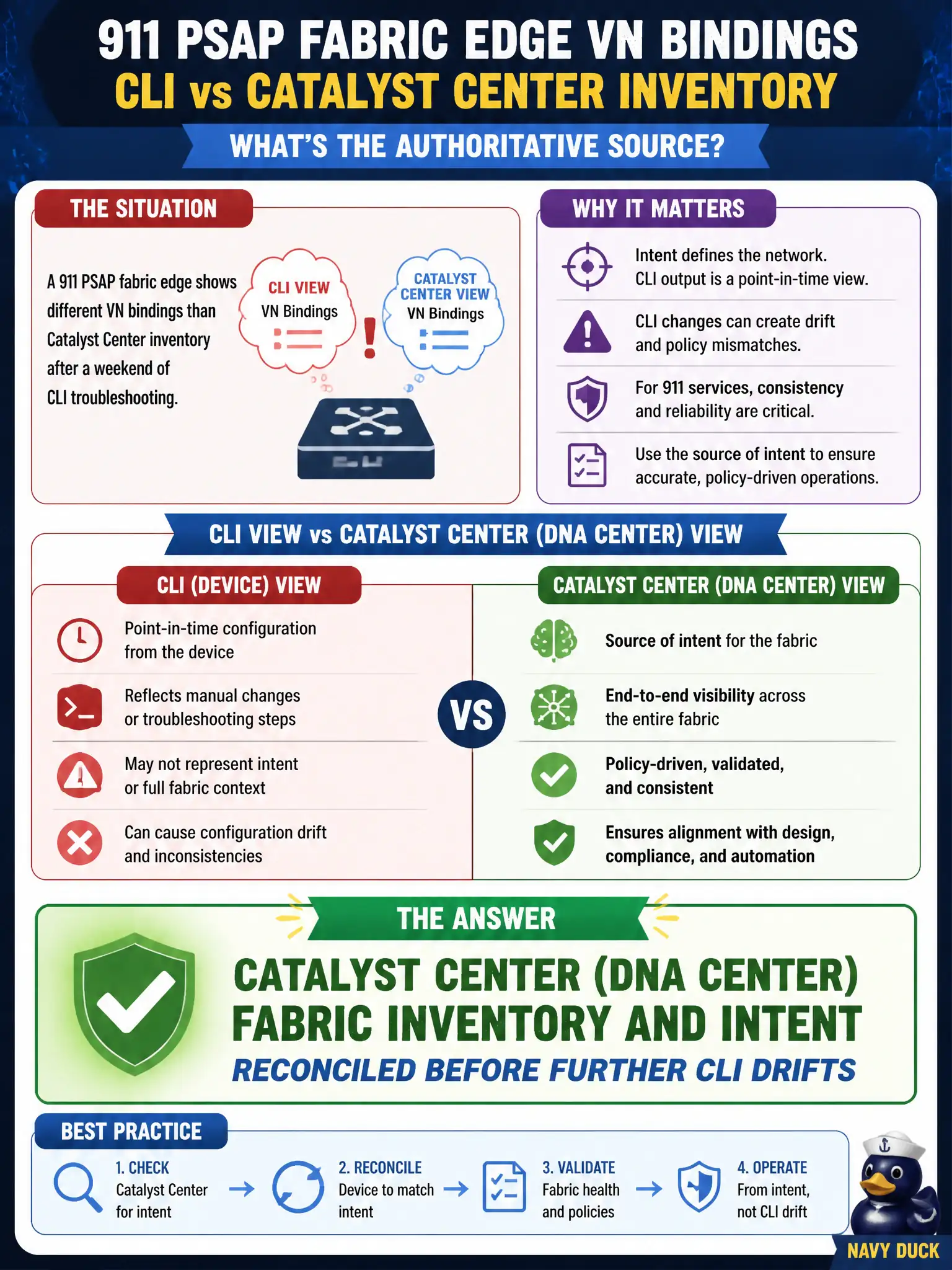
A 911 PSAP fabric edge shows different VN bindings than Catalyst Center inventory after a weekend of CLI troubleshooting. What should the municipal network team treat as the authoritative fabric inventory source?
Select an answer to reveal the explanation.
Short Explanation
Think of Catalyst Center as the city GIS map and CLI as sticky notes someone left on one street corner. The map is the source of truth for fabric membership and VN bindings; chasing every one-off CLI tweak without reconciling intent is how PSAP edges drift. Re-sync to the controller before making more local changes.
Full Explanation
When a 911 PSAP fabric edge shows different VN bindings than Catalyst Center inventory after CLI troubleshooting, the municipal team should treat Catalyst Center fabric inventory and intent as authoritative and reconcile before further CLI drift. Controller intent is the source of truth for fabric roles and segmentation in SD-Access operations.
The oldest switch running-config archive on a USB stick in the PSAP rack is a recovery artifact, not the live fabric inventory authority.
A spreadsheet of VLAN IDs maintained by the radio vendor does not reflect fabric VN/SGT intent in Catalyst Center.
Only local RADIUS accounting logs for 802.1X sessions show auth events, not authoritative fabric inventory/role state.
Exam caveat: after emergency CLI, always re-sync or re-provision from Catalyst Center so the next Assurance view matches the box.
Operational check: compare edge VN bindings to Catalyst Center, reconcile drift, and lock change control that prefers intent pushes over ad-hoc CLI. Note the incident in the PSAP configuration management record. In municipal operations, record the rationale in the change ticket so future on-call staff know which control was chosen and which failure modes the rejected options would create for city services. Re-validate after the next maintenance window that the same control still holds under the platform code and policy revisions used by the civic network team.