
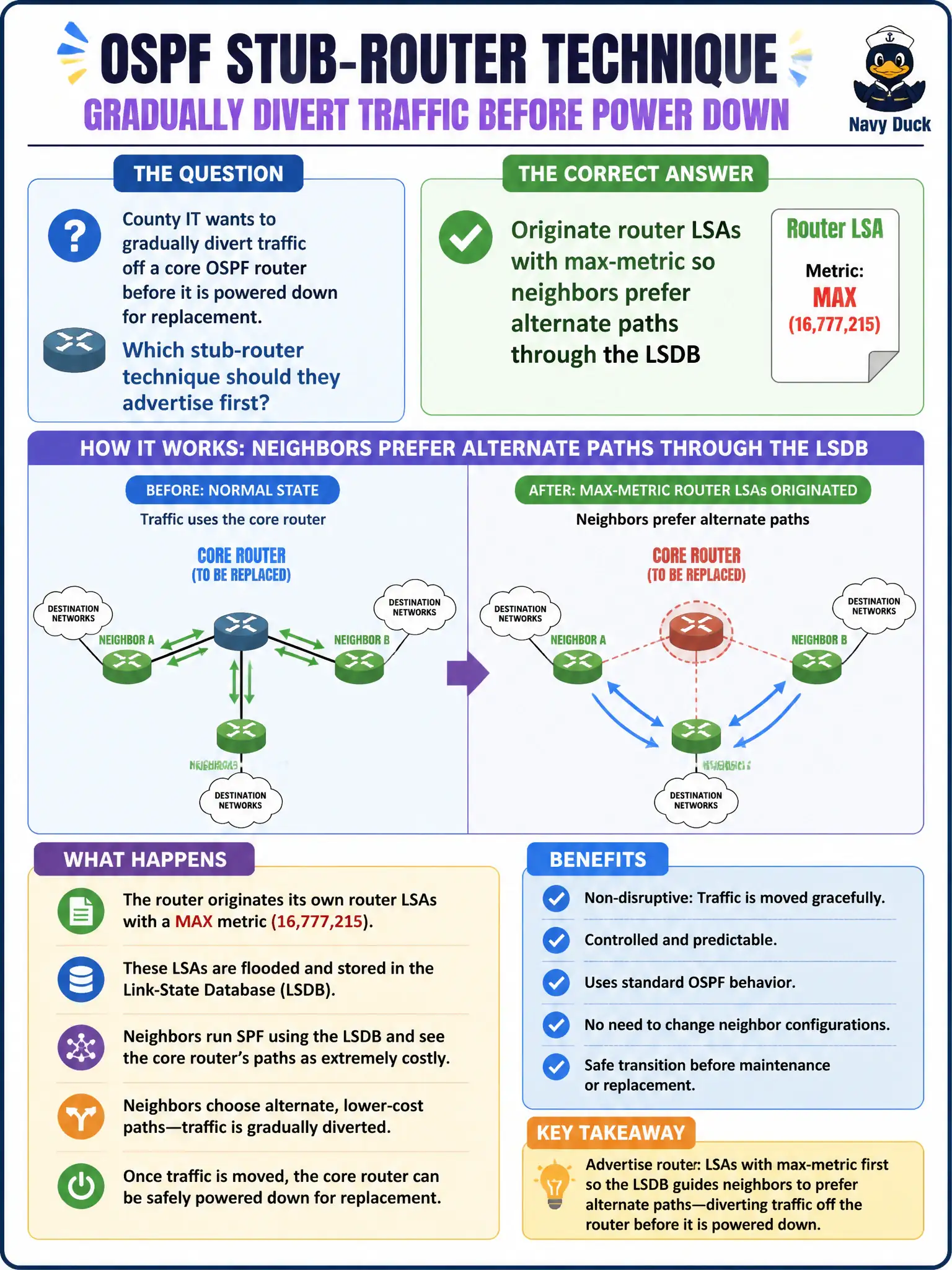
County IT wants to gradually divert traffic off a core OSPF router before it is powered down for replacement. Which stub-router technique should they advertise first?
Select an answer to reveal the explanation.
Short Explanation
Max-metric is like putting ‘closed for remodeling’ on every aisle while the store is still open. Neighbors still see the router, but they stop preferring paths through it. That’s the gentle shove traffic needs before you pull the plug.
Full Explanation
Stub-router / max-metric advertisement marks the router’s transit LSAs as least desirable so SPF elsewhere selects alternate next hops while adjacencies may still exist. County IT gradually diverting traffic off a core OSPF router before power-down for replacement should originate router LSAs with max-metric so neighbors prefer alternate paths learned through the LSDB. That gradual diversion is the intended maintenance drain pattern before the chassis is isolated.
Raising interface cost only on one transit link affects that link alone and does not re-mark the whole transit role of the router. Injecting a discard route for the entire OSPF domain with AD 254 does not implement stub-router traffic engineering and risks wide blackholes. Disabling BFD on all neighbors so Dead timers alone drive the drain slows detection rather than advertising undesirability through max-metric LSAs.
Exam caveat: max-metric stub-router behavior is related to but distinct from full graceful-shutdown automation on some platforms; know your exact commands and wait for reconvergence before pulling power. Operational check: enable max-metric or stub-router mode, confirm alternate paths install on neighbors, verify traffic volumes fall on the maintenance router, then continue with isolation and hardware replacement.