
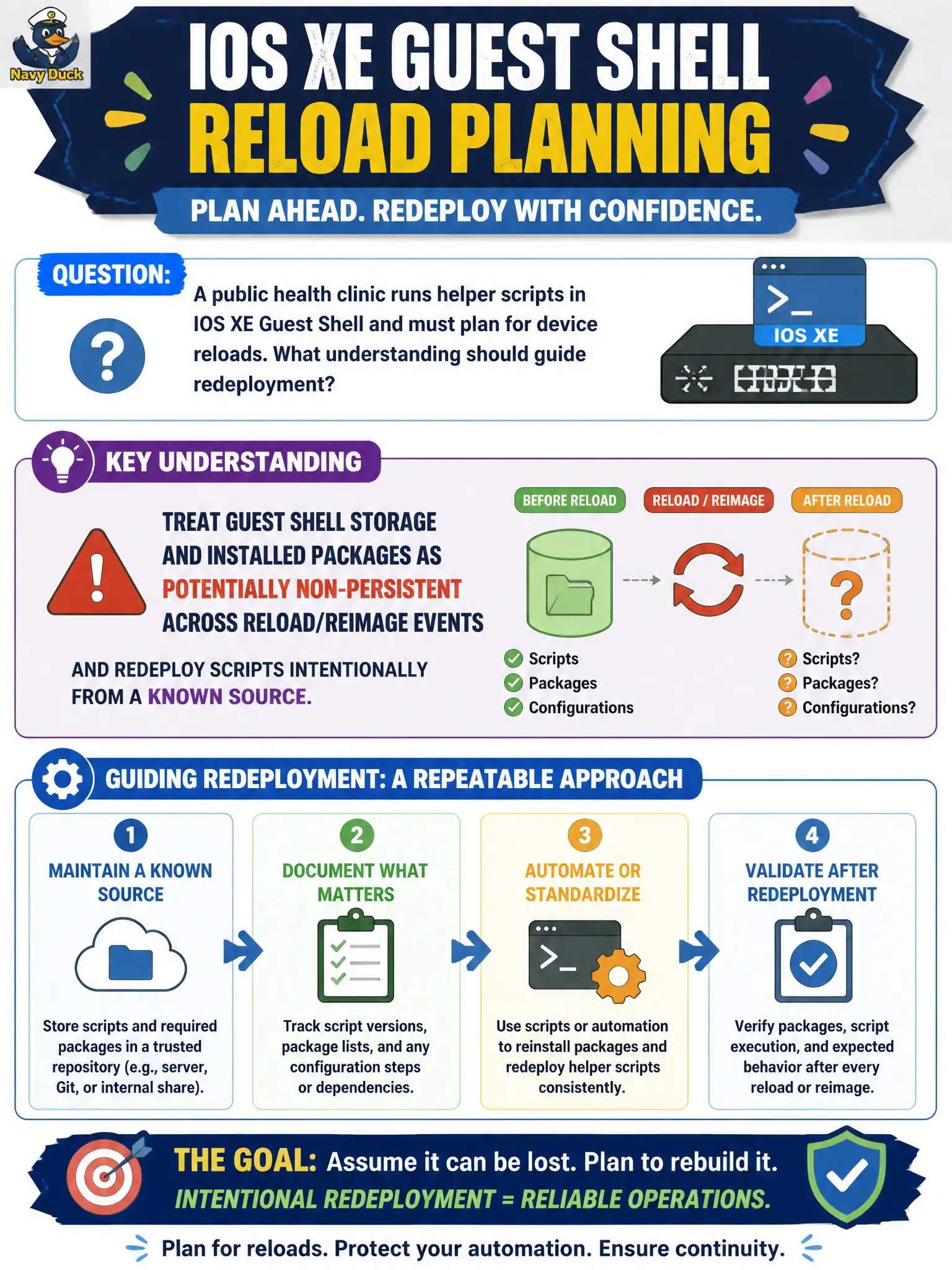
A public health clinic runs helper scripts in IOS XE Guest Shell and must plan for device reloads. What understanding should guide redeployment?
Select an answer to reveal the explanation.
Short Explanation
Guest Shell is like a clinic workstation image—reimage or some reload paths can wipe the local extras. Keep the scripts in a known repo or controller job and push them back on purpose. Hoping pip packages live forever is how morning clinics miss their helper.
Full Explanation
Public-health clinics running helper scripts in IOS XE Guest Shell must plan for device reloads by treating Guest Shell storage and installed packages as potentially non-persistent across reload/reimage events and redeploying scripts intentionally from a known source. Redeployability is the operational mindset; assuming eternal persistence creates surprise after maintenance. Known-good artifacts should live in civic repositories or controllers.
Assuming Guest Shell always survives every reload with all pip packages intact forever is unsafe. Storing production secrets only inside Guest Shell ephemeral files with no vault backup risks loss and exposure. Disabling Guest Shell after first use because it cannot run after reboot by design misstates capability and abandons useful tooling.
Exam caveat: persistence options vary by platform configuration—verify whether guestshell save/resize behaviors apply on your train, but still design for redeploy. Operational check: install a helper, reload a lab switch, document what survived, and automate bootstrap from the clinic’s approved package source. Keep secrets in a vault injected at deploy time. Record the chosen control and rejected alternatives in the municipal change record so future on-call engineers understand the failure modes avoided for city services.