
A stormwater bureau’s network automation guild needs shared, executable examples of controller API calls for onboarding. Which artifact best serves as living documentation?
Select an answer to reveal the explanation.
Short Explanation
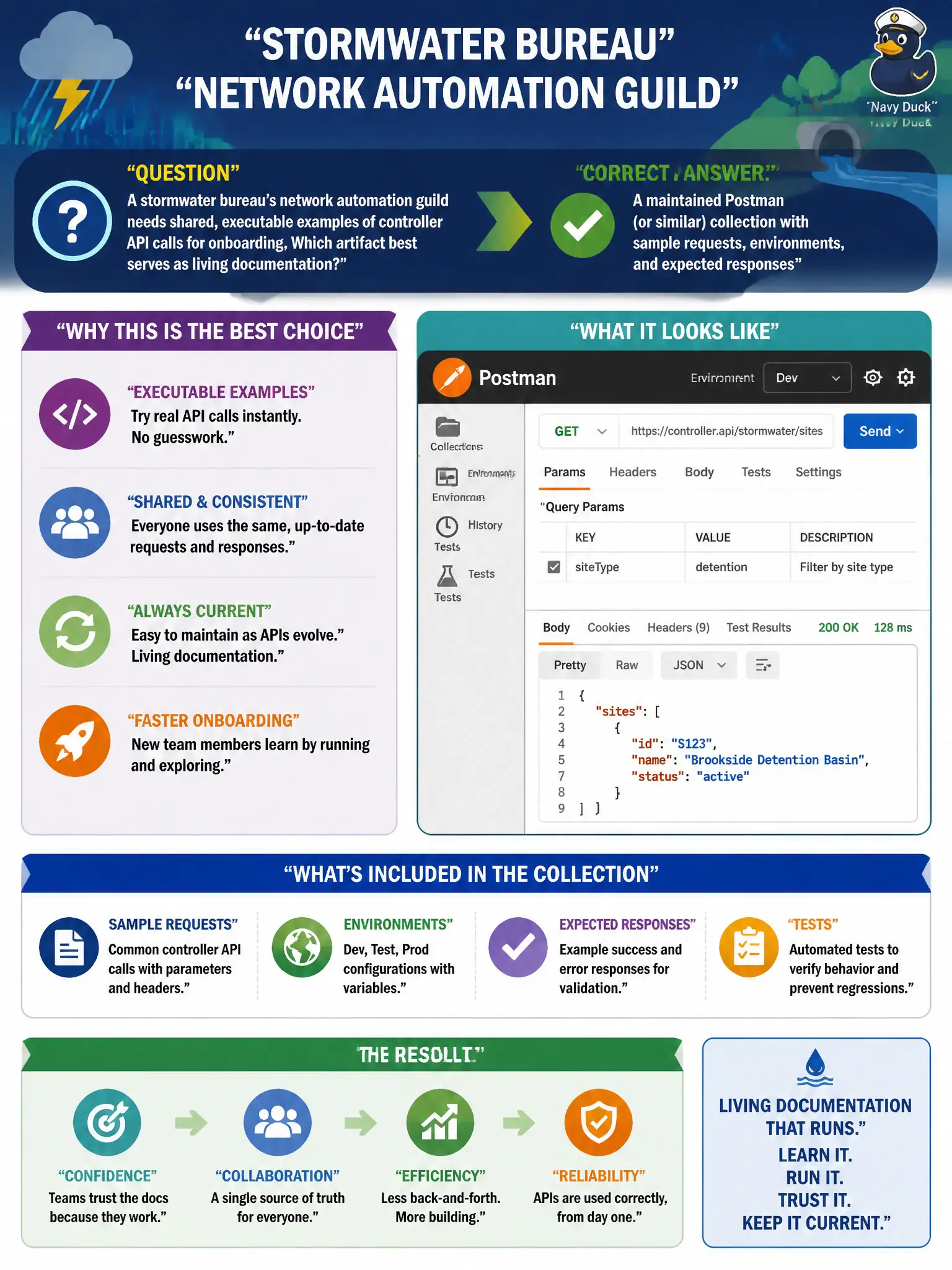
A Postman collection is a lab manual you can press Play on—new engineers hit the same requests with the right variables. Screenshots and hallway stories go stale the day the API path changes. Keep the collection versioned and it stays honest.
Full Explanation
Stormwater network automation guilds need shared, executable examples of controller API calls for onboarding. A maintained Postman (or similar) collection with sample requests, environments, and expected responses is living documentation that new engineers can run, not merely read. Executable collections beat stale slides for civic API literacy.
A static slide deck of screenshots with no request bodies cannot be executed. Oral tribal knowledge refreshed annually does not scale. An unversioned notepad paste of one successful curl from last year drifts immediately.
Exam caveat: collections must use environment variables for secrets—never commit production tokens. Operational check: store the collection in git, run it in CI against a lab controller smoke environment, and update examples when APIs change. Pair each request with expected status codes for guild onboarding checklists. Record the chosen control and rejected alternatives in the municipal change record so future on-call engineers understand the failure modes avoided for city services. Re-validate after the next maintenance window that telemetry, API results, and device state still match the documented design intent. Stormwater onboarding checklists should require every new engineer to run the collection successfully before writing production API code.