
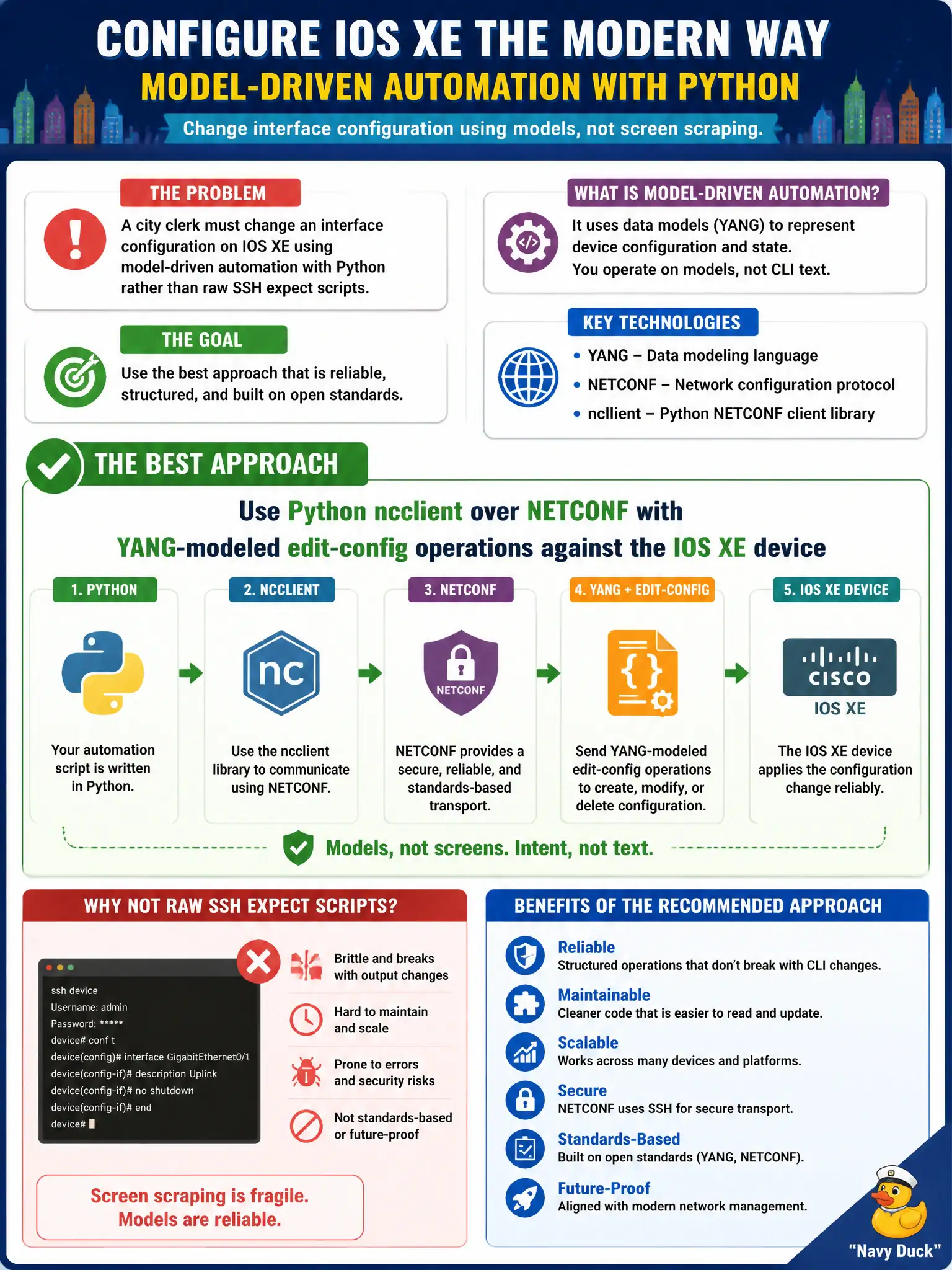
A city clerk must change an interface configuration on IOS XE using model-driven automation with Python rather than raw SSH expect scripts. Which approach best matches that goal?
Select an answer to reveal the explanation.
Short Explanation
ncclient talks NETCONF; YANG names the interface knobs; together they twist the right dial on IOS XE from Python. Pastebin-and-pray or Telnet color scraping is not model-driven automation.
Full Explanation
City clerks changing an interface configuration on IOS XE with model-driven Python rather than SSH expect should use Python ncclient over NETCONF with YANG-modeled edit-config operations. That approach targets structured datastore edits aligned to device models and supports transactional candidate/commit workflows on capable platforms.
Pasting interface commands into a public pastebin hoping cron applies them is insecure and uncontrolled. Telnet without AAA scraping ANSI colors is not model-driven automation. Editing the interface only in a spreadsheet never pushes state to the device.
Exam caveat: lock/datastores/commit confirmed sequences differ by device capabilities—test candidate vs running edit modes explicitly. Operational check: ncclient hello to learn capabilities, edit a lab interface leaf, commit/confirm, verify oper state, then roll into clerk change procedures with AAA accounting. Keep YANG module versions aligned with the IOS XE train. Record the chosen control and the rejected alternatives in the municipal change record so future on-call staff understand which failure modes were avoided for city services. Re-validate after the next maintenance window that counters, logs, and failover behavior still match the documented design intent.