
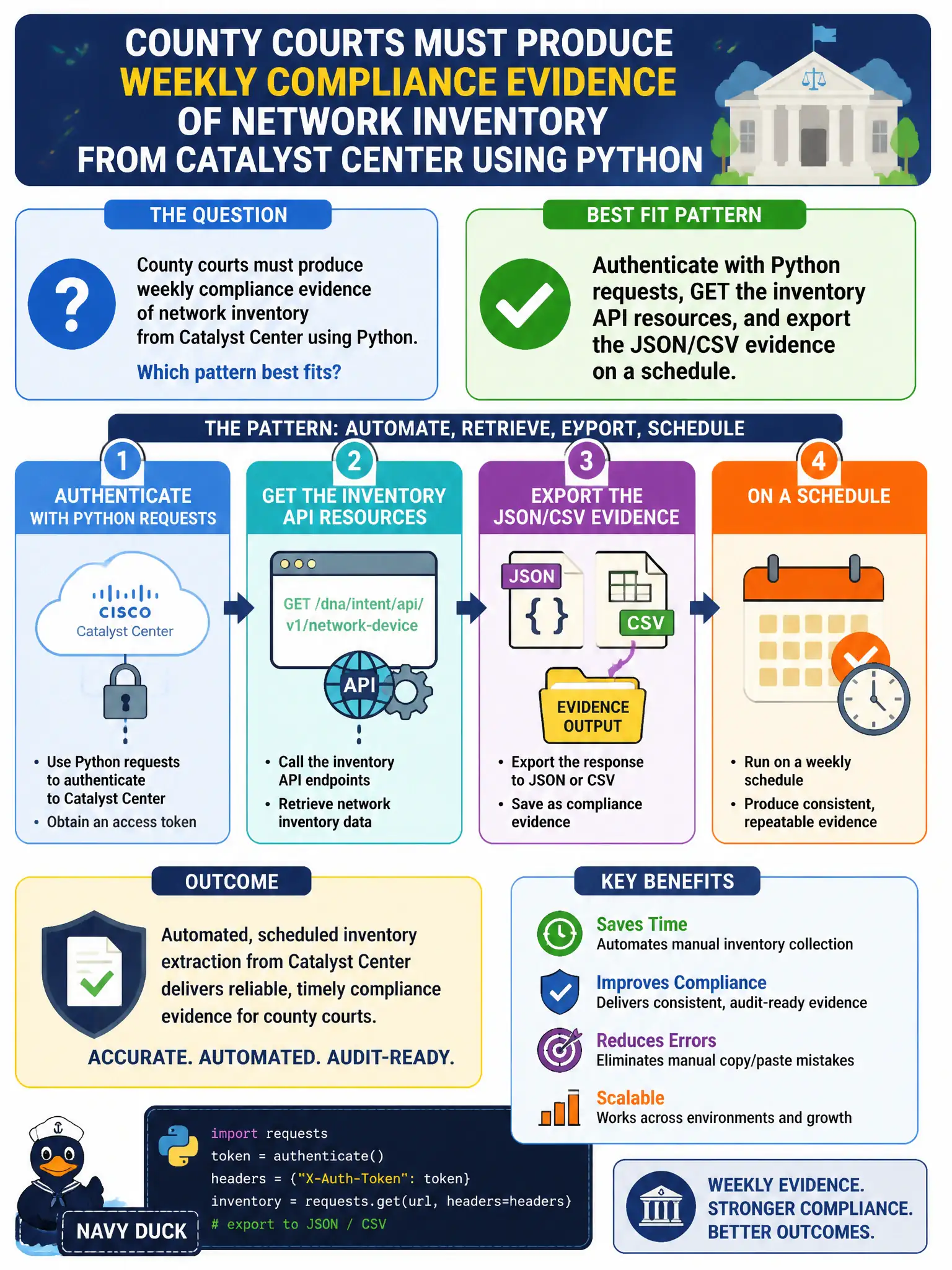
County courts must produce weekly compliance evidence of network inventory from Catalyst Center using Python. Which pattern best fits?
Select an answer to reveal the explanation.
Short Explanation
requests.get with a login token is the courthouse clerk that pulls a fresh inventory scroll every week. Phone photos of the GUI and a 2019 serial list will not impress auditors.
Full Explanation
County courts needing weekly compliance evidence of network inventory from Catalyst Center should authenticate with Python requests, GET the inventory API resources, and export JSON/CSV evidence on a schedule. That pattern produces repeatable, machine-readable artifacts suitable for auditors without relying on screenshots.
Photographing the GUI inventory page weekly stores weak evidence and does not scale. Disabling inventory services so compliance cannot find outdated devices undermines the control. Hard-coding serial numbers from 2019 and never refreshing lies to auditors.
Exam caveat: paginate inventory APIs—large campuses will truncate if the script assumes one page. Operational check: schedule the job, verify file checksums land in the evidence repository, spot-check counts against the GUI, and alert on job failure. Restrict credentials to read-only inventory scopes. Record the chosen control and the rejected alternatives in the municipal change record so future on-call staff understand which failure modes were avoided for city services. Re-validate after the next maintenance window that counters, logs, and failover behavior still match the documented design intent. Courts automation owners should retain weekly artifacts long enough to satisfy the records schedule tied to network compliance evidence.